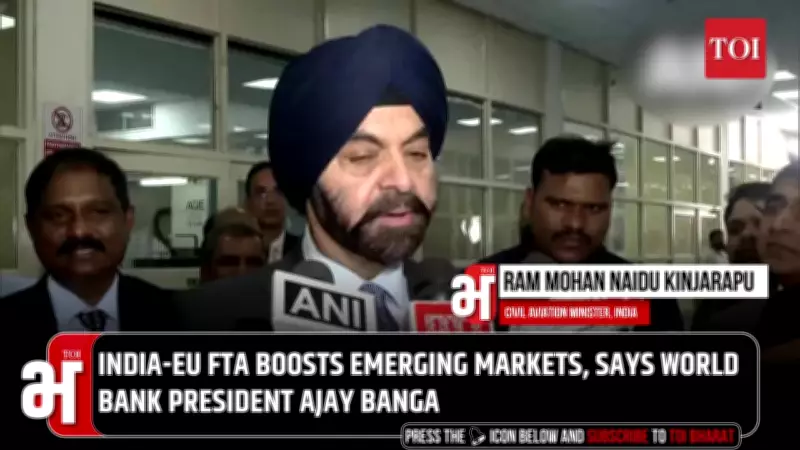
World Bank President Ajay Banga has articulated a clear stance on international trade agreements, emphasizing that such deals must be structured to avoid harming domestic industries on either side of the negotiation table. Speaking in Bhubaneswar, Odisha, Banga underscored the importance of creating trade frameworks that foster mutual growth without undermining local economic sectors.
India's Economic Trajectory and the Skilling Imperative
During his address, Banga lauded India's remarkable economic progress, noting its position as one of the world's fastest-growing major economies. He connected this growth to the broader vision of "Viksit Bharat" (Developed India) by 2047, a national goal that requires strategic investments in human capital.
The Annual Workforce Challenge
Banga highlighted a critical statistic: approximately 12 million young Indians enter the workforce each year. He stressed that providing these individuals with appropriate training and skills is not merely an educational issue but an economic necessity. "Skilling is the cornerstone for sustainable economic development," Banga stated, adding that it drives innovation and positions India as a global economic powerhouse.

The World Bank President elaborated that true economic growth transcends mere GDP percentages. It involves developing robust infrastructure, modern facilities, and efficient systems that empower the next generation. Skilling initiatives must create employment opportunities not only in metropolitan cities but also across towns, villages, and even in international markets, he emphasized.
Balancing Trade and Domestic Industry Protection
Banga's comments on trade deals reflect a nuanced understanding of globalization's complexities. He argued that while international trade is vital for economic integration, agreements must be carefully crafted to prevent adverse impacts on domestic industries. This balance is crucial for maintaining economic sovereignty and ensuring that growth benefits are widely distributed.
His remarks come at a time when global trade dynamics are increasingly scrutinized for their effects on local employment and industrial competitiveness. By advocating for protective measures, Banga aligns with broader discussions on fair trade practices that support rather than stifle domestic economic activities.
The Path to Viksit Bharat 2047
Looking ahead, Banga outlined several key areas for focus:
- Enhanced Vocational Training: Expanding access to quality skill development programs tailored to industry needs.
- Public-Private Partnerships: Encouraging collaboration between government and private sector to fund and implement skilling projects.
- Technology Integration: Leveraging digital tools and platforms to deliver scalable and effective training solutions.
- International Best Practices: Adopting successful models from other countries while customizing approaches to India's unique demographic and economic context.
Banga concluded by reiterating that empowering youth through skills is not just an economic strategy but a moral imperative. It ensures that India's demographic dividend translates into tangible progress, driving the nation toward its Viksit Bharat aspirations while safeguarding its domestic industries through prudent trade policies.