

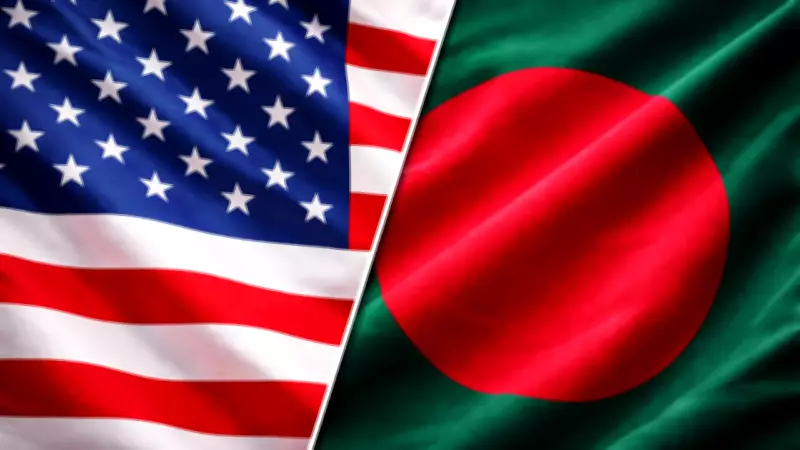
Bangladesh's Interim Government to Sign Secret US Tariff Agreement Days Before Election
Bangladesh's interim government is preparing to sign a confidential tariff agreement with the United States on February 9, a move that has sparked significant controversy due to its timing just three days before the country's parliamentary elections. This development follows closely on the heels of a similar trade agreement between the United States and India, which was announced about a week earlier.
Timing Raises Transparency Concerns
The decision to proceed with this agreement during the final days of the interim government's tenure has drawn sharp criticism from business leaders and analysts. The contents of the proposed deal remain completely confidential under a non-disclosure agreement signed between Bangladesh and the United States, preventing public scrutiny of its terms.
According to reports from Bangladesh Daily Prothom Alo, the lack of transparency surrounding the agreement has created widespread unease within the business community. If signed as planned on February 9, the agreement will come just days before the interim government's term concludes, with voting for the 13th parliamentary election scheduled shortly thereafter.

Business Community Expresses Alarm
Senior business leaders have voiced strong concerns about the rushed nature of this decision. BGMEA Senior Vice President Inamul Haque Khan expressed surprise at the timing, stating, "I still believe this should have been done after the election, because it carries major implications." He added, "Based on the target for purchases from the US, it can be expected that the reciprocal tariff rate will come down to 15 percent from the current 20 percent."
DCCI President Taskeen Ahmed echoed these sentiments, suggesting that the interim government could have avoided making such a rushed decision. The business community is particularly worried about potential negative impacts on various sectors and questions why such a significant agreement is being finalized by a temporary administration rather than an elected government.
Background of US-Bangladesh Trade Negotiations
The negotiations leading to this agreement have been ongoing since April 2025, when US President Donald Trump announced reciprocal tariffs on 100 countries. Initially, Bangladesh faced a tariff rate of 37 percent, which was eventually negotiated down to 20 percent in August of last year through diplomatic efforts.
The current agreement reportedly includes several conditions imposed by the United States:
- Requiring Bangladesh to reduce imports from China
- Increasing purchases of American military equipment
- Accepting US standards without additional inspections
- Boosting US agricultural exports to Bangladesh
- Easing market access for American automobiles
Delegation Details and Signing Arrangements
Commerce Secretary Mahbubur Rahman has confirmed the February 9 signing date, though he will not travel to Washington in person for the event. Instead, a five-member delegation from Bangladesh will represent the country at the signing ceremony.
According to a government order issued by the Ministry of Commerce on February 3, the delegation will be led by Khadija Nazneen, Additional Secretary at the Ministry of Commerce and head of the World Trade Organization Wing. Other members include Joint Secretaries Firoz Uddin Ahmed and Mustafizur Rahman, Senior Assistant Secretary Sheikh Shamsul Arefin, and National Board of Revenue Commissioner Rais Uddin Khan.
The delegation is scheduled to depart Dhaka on Friday, February 6, and return on or around February 10, completing their mission during this critical pre-election period.
Broader Implications and Criticism
This tariff agreement is not the only significant decision made by the interim government in recent weeks. The administration has also entered into port management agreements with international companies, raising further questions about long-term commitments being made by a temporary government.

CPD Distinguished Fellow Debapriya Bhattacharya has criticized the lack of transparency surrounding the agreement, stating, "This is not just a tariff agreement with the US but one with long-term implications. It must be viewed holistically, including its geopolitical and political dimensions."
Critics argue that while confidentiality in trade agreements is common practice, such significant decisions are typically made by elected governments that are accountable to parliament and citizens. The rushed timing and secretive nature of this agreement have led to speculation about whether it unnecessarily constrains the policy options available to the incoming elected government.
The proximity of this signing to both the Bangladesh elections and the recent US-India trade announcement adds layers of complexity to an already controversial diplomatic move. As Bangladesh prepares for its democratic transition, this secret tariff agreement represents a significant economic and political development that will likely have repercussions long after the election results are announced.





