

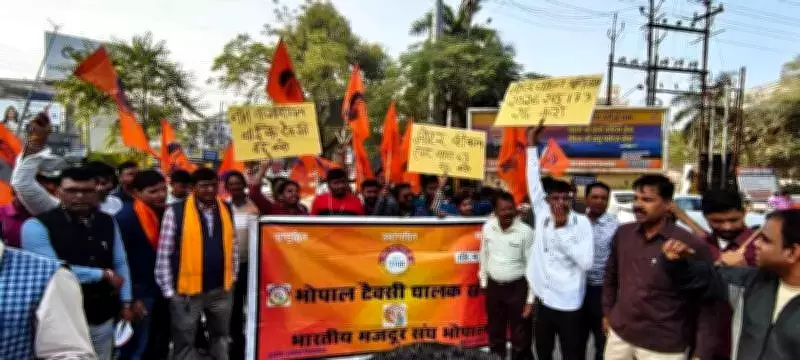
Bhopal Taxi Drivers Stage Two-Hour Strike, Paralyzing Ride-Hailing Services
Online taxi services in Bhopal came to a complete standstill for two hours on Saturday as drivers organized a protest strike, leaving numerous passengers stranded across the state capital. The demonstration, which disrupted normal transportation operations, was orchestrated by the Bhopal Taxi Drivers' Union, an organization affiliated with the prominent Bharatiya Mazdoor Sangh labor union.
Protesters Rally Against Government and Aggregator Companies
The striking drivers gathered to voice their grievances against both the state government and major ride-hailing aggregator companies. They accused these platforms of exploiting drivers through what they described as unfavorable government regulations that fail to protect their economic interests. The central demand of the protest was the immediate notification and strict enforcement of minimum fare structures, which drivers believe would provide much-needed financial stability and fair compensation for their services.
Opposition to Bike Taxis and Private Vehicle Usage
In addition to fare concerns, the protesting drivers expressed strong opposition to the operation of bike taxis and the use of private vehicles for passenger transport within the city. They argued that these practices directly threaten the livelihoods of commercial taxi drivers by creating unfair competition and potentially undermining established transportation standards and safety protocols.

Union Leaders Issue Warning of Escalated Action
Union representatives characterized Saturday's two-hour strike as merely a preliminary action, warning that more extensive protests would follow if their demands remain unaddressed. They called for significant rule changes and amendments to existing regulations that would better protect driver interests and ensure sustainable working conditions within the ride-hailing industry.
A formal memorandum outlining these demands was submitted to relevant authorities through Kuldeep Singh Gurjar, who serves as the state general secretary of the Bharatiya Mazdoor Sangh. This document detailed the specific regulatory changes sought by the taxi drivers and established a formal record of their grievances for governmental consideration.






