

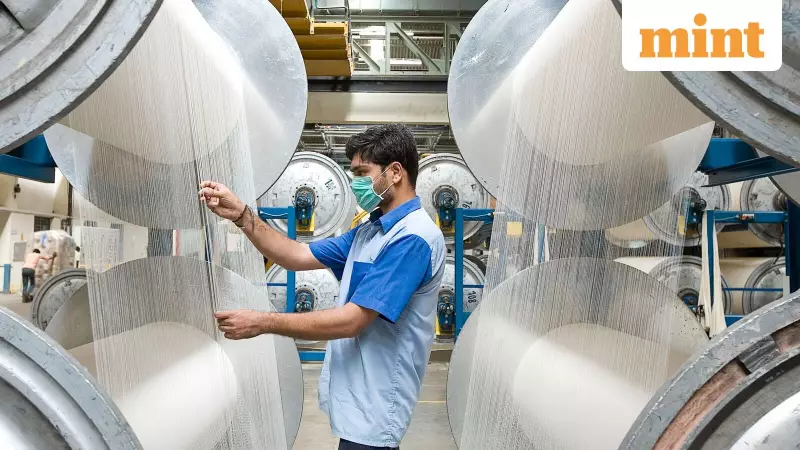
In a significant push to enhance the global competitiveness of Indian products, the government has undertaken a major overhaul of quality standards across key sectors like textiles, aerospace, and smart mobility. The Bureau of Indian Standards (BIS) notified a fresh set of new and revised norms on 27 December 2025, aiming to replace outdated benchmarks and align with international expectations.
Modernizing Legacy Norms, Starting with Textiles
A primary focus of this regulatory refresh is the textiles sector. The BIS has revised standards for several key products, including cotton fibres, handloom cotton shirting, drill fabric, and khadi. Notably, some of these norms were over four decades old and required modernization. The updated specifications and testing methods are designed to bring consistency to quality assessment, bolster consumer confidence, and provide clear guidelines for manufacturers.
This move is particularly crucial for exporters who increasingly face stringent scrutiny in overseas markets. With global buyers demanding uniform quality and safety, aligning with international standards is seen as essential for maintaining and expanding market access. Rahul Mehta, Chief Mentor of the Clothing Manufacturers Association of India, emphasized that countries failing to meet these benchmarks risk losing their foothold in global trade.

A Voluntary and Flexible Approach
In total, around 30 new standards were released, all of which are currently voluntary for compliance. This deliberate strategy provides domestic manufacturers with a crucial transition window. Instead of facing immediate regulatory pressure, companies can upgrade their processes and improve product quality at their own pace.
"The approach allows Indian manufacturers to prepare for global competition at their own pace, helping them align with international standards without immediate regulatory pressure," explained Mehta. However, industry voices like Raja M. Shanmugam, former president of the Tiruppur Exporters’ Association, caution that the success of this initiative hinges on smooth implementation. He urged close monitoring to prevent any potential bureaucratic misuse during the compliance phase.
Beyond Textiles: Safety, Aerospace, and Smart Infrastructure
The standards overhaul extends far beyond the textile industry, touching several safety-critical and emerging technology domains:
- Mining Safety: Revised standards for fire-resistant conveyor belts used in underground mines, reflecting global occupational safety expectations.
- Aerospace: Updated norms for woven glass fibre fabrics to strengthen domestic capability in high-performance materials.
- Smart Mobility: First-time standards introduced for components of intelligent traffic management systems.
- Agriculture & Security: New norms for agro-textiles like high-density polyethylene woven dry fodder storage bags, and for bomb disposal systems.
The government has stated that older standards will remain in force alongside the revised ones until mid-2026, ensuring a smooth transition for industry.
Context of QCO Rollbacks and Future Regulation
This standards update follows a recent rollback of 25 Quality Control Orders (QCOs) between mid-November and early December 2025, a move carried out "in the public interest" to avoid bottlenecks for downstream manufacturers. This action was based on recommendations from a NITI Aayog committee led by former cabinet secretary Rajiv Gauba.
Despite these rollbacks, the new standards create a pipeline for future regulation, as they can be converted into mandatory QCOs later. The government's broader strategy appears to balance immediate flexibility with a long-term vision for quality elevation, responding to international concerns—such as those flagged by the US Trade Representative's 2025 report—while supporting domestic industry growth.






