

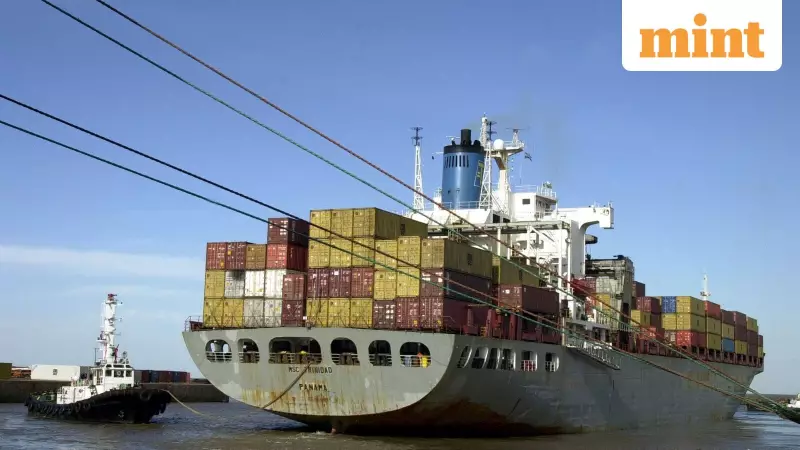
In a significant push to enhance India's global trade competitiveness, the upcoming Union Budget for the fiscal year 2027 is set to introduce pointed reforms targeting port efficiency and a simplified customs duty structure. The moves aim to make cross-border trade simpler, quicker, and cheaper, while supporting businesses in diversifying their export markets against a backdrop of global uncertainties.
Driving Efficiency at Indian Ports
Central to the budget's trade strategy is a focus on drastically reducing the time cargo ships spend at Indian ports. Currently, the average turnaround time for a vessel stands at about 48 hours. While this marks a significant improvement from approximately 93 hours in 2013-14, it still lags behind global hubs like Hong Kong, where turnaround is less than half a day. The government's objective is to narrow this gap substantially.
Pre-budget discussions are actively exploring measures to simplify customs procedures, enhance last-mile connectivity to ports, and increase automation. These steps are designed to ensure consignments can exit ports faster, directly reducing costs associated with shipment delays and idling ships. A standout example of progress is the Jawaharlal Nehru Port in Nhava Sheva, Navi Mumbai, which has achieved an average turnaround time of just 26 hours.

This improvement was highlighted in a World Bank report in September 2025, which noted the port's remarkable rise in the Container Port Performance Index (CPPI), reaching a score of 100 in 2024 from 66 in 2020. The port was ranked 10th globally for the pace of its performance improvement between 2020 and 2024.
Streamlining the Customs Tariff Structure
Parallel to port reforms, the budget will undertake a major simplification of the customs duty regime. The government is examining a further reduction in the number of core tariff rates, which currently stand at eight: zero, 5%, 10%, 15%, 20%, 30%, 50%, and 70%. This follows two previous rounds of rationalization in the February 2023 and February 2025 budgets, which phased out 14 tariff rates.
Finance Minister Nirmala Sitharaman had indicated this direction earlier in December 2025, stating that reforming customs duties by lowering selected rates, increasing transparency, and reducing officials' discretion would be the next major economic reform.
The calibration of duty rates will be carefully aligned with India's industrial goals. The intent is to keep costs low for imported raw materials and machinery while providing adequate tariff protection for domestic production of intermediate and final goods, thereby encouraging backward integration in manufacturing.
Strategic Trade and Expert Expectations
Trade strategy will play a pivotal role in shaping the final reforms. One consideration is to converge towards the practices of developed nations by having a limited number of tariff rates or bands. However, this will be balanced against India's trade diversification strategy, as across-the-board concessions could potentially weaken the country's negotiating position with future trade partners.
Experts have welcomed the proposed direction. Rajat Mohan, Senior Partner at AMRG & Associates, emphasized that multiple tariff rates and frequent changes have increased complexity and compliance costs. He advocated for a move towards three to four principal tariff rates, akin to the GST 2.0 approach, to reduce classification disputes and administrative discretion, thereby improving the ease of doing business.
The government's broader objectives for the customs overhaul include fostering faster trade diversification, ensuring greater access to critical minerals at reduced cost, adjusting duties to support developing domestic capacities, and aiding labour-intensive sectors like textiles, leather goods, and handicrafts.
These anticipated reforms in Budget 2027 underscore a clear focus on building a more predictable, efficient, and globally aligned trade ecosystem to strengthen India's position in the international market.






