

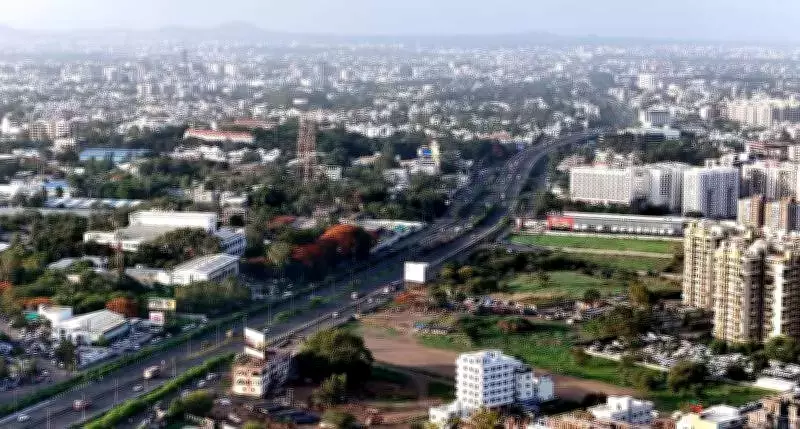
Union Cabinet Greenlights Major Highway Upgrade in Nashik Region
The Union Cabinet Committee on Economic Affairs (CCEA) has given its crucial approval for a significant highway development project in Maharashtra. On Saturday, the committee cleared the rehabilitation and upgradation of the Ghoti–Trimbak–Palghar stretch of national highway 160A, marking a substantial infrastructure boost for the region.
Project Details and Financial Outlay
This extensive 154.63-kilometer corridor will be executed using the engineering, procurement, and construction (EPC) model. The total estimated cost for this ambitious project stands at a substantial Rs 3,320.38 crore, as confirmed by an official press statement issued by the CCEA of the Central Government.
Industrial Connectivity and Economic Impact
Industry associations across Maharashtra have warmly welcomed this decision, recognizing its potential to transform regional logistics. The upgraded highway will provide direct connectivity to Wadhwan port, significantly boosting the industrial sector concentrated in and around Nashik.

The region west of Nashik, particularly encompassing the Ambad and Satpur areas, hosts a dense cluster of industrial units developed by the Maharashtra Industrial Development Corporation (MIDC) within Nashik city limits. This concentration generates substantial freight traffic that currently faces major challenges.
Current Challenges and Future SolutionsPresently, freight movement largely passes through Nashik city via NH-848, creating severe congestion on urban roads and increasing transportation costs. The comprehensive upgradation of NH-160A will establish an alternative route from industrial areas through Trimbak, effectively bypassing the city center and dramatically reducing traffic snarls.
Traffic Flow and Strategic Connections
Traffic originating from Mumbai on the western side and from southern regions is expected to utilize the Samruddhi Expressway through the interchange at Igatpuri on NH-848. From there, vehicles will travel on NH-848 up to Ghoti before transitioning to the upgraded NH-160A stretch continuing through Trimbak and onward to Nashik.
Projections indicate that from 2028 onwards, daily traffic on the NH-160A corridor will exceed 10,000 passenger car units (PCUs), qualifying this vital route for essential four-laning to accommodate growing transportation demands.
Broader Regional Connectivity
The section of NH-160A extending westward from Trimbak toward Manor and Palghar creates crucial connections to multiple major transportation arteries. This includes links to the Delhi-Mumbai Expressway (NE-4), NH-48, and onward access to the western coastal belt, as well as tribal areas within Palghar district.
While this particular link currently handles approximately 4,500 PCUs of traffic, the development of the existing intermediate-lane carriageway to two lanes with paved shoulders will facilitate significantly smoother movement for both freight and passenger traffic.
Furthermore, the stretch from Manor to Palghar passes through urban built-up sections experiencing traffic volumes of about 12,000 PCUs. The proposed upgradation to four lanes in this urban section aims to ensure smoother traffic flow through these congested areas.
Alignment with National Development Initiatives
This infrastructure project has been strategically proposed in alignment with the PM GatiShakti national master plan. Upon completion, it will connect six PM GatiShakti economic nodes, one social node, and eight logistics nodes across Maharashtra. This enhanced connectivity aims to positively impact the national Logistics Performance Index (LPI), improving India's overall logistics efficiency.
Comprehensive Benefits and Employment Generation
Officials emphasize that project completion will facilitate multiple benefits including:

- Smooth and safe traffic flow throughout the region
- Substantial reduction in travel time for commuters and freight
- Notable decrease in vehicle operating costs (VOC)
- Enhanced basic infrastructure in tribal regions
- Contribution to overall economic development
The project is estimated to generate approximately 19.98 lakh person-days of direct employment and an additional 24.86 lakh person-days of indirect employment. Beyond these employment figures, the infrastructure development is expected to induce substantial additional economic activity along the entire corridor, creating lasting economic benefits for the region.





