Canada Sets Ambitious $60 Billion Trade Target with India by 2030
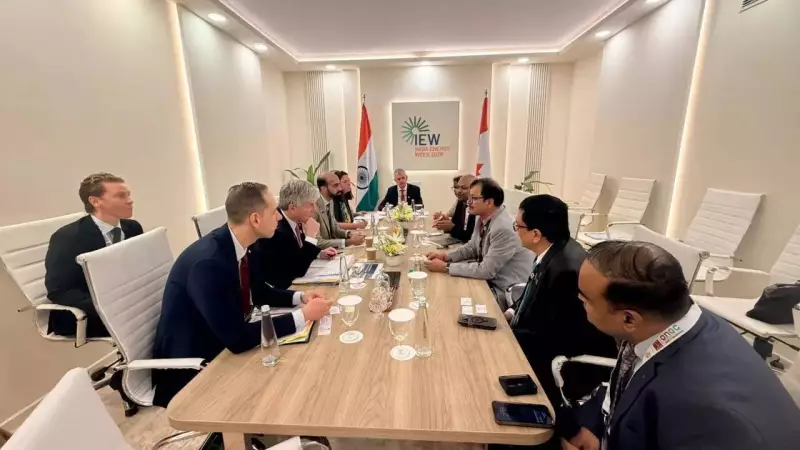
Canadian Energy and Natural Resources Minister Tim Hodgson has revealed that Prime Minister Justin Trudeau has established a clear objective to double bilateral trade between Canada and India from the current $30 billion to $60 billion by the end of this decade. This significant announcement was made during Minister Hodgson's participation at the India Energy Week event in New Delhi, where he is laying the groundwork for the Prime Minister's anticipated visit scheduled for March.
Strategic Realignment Amid Global Economic Uncertainty
In an exclusive interview, Minister Hodgson emphasized that this enhanced trading partnership represents a strategic realignment for both nations, particularly in the context of ongoing global economic volatility. "Our prime minister is a business person. He has clear key performance indicators that he sets," Hodgson stated. "Today, bilateral trade between Canada and India is only $30 billion. He's been very clear. He expects that to double by the end of the decade."
This ministerial visit marks the latest in a series of high-level engagements between Canadian and Indian officials, following a comprehensive bilateral reset between the two countries. The discussions signal a renewed commitment to strengthening economic ties and exploring new avenues for collaboration.

Energy as the Cornerstone of Partnership
Positioning energy cooperation as the fundamental pillar of this revitalized relationship, Hodgson pointed out that Canada, which accounts for approximately 6% of global oil production, currently supplies less than 1% of India's oil imports. "If we just paired up to a normal percentage, that would make us both stronger, more resilient, more secure," he asserted.
The minister acknowledged that India is already procuring substantial quantities of liquefied natural gas and oil from Canada. However, due to existing infrastructure limitations, these shipments are currently routed through the Gulf Coast. Hodgson highlighted that new infrastructure developments on Canada's west coast are expected to reduce shipping times by 10 to 14 days, resulting in more cost-effective supplies for India and increased profitability for Canadian exporters.
Nuclear and Renewable Energy Opportunities
In response to India's ambitious plan to add 100 gigawatts of nuclear power capacity, Hodgson drew attention to Canada's extensive uranium reserves, which are recognized globally for their exceptional quality and purity. "Canada has historically supplied uranium to India. We supply uranium for peaceful purposes to countries all over the world. There's a tremendous opportunity for us to increase our supplies," he remarked.
The minister expressed particular enthusiasm regarding India's renewable energy aspirations. He underscored Canada's capabilities in providing critical minerals essential for solar energy production, grid storage systems, and green hydrogen initiatives. "I've heard in many of my meetings huge interest in Canadian lithium, huge interest in Canadian graphite, monstrous interest in Canadian copper," Hodgson described, presenting this as a strategic opportunity for India to diversify its supply chains and reduce dependencies.
Mutual Diversification Benefits
Hodgson commended India's efforts to broaden its energy sourcing network, referencing Union Minister for Petroleum and Natural Gas Hardeep Singh Puri's revelation that India has expanded its energy suppliers from approximately 20 to 40 countries. "Good for you. We're going to diversify our customer base," Hodgson affirmed, emphasizing the mutual benefits of this diversified approach for both nations' economic security and growth.
This comprehensive energy and trade dialogue between Canada and India reflects a shared vision for enhanced cooperation, economic resilience, and sustainable development as both countries navigate the complexities of the global economic landscape.