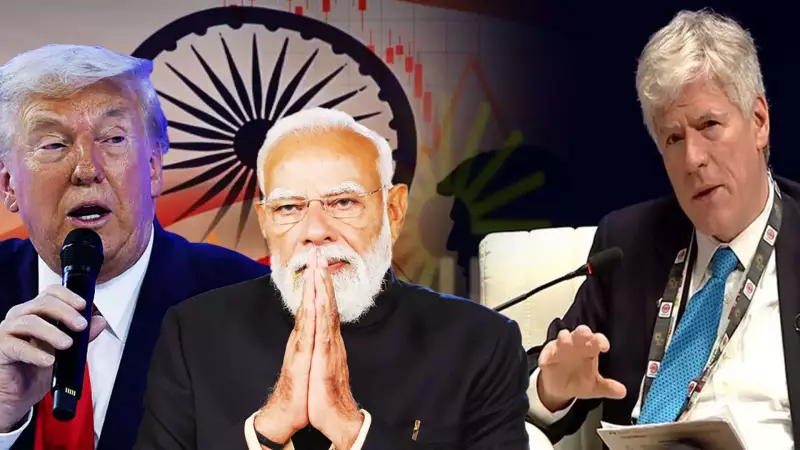
Canada Stands With India Against Tariff Coercion, Eyes Deeper Energy Partnership
In a significant diplomatic and economic alignment, Canada has sent a clear signal of solidarity with India's position against tariff-based bullying and trade intimidation tactics. The declaration came from Canadian Energy Minister Tim Hodgson during his address at the prestigious India Energy Week, marking a notable convergence of interests between the two nations on global trade principles.
A Shared Stance Against Economic Pressure
Minister Hodgson delivered a pointed warning against what he described as a dangerous trend where powerful economies leverage tariffs to enforce political compliance from other nations. "We won't accept tariff bullying," Hodgson emphasized, directly aligning Canada's position with India's well-documented resistance to such coercive trade practices.
The Canadian minister specifically praised India's strategic diversification approach to international trade, highlighting the country's massive trade agreement with the European Union as a template for resisting economic pressure. This endorsement comes at a time when both nations are navigating complex global trade dynamics and seeking to strengthen their economic sovereignty.

Energy Security and Geopolitical Realities
Hodgson stressed the inseparable connection between energy security and contemporary geopolitics, noting that energy considerations now fundamentally shape international relations. In this context, he revealed that Canada is actively working to reduce its dependence on single-market exports, diversifying its energy partnerships to build greater resilience.
The minister positioned India as the future epicentre of global energy demand, recognizing the subcontinent's growing economic influence and energy requirements. This acknowledgment forms the foundation for what both countries envision as a deepening energy partnership.
Building a Comprehensive Energy Partnership
Discussions between Canadian and Indian officials spanned multiple critical energy sectors:
- Liquefied Natural Gas (LNG) cooperation and supply arrangements
- Uranium for India's nuclear energy program
- Critical minerals essential for the global energy transition
Canada positioned itself not merely as a transactional supplier but as a long-term, trusted partner for India's energy security needs. This approach reflects a strategic shift toward building enduring relationships rather than pursuing short-term commercial interests.
Reinforcing Shared Principles
Beyond specific energy commodities, Hodgson's statements reinforced a broader alignment of principles between Canada and India. Both nations demonstrated a shared commitment to:
- Free trade based on mutual benefit rather than coercion
- Multilateralism in international economic governance
- Resilient supply chains that can withstand geopolitical pressures
The timing of this alignment is particularly significant, coming as both countries negotiate a comprehensive Free Trade Agreement (FTA) that promises to deepen economic integration. Hodgson's praise for India's trade strategy suggests positive momentum in these negotiations and a meeting of minds on fundamental trade principles.
This development represents more than just diplomatic rhetoric—it signals a practical convergence of economic strategies between two major democracies seeking to navigate an increasingly complex global trade environment while protecting their national interests against coercive economic practices.