

In a significant endorsement of India's trade diplomacy, Canada's Minister of Energy and Natural Resources, Tim Hodgson, has lauded the recently concluded India-European Union Free Trade Agreement as the "perfect example" of standing up against "hegemons who use tariffs as leverage." The comments, made during the India Energy Week in Goa, come as Canada seeks to expand its energy and critical minerals trade with India, signaling a strategic pivot in global economic alliances.
A Critique of Tariff Wars and Mercantilism
While Minister Hodgson did not explicitly name any country, his remarks were widely interpreted as a pointed criticism of the United States' approach under President Donald Trump, who has weaponized trade tariffs against numerous nations. Hodgson described these tariff wars as a "rupture" in the global trading system, rather than a gradual economic transition.
"The rules-based order that we all have been building our economies around, one that was based on multilateralism and free trade, is being challenged," Hodgson stated. "The hegemons of the world have decided that's not the way the world's going to work anymore. They've decided the world will work in a much more mercantilist way."

India-EU Deal: A Beacon of Free Trade
Hodgson praised the India-EU FTA, referring to it as the "mother of all deals," and emphasized its symbolic importance. "What you just did with the EU was a perfect example of how to say... 'We're not going to live in a world where the strongest puts tariffs on everyone else. We're going to live in a world where we believe in free trade and trusted relationships,'" he remarked.
He acknowledged that India is well-aware of the implications when economic integration is used for coercion, highlighting the shared need to resist such pressures through strengthened multilateral ties and supply diversification.
Deepening India-Canada Energy Cooperation
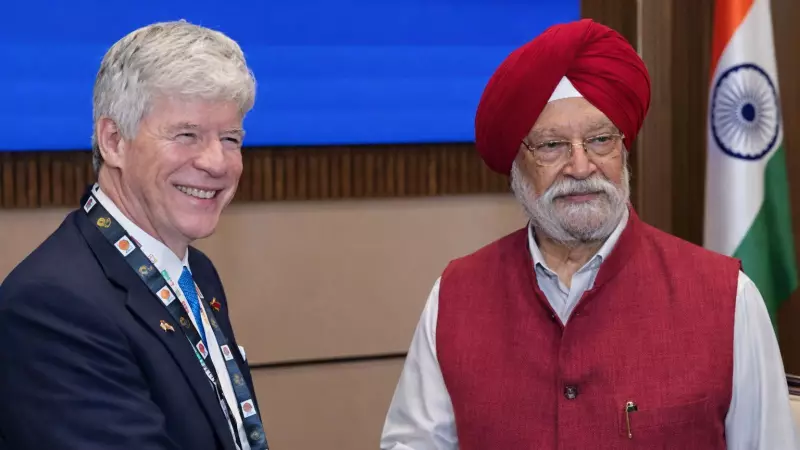
The Canadian minister's visit to Goa included a bilateral meeting with India's Petroleum Minister, Hardeep Singh Puri, where both sides agreed to enhance energy trade. This move aligns with Canada's strategy to reduce its heavy reliance on the United States, which has traditionally been its primary energy export market.
Key areas of collaboration identified include:
- Supply of Canadian liquefied natural gas (LNG), liquefied petroleum gas (LPG), and crude oil to India.
- Supply of refined petroleum products from India to Canada.
- Cooperation in clean energy value chains, such as renewable energy, hydrogen, biofuels, and sustainable aviation fuel.
- Partnerships in battery storage, critical minerals, clean technologies, electricity systems, and energy supply chain resilience.
- Application of artificial intelligence in the energy sector.
Canada's Diversification Drive and India's Growing Demand
Hodgson noted that Canada previously directed 98% of its energy exports to a single customer, underscoring the urgency of diversification. "We are committed to diversifying our supply. We see the opportunity to work with India," he affirmed.
India, as one of the world's top consumers and importers of crude oil and LNG, presents a lucrative market for Canadian energy resources. Additionally, Ottawa is keen on supplying uranium and critical minerals to support India's energy transition and technological advancements.
"To power its energy transition, India needs access to critical minerals, and Canada is a great supplier of those critical minerals," Hodgson added, highlighting the mutual benefits of this burgeoning partnership.
Global Trade Realignments and Strategic Implications
The warming of India-Canada energy ties occurs against the backdrop of strained relations between Ottawa and Washington, particularly during the Trump presidency. This has prompted Canada to reassess its economic dependencies and explore new alliances.
The joint statement released after the Puri-Hodgson meeting emphasized the vast potential for cooperation in clean energy and technology, reflecting a shared commitment to sustainable development and energy security. As global trade dynamics evolve, such partnerships are poised to play a crucial role in shaping a more diversified and resilient economic landscape.

In essence, Canada's vocal support for the India-EU FTA and its proactive engagement with India underscore a broader shift towards multilateralism and supply chain diversification, challenging the dominance of tariff-based coercion in international trade.





