

Credit Support Falls Short for MSMEs Facing US Tariff Shock
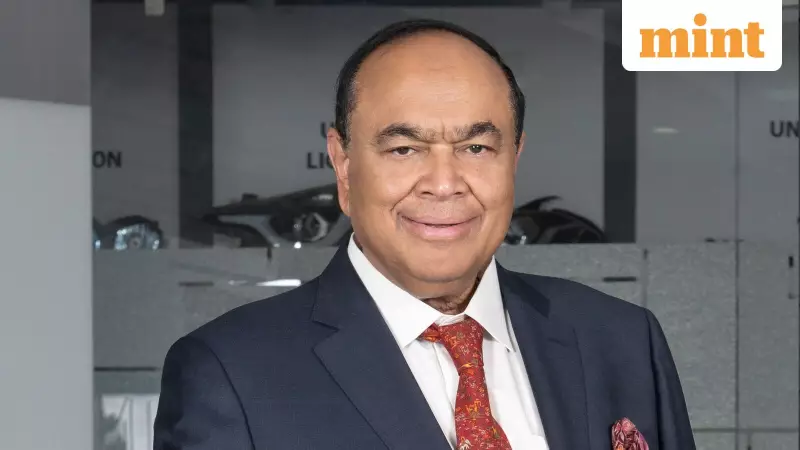
India's small businesses, the backbone of the nation's exports, require direct cash subsidies to weather the storm created by recent US tariffs, according to a top industry leader. Nirmal K. Minda, the executive chairman of UNO Minda Group and the newly-appointed president of the Associated Chambers of Commerce and Industry of India (Assocham), has stated that providing easier credit is not a sufficient remedy in the current climate of uncertainty.
Minda emphasized that until the situation stabilizes, the central government should consider offering interim financial benefits, specifically to export-dependent businesses, with a sharp focus on Micro, Small, and Medium Enterprises (MSMEs). "Small businesses employ a lot of labour, a fixed cost, but face revenue loss. Government should give cash incentives to cushion the revenue loss from exports for a specified period," Minda said in an interview.
Proposed Relief and MSMEs' Critical Role
The proposed subsidy scheme would be based on a company's export track record and recent performance, designed to be easily accessible. This call for direct support underscores the critical role MSMEs play in the Indian economy. MSMEs account for about 45% of India’s merchandise exports, making them a vital segment.

Minda pointed to recent data to highlight the sector's resilience and importance. The contribution of MSMEs to India's GDP, which had fallen to 27.3% in FY21 from 30.5% pre-pandemic, has recovered to nearly 30% in FY23 and is reported near the same level for 2024-25. Similarly, the sector's share in exports dipped after COVID-19 but is now rebounding, accounting for 45.8% of exports by May 2024, according to figures from the Directorate General of Commercial Intelligence and Statistics.
Broader Strategy: Beyond Subsidies
While pushing for immediate relief, Minda also outlined a broader vision for making India a more attractive investment destination. He suggested that India could learn from some of China's successful practices. "For example, offering land to businesses free or at nominal cost, infrastructure linkages and offering plug-and-play facilities will make it easy for businesses. Incentivising export-focused research and development will also help," he stated.
On the credit front, he acknowledged the significant expansion of bank credit to MSMEs post-2020, with outstanding credit rising from about ₹16.6 trillion in early-2020 to over ₹22.6 trillion by the end of FY23. However, he noted that sizeable credit gaps remain, particularly due to issues around the credit-worthiness of a small segment of the sector.
Minda confirmed that exporters are already taking independent action, such as diversifying into new markets, to deal with the tariff shock. India is also concurrently negotiating a trade deal with the US to address the steep tariffs. The industry body is currently assessing various sectors to find ways to reduce import dependence and boost exports, with the upcoming Union Budget for FY27 likely to address these demands for fiscal support.






