

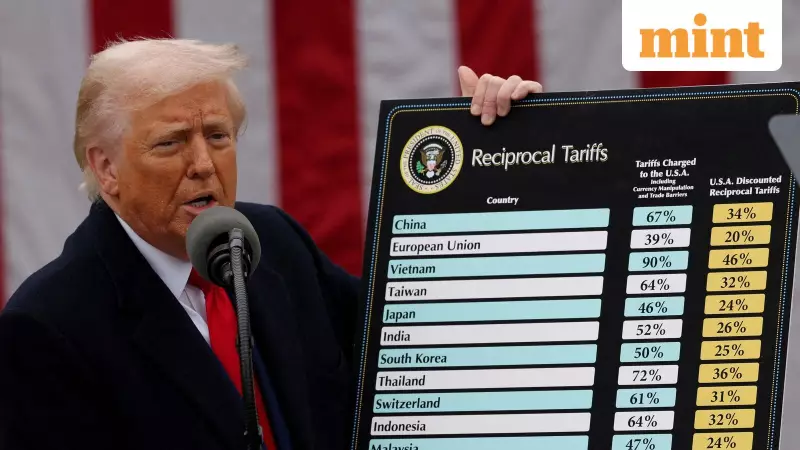
American business leaders are showing signs of reduced anxiety about tariffs after months of uncertainty in President Trump's global trade war, according to an extensive analysis of corporate earnings calls. The shift in sentiment comes as companies have developed strategies to mitigate costs and the administration has offered some relief on specific products.
From Panic to Pragmatism: The CEO Mindset Shift
The Wall Street Journal examined more than 5,000 earnings calls held by publicly traded US companies through November 14, revealing a notable change in executive tone. Business leaders are discussing tariffs less frequently as a risk factor and sounding significantly less pessimistic than earlier in the year.
David Maura, CEO of Spectrum Brands, which markets products ranging from pet food to insect repellent, captured the emerging sentiment during a recent investor call. "We believe that the worst of the tariff and economic disruptions to our businesses are now behind us," Maura stated earlier this month.

This changing perspective stems from several factors. Companies paid approximately 12% of their import value as tariffs in October, according to estimates from consulting firm Oxford Economics. While this represents a significant increase from January's approximately 2%, it remains well below the most dramatic tariff rates announced by the administration throughout the year.
The Real Impact: Beyond Headline Numbers
Several developments have contributed to the improved outlook. The US has negotiated new trade agreements, and Supreme Court justices recently questioned Trump's authority to impose levies on nearly every country. Companies have also become more adept at managing costs through exemptions, price increases, spending reductions, and supply chain adjustments.
Bernard Yaros, lead US economist for Oxford Economics, notes that companies have passed along about two-thirds of tariff costs to consumers, excluding food and energy. This contrasts with nearly 100% during Trump's first term, indicating improved corporate ability to absorb some expenses.
"What they're saying is the tariffs are manageable for them," observed Parag Thatte, a Deutsche Bank equity analyst, summarizing the current executive sentiment.
Case Studies: Automakers to Chocolate
The automotive sector illustrates this evolving dynamic. In February, Ford Motor CEO James Farley warned that proposed tariffs "would have a huge impact on our industry, with billions of dollars of industry profits wiped out." By May, following Trump's extensive "Liberation Day" tariffs, Ford projected a $1.5 billion net earnings impact for 2025, later revising it to $2 billion.
However, the situation improved this fall when the US expanded a program offsetting tariffs on some imported auto parts. This development prompted Ford to halve its earlier projection to $1 billion. Additionally, increased duties on medium- and heavy-duty trucks didn't affect Ford, giving it a competitive advantage over import-dependent rivals.
The confectionery industry experienced similar relief. Hershey entered the second quarter concerned about tariffs on cocoa imports and Canadian retaliatory duties. By late October, executives acknowledged they couldn't expect blanket exemptions and projected a $200 million tariff exposure increase for 2026.
Yet finance chief Steven Voskuil expressed "maybe a little bit more optimism on tariffs" during the October 30 call. This optimism proved justified when the White House exempted cocoa and dozens of other foods from much of the tariff regime in mid-November. A Hershey spokeswoman confirmed that "cocoa was more than half of our total exposure, so the tariff impact has improved for '26."
Ongoing Challenges and Political Pressure
Not all companies share this improving outlook. MasterBrand, North America's largest residential cabinet maker, faces significant challenges. The company initially appeared insulated from tariff impacts, but new duties rising to 50% on kitchen cabinets, bathroom vanities, and similar products announced in late September have taken a toll.

Tariffs reduced MasterBrand's gross margin by nearly a percentage point in the third quarter. With previously announced duties on imported lumber and wood products taking effect in October, the company warned the impact could reach 8% of annual net sales before mitigation efforts.
CEO David Banyard highlighted the timing challenge: "That is the hardest part of this tariff regime. It comes in fairly quickly, and it takes us time to mitigate it." The company expects to offset ongoing tariff costs through price increases and supplier renegotiations, but acknowledges this requires time.
Political considerations may drive further relief. With affordability concerns weighing on voters ahead of next year's midterm elections, the administration has already taken action. Most recently, Trump dropped 40% tariffs on certain agricultural and food products from Brazil, following the previous week's rollback of duties on beef, coffee, and dozens of other goods in response to American cost-of-living concerns.
The analysis suggests that while tariffs remain a significant business consideration, corporate America is adapting to the new trade reality with greater confidence than many executives initially anticipated.





