

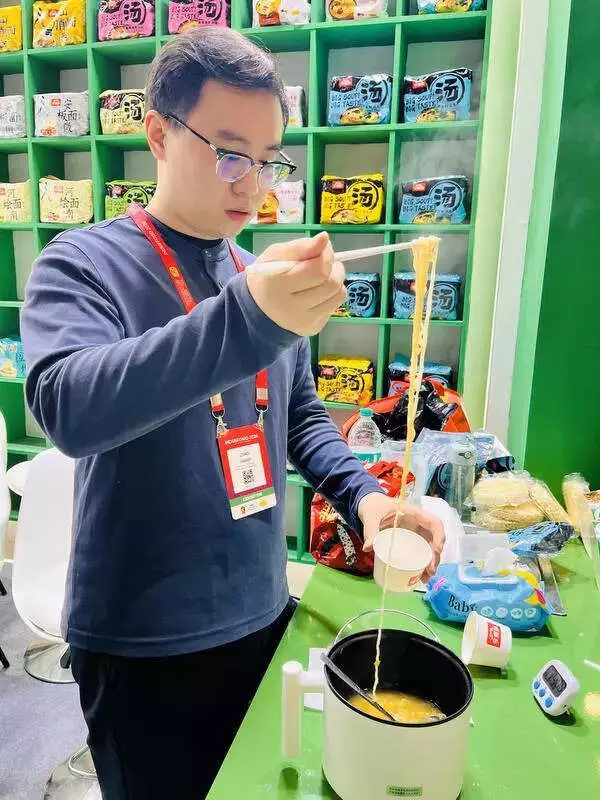
In a significant move against the backdrop of global trade challenges, Chinese food manufacturers are spearheading a fresh offensive to capture a share of India's vast consumer market. This push was prominently on display at the inaugural day of Indusfood 2026, the global trade exposition which commenced on Thursday in Greater Noida.
China's Customised Culinary Offensive
With 15 exhibitors, China registered the single largest national presence at the expo, presenting a diverse array of products specifically designed for Indian consumers. Moving beyond standard imports, companies are demonstrating a keen understanding of local preferences. The offerings range from canned mushrooms and chickpeas to instant noodles that capitalise on the growing Indian fondness for Korean-style ramen.
Several Chinese firms are actively promoting vegetarian, non-fried, and less spicy variants, signalling a strategic shift to adapt rather than simply export. A representative from ramen maker Jinmailang Food explained their strategy was born from observing the Korean ramen trend in India. "We are offering several varieties, including vegetarian options such as mock chicken, which tastes like chicken but is vegetarian," said Chris, a company representative.

A Global Feast for India
The Chinese contingent was not alone in its ambitions. The three-day event, organised by the Trade Promotion Council of India, attracted over 2,200 exhibitors from more than 30 nations. Food businesses from Iran, the Netherlands, Egypt, Palestine, Brazil, Azerbaijan, and Greece are also vying for a bite of the giant Indian food market.
Their pitches included everything from olives, pickles, and baklava to kunafa and sugarcane-based spirits. The Palestine stall featured a personal story, with fourth-generation confectioner Diab Mahroum presenting baklava under the family brand, which dates back to 1890. His interest in India grew after noting strong demand from Indian consumers in Dubai.
European and Latin American brands also drew attention. Greece's Danais SA showcased canned peaches and apricots, while Brazil's Expodireto Cotrijal promoted cachaça, a spirit made from fermented sugarcane juice. From Egypt, Zahrat El Wady displayed pickles and olives.
Government Vision and Industry Scope
The expo was inaugurated by Union Minister for Food Processing Industries, Chirag Paswan. Addressing the gathering, Paswan emphasised the role of such platforms in connecting India's production potential with international markets, building trust, and forging lasting partnerships.
"Now that we are a food surplus country, we all need to convert this volume into value," Paswan stated. He underscored the sector's strength and India's untapped potential to become the global food basket, stressing the need to channel resources effectively.
Mohit Singla, Chairman of the Trade Promotion Council of India, confirmed that China accounted for the biggest foreign presence at the fair. Beyond food, the Hong Kong pavilion featured stalls selling traditional Chinese medicine products, like herbal eye drops made from ginseng and safflower.
The event also saw the launch of the India-UAE Food Corridor, led by the Abu Dhabi Food Hub, aimed at enhancing food security and streamlining supply chains between the two nations. As Indusfood 2026 progresses, it underscores India's pivotal and growing role in the global food trade ecosystem.






