

A recent military confrontation between China and Japan has sent ripples beyond defense circles, raising significant concerns about the stability of global supply chains for rare earth metals, crucial for modern technology.
Military Escalation in the East China Sea
Over the past weekend, military tensions flared when Chinese J-15 fighter jets radar-locked onto Japanese F-15 aircraft. The incident occurred southeast of Japan’s Okinawa Prefecture, as reported by The Wall Street Journal. This aggressive maneuver came shortly after Japanese Prime Minister Sanae Takaichi stated that a potential Chinese attack on Taiwan would constitute a "survival-threatening situation" for Japan.
While such confrontations directly impact aerospace and defense sectors, the strategic implications for investors and global industry run much deeper. The friction between these two Asian powers threatens to reignite volatility in the market for rare earth elements, a domain where China holds commanding influence.

The Critical Role of Rare Earths
Rare earths are a group of 17 elements, including neodymium, cerium, lanthanum, and praseodymium. Though less famous than industrial metals like copper, analysts at UBS aptly describe them as the "spice" of manufacturing. These materials are indispensable for a vast array of modern technologies.
They are vital components in:
- Electric vehicle motors and batteries
- Smartphones and consumer electronics
- Advanced military hardware, including fighter jets
- Wind turbines and other green energy solutions
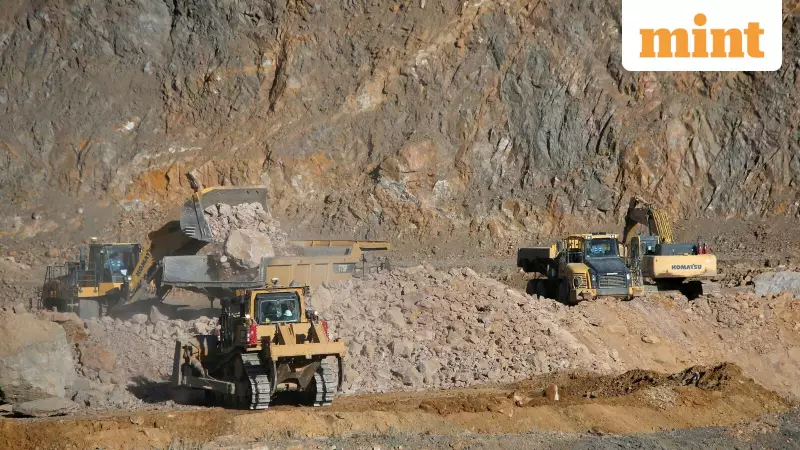
Global production has surged, with an estimated 390,000 metric tons of rare earth oxides mined in 2024, up dramatically from 110,000 tons a decade ago. However, China controls an estimated 85% of the world's rare earth processing capacity. This dominance has been used as a geopolitical tool in the past.
History Repeating? Geopolitics and Market Volatility
In 2010, during a previous dispute over the East China Sea, China temporarily suspended rare earth exports to Japan, causing major supply disruptions. Recent actions suggest a similar playbook. China has been tightening controls on export licenses for rare earth materials.
A brief respite came in late October 2025 when former U.S. President Donald Trump and China's President Xi Jinping negotiated a truce to ensure the continued flow of these critical materials. However, this is an American agreement, and Japan remains a top destination for Chinese rare earth exports due to its massive electronics manufacturing sector.
Any disruption in the China-Japan supply corridor would create immediate volatility, particularly for U.S. rare earth producers and their stocks. The market has already experienced a rollercoaster year. Shares of MP Materials, the largest rare earth miner in the Western Hemisphere, have swung from below $16 to over $100 in 2025.
The stock peaked in early October amid fears of Chinese export controls, before the Trump-Xi meeting. It entered the week of December 8th trading around $62, still representing a staggering 300% gain for the year. A key catalyst was a U.S. Defense Department agreement with MP to expand domestic production, featuring an equity stake, a price floor, and a guaranteed customer for its planned rare earth magnet capacity.
The Long Road to Supply Chain Independence
Recognizing the strategic vulnerability, the U.S. and its allies are actively working to break China's monopoly. Alongside the MP Materials deal, the U.S. government has announced rare earth cooperation agreements with allies like Australia and Japan. The goal is to build an alternative, resilient supply chain.
However, experts caution that achieving meaningful rare earth independence from China will take several years. In the interim, investors and industry leaders must navigate a landscape where mining progress is inextricably linked to high-stakes geopolitics. The radar lock over the East China Sea is a stark reminder that technological and economic security is now firmly tied to diplomatic and military posturing in the Indo-Pacific.






