

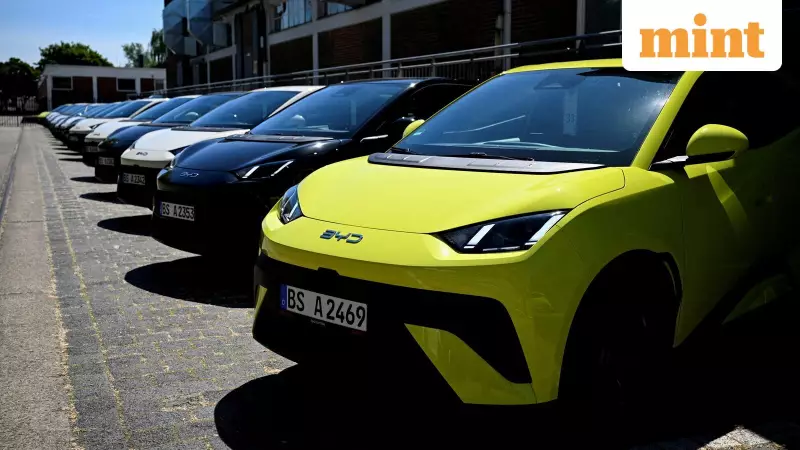
Facing a saturated domestic market and declining sales, Chinese automobile manufacturers are turning their gaze overseas with renewed vigor. However, industry analysts warn that if they export their aggressive domestic price-cutting strategies, they could trigger a backlash of rising trade barriers and destabilize foreign markets. The need for careful localization and market sensitivity has never been more critical for these expanding giants.
The Domestic Crunch: Why China is Pushing Exports
The world's largest car market is hitting a wall. Annual revenues in China are projected to decline by 3% to 5% in the coming year, marking the first drop since 2022. The post-pandemic economic recovery has been weaker than hoped, with consumers grappling with a real estate crisis and persistent job insecurity, particularly among the youth.
To stimulate demand, Beijing launched a substantial subsidy program in April 2024, akin to a "cash-for-clunkers" scheme. This initiative is believed to have driven the sale of over 16 million vehicles, about one-third of total sales. However, many cities exhausted their funds and halted the 300-billion-yuan ($43 billion) program early. Its future is uncertain, and any renewal would likely offer less generous terms. Compounding the pressure, a new 5% tax on electric vehicles (EVs) takes effect on January 1, setting the stage for a challenging sales year.

The Fallout of a Relentless Price War
The Chinese auto industry has been embroiled in a fierce price war for three years, eroding profitability across the entire supply chain, from carmakers to parts suppliers. In response, Chinese regulators recently proposed a crackdown on selling vehicles below cost. Yet, regulation alone cannot solve the core issue of excessive supply and insufficient demand.
This imbalance is forcing manufacturers to seek opportunities abroad, where the same vehicle can often command more than double the price. However, this export drive is meeting resistance. In October 2024, Russia—previously the top destination for Chinese car exports—raised import fees, severely impacting sales. Mexico has since taken the top spot, even after its government approved 50% tariffs last week, as low prices keep Chinese cars competitive.
Global Expansion and the BYD Blueprint
BYD, the world's largest EV maker, is leading the export charge. In the first eleven months of this year, its overseas sales soared to over 900,000 units, a staggering 150% increase year-on-year. At this pace, BYD will soon dethrone Chery, which has been China's top exporter since 2003 and posted a modest 15% gain.
For BYD, higher-margin international sales are crucial for reviving profit growth, which has faltered in recent quarters due to declining domestic deliveries and Beijing's scrutiny of its aggressive discounting and supplier payment practices. The company's share price has fallen sharply since its May peak.
A clear signal of its global ambitions came in October, when BYD revealed a massive jump in long-term borrowing to 61 billion yuan from 5.5 billion yuan the previous quarter. This capital is fueling a worldwide manufacturing footprint, with factories scaling up in Hungary, Indonesia, and Turkey. The company also recently inaugurated a $1 billion facility in Brazil's Bahia state, its largest outside China.
Other Chinese automakers are following suit. Chery, with an existing European base in Spain, is reportedly considering production in Germany and additional UK facilities. EV startup Zhejiang Leapmotor, in partnership with Stellantis, aims to sell 50,000 vehicles abroad this year and double that figure in 2026.
Localization: The Key to Long-Term Success
Establishing local production is the strategic path to avoiding tariffs and building lasting brand equity in new markets. Yet, as expansion accelerates, the industry must heed the cautionary tale of destructive price wars. Markets like Thailand are already witnessing concerning patterns of steep discounts, prompting suggestions that local authorities should emulate Beijing's regulatory moves to curb unreasonable competition.

While the influx of Chinese automakers brings new investment and jobs to host countries, regulators must remain vigilant. The pressures driving these companies could lead to a repeat of profit-crushing behaviors that ultimately harm the entire automotive ecosystem. For emerging markets like India, this unfolding global scenario offers critical lessons in safeguarding domestic industry while navigating the opportunities and risks presented by deep-pocketed international players.





