

Chinese Auto Glass Giant Fuyao's Ohio Plant Threatens US Rivals, Sparks Security Fears
A Chinese automotive glass factory in Ohio, initially hailed as a Rust Belt revival project, is now threatening the survival of a long-standing American competitor and raising alarms in Washington about national security and unfair trade practices.
The Ohio Showdown: Fuyao vs. Vitro
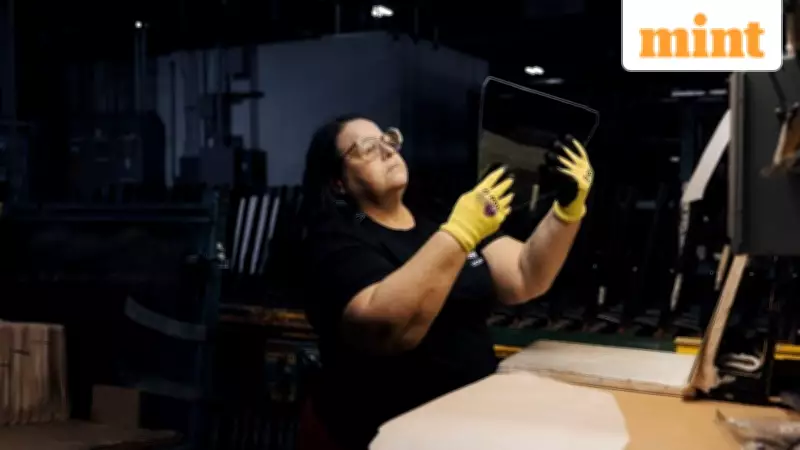
In Moraine, Ohio, the Fuyao Glass America plant—a Chinese glassmaking giant that took over a closed General Motors factory a decade ago with support from Ohio taxpayers—is now threatening approximately 250 jobs at the Vitro automotive glass factory in Crestline, Ohio. Vitro's plant has operated since the 1950s.
Carlos Bernal, Vitro's head of automotive glass, revealed the company spent the past year considering whether to shut down the Crestline facility. Although Vitro recently announced it would continue operating after previously planning a 2026 closure, the plant's long-term future remains uncertain.

Since 2019, Vitro has already shut three auto-glass plants in Pennsylvania, Michigan, and Indiana—decisions the company attributes largely to Chinese competition. "The entry of Chinese firms into the U.S. auto industry not only threatens the safety and security of domestic supply chains," Bernal said, "but jeopardizes entire communities that rely on American manufacturing jobs."
Allegations of Unfair Practices and Federal Investigation
American competitors claim they cannot match Fuyao's lower prices and allege the Chinese company employs unfair business and labor practices. These concerns reached Washington after federal authorities conducted a raid on the Fuyao plant in 2024.
According to a civil forfeiture complaint filed by federal authorities last year, the U.S. alleges that Chinese business owners formed dozens of commercial enterprises in Ohio to "facilitate the harboring, transportation, and employment of illegal aliens at various factories," including Fuyao. The complaint alleges Fuyao funneled $126 million to companies involved in this scheme. No criminal charges have been filed.
Fuyao denies any wrongdoing. Company spokeswoman Stella Zhang attributes Fuyao's success to "production prowess and economies of scale" that have made China the world's leading manufacturer. Zhang stated all Fuyao employees are authorized to work in the U.S. and emphasized the investigation targeted suppliers, not Fuyao directly.
National Security Concerns and Political Response
Vitro and its Washington allies argue Fuyao's success reflects how Beijing might try to hollow out American manufacturing capacity and undermine critical industries. They claim Chinese companies can evade tariffs by moving production to the U.S., then use low prices to undercut American manufacturers—a practice known as internal dumping.
"It's a really dirty game," said Elaine Dezenski, head of the Center on Economic and Financial Power at the Foundation for Defense of Democracies, a think tank critical of China.
Fuyao's success has triggered national-security concerns in Congress and federal agencies, primarily focused on China potentially disrupting the American automotive sector and other crucial industries if it gains significant market share at the expense of U.S. factories.
Nazak Nikaktar, a former Commerce Department official in Trump's first term who oversaw efforts to confront China, stated: "The Chinese government is systematically weakening our economy from within our own borders." The Chinese embassy in Washington rejected this claim.
Workers' Perspectives and Economic Impact
At the Vitro factory in Crestline, workers express fear and frustration. Chandra Jarvis, a 13-year employee and single mother, said union wages helped support her daughter through nursing school and her son through high school. "There are families with young kids that they need to provide for," Jarvis said, noting jobs would be "ripped away" if the plant closes.

Rich Parron, plant manager at the Crestline facility, reported: "We've seen our volume drop by 50% in the last seven years." Despite installing new equipment and reducing employees to improve efficiency, Vitro still cannot match Fuyao's prices. A person familiar with recent automaker deals said Fuyao prices generally run about 10% less than competitors.
Broader Implications and Policy Discussions
Similar complaints are emerging in other industries. U.S.-based copper companies have told the White House and Commerce Department they fear being undercut by Chinese firms building processing facilities stateside.
The Trump administration is discussing ways to regulate Chinese firms in the U.S. on national-security grounds. Strategies under consideration include closer evaluation of foreign investments in protected industries like automotive, copper, steel, aluminum, and critical minerals.
However, President Trump has sent mixed signals. While using tariffs to protect the automotive sector, he stated at a January Detroit Economic Club meeting: "If they want to come in and build a plant and hire you and hire your friends and your neighbors, that's great, I love that. Let China come in."
Trump is expected to meet with Chinese leader Xi Jinping in April, which could influence any new restrictions on Chinese investment.
Legal and Immigration Dimensions
The July 2024 raid on Fuyao involved agents from Immigration and Customs Enforcement, FBI, IRS, Border Patrol, and state and local police. The federal complaint alleges Fuyao and affiliates created a pipeline to import workers for the auto-glass industry, providing housing and transportation.
Some employees told law enforcement they were trafficked across the U.S.-Mexico border, according to the complaint. While nearly all Fuyao employees had documentation showing legal work permission, many employees from Fuyao suppliers named in the investigation didn't show up for work on raid day, and none had legal permission to work in the U.S., the complaint alleged.
Fuyao received 33 H-1B visas in fiscal year 2025 for its Ohio facilities—about 1% of its local workforce, government records show.
Political Reactions and Legislative Action
Sen. Bernie Moreno (R., Ohio) wants to see the Fuyao plant under new ownership. Rep. Hal Rogers (R., Ky.) inserted language in a government funding bill directing the Justice Department to detail efforts to combat alleged human trafficking in the auto-glass industry involving any company with ties to the Chinese Communist Party.
Bryce Burchett, UAW union chair at the Crestline Vitro factory, summarized the competitive challenge: "If we had everything they had, then we would be able to match them on price. But right now, we can't."
As Chinese investment in the U.S. declines overall, the Fuyao case illustrates the complex trade-offs between attracting foreign investment and protecting domestic industries—a dilemma that continues to challenge policymakers and affect American workers.





