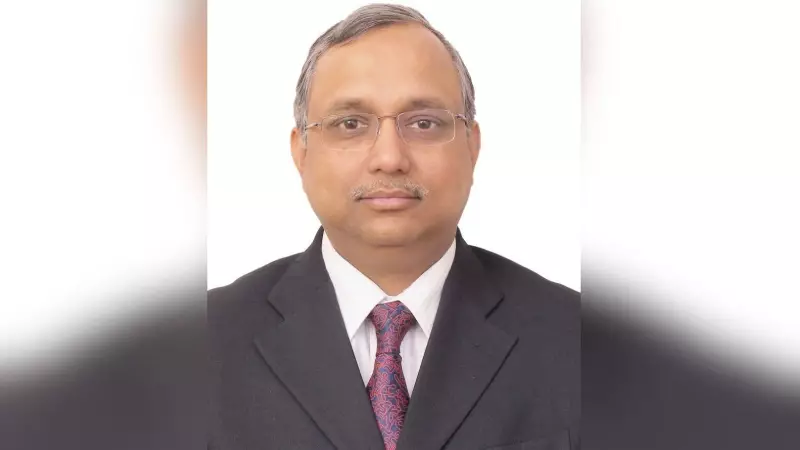
India's pursuit of a free trade agreement (FTA) with the United States, while strategically important, will not be enough on its own to guarantee the nation's long-term trade and export expansion, according to a top industry leader. Chandrajit Banerjee, Director General of the Confederation of Indian Industry (CII), emphasized the need for a more comprehensive approach, combining multiple international deals with robust domestic competitiveness measures.
Macroeconomic Resilience and the Road Ahead
In an exclusive interview, Banerjee provided an optimistic assessment of India's economic fundamentals. He pointed to real GDP growth exceeding 8% in the first half of the current fiscal year, resilient services exports, and a recovery in rural demand as key strengths. The CII-Business Confidence Index also rose to 66.5 in the third quarter, marking its highest level in five quarters.
"At CII, we expect GDP growth in the range of 7.3-7.5% in the current fiscal year, higher than our earlier assessment," Banerjee stated. He attributed this momentum to broad-based growth, where public capital expenditure is effectively stimulating private investment. Looking ahead to 2026, he anticipates growth to remain in a similar range, supported by strong domestic drivers, with inflation likely to stay anchored below the Reserve Bank of India's 4% target.

A Multi-Pronged Trade Strategy for 2026
While acknowledging the value of a potential trade pact with the US—one of India's largest export markets—Banerjee argued for a wider strategic push. "From an industry standpoint, a US deal alone will not be sufficient to secure India’s long-term trade and export growth," he clarified.
The industry body hopes that 2026 will see a dual focus: the early conclusion of other critical negotiations, notably with the European Union, and the effective implementation of already-signed agreements with the UK, New Zealand, and Oman. The goal is to ensure tangible benefits for exporters, especially Micro, Small, and Medium Enterprises (MSMEs).
Banerjee also stressed that bolstering domestic competitiveness is equally crucial. This includes advancing logistics reforms, easing access to export finance, speeding up regulatory clearances, and helping Indian businesses comply with evolving global sustainability and quality standards.
Private Investment Gains Momentum Amid Reforms
Addressing concerns about sluggish private capital expenditure, the CII chief presented data indicating a positive shift. An analysis of around 1,600 non-financial firms shows that corporate capex rose to approximately Rs 12.1 lakh crore in FY25, up from Rs 8.1 lakh crore in FY24, implying a healthy 14% compound annual growth rate since the pre-pandemic period.
"This points to firms increasingly committing capital to productive assets rather than merely accumulating cash," Banerjee noted. He added that while overall manufacturing capacity utilisation is in the mid-70% range, sectors like cement, select steel categories, and digital infrastructure are operating at tighter levels, signaling the onset of a new investment cycle.
On the reform front, Banerjee praised recent government moves on GST 2.0 and labour codes. For sustained growth, he recommended prioritizing a strengthened National Infrastructure Pipeline with a target investment of Rs 150 lakh crores, establishing Centres of Advanced Learning in frontier technologies like AI and quantum computing, and forming a new expert committee to guide next-generation banking sector reforms.
Export Resilience and Foreign Investment Context
Commenting on volatile merchandise export data, Banerjee advised looking beyond monthly fluctuations. He acknowledged headwinds from higher US tariffs and slowing global growth but highlighted underlying resilience. India has successfully diversified its export destinations, increasing its footprint in markets like the UAE, China, Vietnam, and Thailand, while services exports continue to act as a stabilizer.

Regarding concerns over weak foreign direct investment (FDI) inflows, Banerjee urged a nuanced view. He explained that the gap between gross and net FDI often reflects a maturing market with increased repatriation and outward investments, not a loss of confidence. The policy focus, he argued, should be on enhancing medium-term attractiveness through greater policy predictability, faster project execution, and robust public-private partnership frameworks.
Finally, on the soon-to-be-operational National Manufacturing Mission, Banerjee outlined key priorities: embedding advanced manufacturing at its core, adopting a cluster-based development strategy, building a future-ready workforce, and deeply integrating MSMEs into global value chains to drive inclusive and competitive growth.