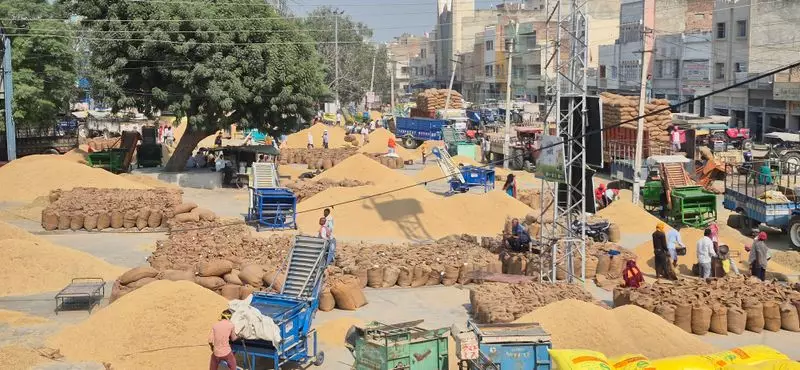
Haryana's bustling agricultural markets, known as mandis, are witnessing an unprecedented and puzzling trend. They are being flooded with substantial quantities of wheat and other crops not grown by local farmers, but sourced from neighboring states like Punjab, Rajasthan, and Uttar Pradesh. This massive influx is creating a significant glut, leading to a sharp decline in market prices and raising serious concerns among Haryana's farming community.
The Core Reasons Behind the Cross-Border Crop Flow
This unusual movement of grain into Haryana is not a random occurrence but is driven by specific economic and policy factors. The primary magnet is the higher Minimum Support Price (MSP) offered by the Haryana government compared to its neighbors. For instance, Haryana provides an MSP of Rs 2,275 per quintal for wheat, while Punjab offers Rs 2,250 per quintal. This seemingly small difference of Rs 25 per quintal becomes a powerful incentive when dealing with large volumes, encouraging traders and farmers from other states to bring their produce to Haryana's markets.
Another critical factor is the lower market fee or mandi tax structure in Haryana. The state charges a 2% market fee, whereas Punjab imposes a combined 6.5% fee (including 3% market fee and 3% rural development fee). This substantial difference in transaction costs makes selling in Haryana mandis more financially attractive for sellers from Punjab, even after accounting for transportation expenses. The streamlined procurement process and efficient payment systems in Haryana further add to the appeal.

Impact on Local Farmers and Market Dynamics
The consequences of this cross-border influx are directly felt by Haryana's own agriculturists. The sudden surge in supply has led to a market price crash, with wheat selling for Rs 100-150 per quintal below the official MSP in some mandis. This undermines the very purpose of the price support mechanism for local farmers. Their produce faces stiff competition, and the rapid filling of procurement targets by state agencies with 'outside' grain raises fears that their own crops might not be purchased at the guaranteed price.
This situation has sparked protests and demands for action. Farmer unions, led by groups like the Bharatiya Kisan Union (Charuni), are urging the state government to intervene. They argue that the Haryana State Agricultural Marketing Board must enforce rules that prioritize local produce. Their key demand is for a verification system, such as the 'Fasal Doshikaran' (crop registration) documents, to prove the origin of the crop and ensure that procurement benefits primarily reach Haryana's farmers for whom the MSP system is designed.
Policy Dilemma and Potential Solutions
The state government faces a complex policy challenge. On one hand, it must protect its farmers from price depression and ensure they benefit from state-run procurement. On the other hand, overly restrictive measures could disrupt the integrated national agricultural market and invite legal challenges. The Agriculture Produce Marketing Committee (APMC) Act allows for the sale of produce from anywhere in the country in any mandi, making outright bans difficult.
Potential solutions being debated include stricter enforcement of existing rules regarding trader licenses and crop documentation. There are also calls for greater coordination between states to harmonize market fees and reduce the arbitrage opportunity. Ultimately, resolving this issue requires a balance between safeguarding local farmer interests and maintaining the fluidity of interstate agricultural trade, a dilemma at the heart of India's farm economy.
The ongoing situation in Haryana's mandis highlights the intricate and often unintended consequences of state-level agricultural policies in a connected national market. It underscores the need for a more cohesive national approach to market fees and procurement to prevent such disruptive cross-border flows that end up hurting the very farmers state policies aim to protect.