

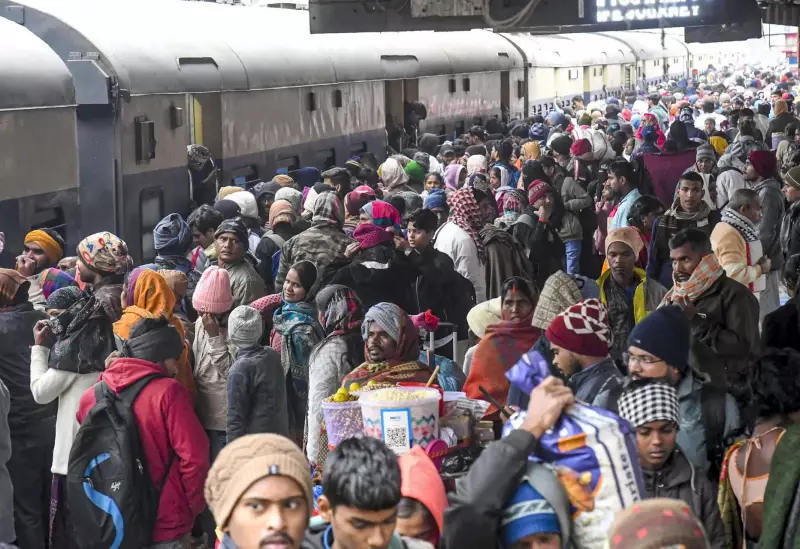
Rail traffic on the crucial Delhi-Patna corridor descended into chaos on Monday, as thick fog and adverse weather conditions brought operations to a near standstill. The severe disruption caused massive delays for almost all Bihar-bound trains originating from the national capital, leaving thousands of passengers stranded and frustrated.
Major Trains Hit with Extreme Delays
According to information from the Danapur control room, the premier New Delhi–Rajendra Nagar Terminal Tejas Rajdhani Express was the worst-hit service. The train finally reached its destination after a staggering delay of nearly 16 hours. Not far behind was the New Delhi-Rajendra Nagar Terminal Sampoorna Kranti Express, which arrived at Patna a massive 15 hours late on Monday.
Widespread Disruption Across Key Routes
The disruption was concentrated on the Kanpur-Prayagraj-Deen Dayal Upadhyaya (DDU)-Patna mainline route, a critical artery for north Indian rail traffic. The inclement weather did not spare other long-distance mail and express trains either.

The ripple effects were felt across the schedule:
- The New Delhi-Rajgir Express was delayed by approximately 3 hours.
- The New Delhi-Islampur Express reached its destination 10 hours and 59 minutes behind its scheduled time.
- The Anand Vihar-Bhagalpur Express was running late by 4 hours and 57 minutes upon reaching Patna.
Passenger Inconvenience and Operational Challenges
The cascading delays caused widespread inconvenience to passengers, many of whom were left waiting at stations for hours without clear information. The situation highlighted the vulnerability of rail operations to severe fog during the winter months in northern India. Railway authorities faced significant challenges in managing traffic and communicating revised schedules to the affected travelers.
This incident underscores the recurring impact of seasonal weather on India's railway network, particularly on high-density routes connecting Delhi with eastern states like Bihar. It calls attention to the need for robust fog-proofing measures and improved contingency planning to minimize passenger hardship during such widespread disruptions.






