

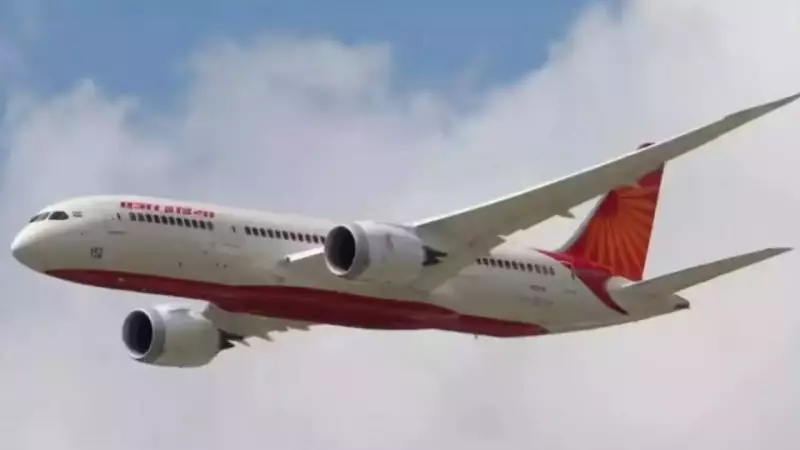
The Directorate General of Civil Aviation (DGCA) has issued a directive to Air India, mandating a thorough reinspection of the ram air turbine (RAT) systems on specific aircraft. This action comes in the wake of an uncommanded RAT deployment incident involving an Air India Boeing 787 last week.
What Triggered the Safety Directive?
The regulator's order was prompted by a specific event on October 4, 2025. An Air India Boeing 787-8, registered as VT-ANO, experienced an uncommanded deployment of its ram air turbine just before landing in Birmingham, UK. The incident occurred when the aircraft was at an altitude of approximately 400 feet.
During the landing phase, an RAT unlock message appeared, and the turbine deployed automatically. Fortunately, the pilots did not report any other related abnormalities, and the aircraft landed safely at its destination. Following Boeing's recommended maintenance procedures, the aircraft was inspected, released for service, and flown back to Delhi on October 5.

Scope of the DGCA's Investigation and Orders
The primary focus of the DGCA's investigation is to determine if there is any link between recently replaced power conditioning modules (PCM) and the unintended RAT deployment. The PCM is a critical component that supplies power to other modules supporting various aircraft systems.
Consequently, the aviation authority has instructed Air India to reinspect the RAT for storage on all aircraft where the PCM was replaced in the recent past. This precautionary measure aims to identify and mitigate any potential systemic issue. Furthermore, Air India has been advised to conduct a comprehensive review of its major maintenance procedures.
Global Scrutiny and Boeing's Role
The DGCA has also escalated the matter to the aircraft manufacturer, Boeing. The US aerospace giant has been formally requested to submit a detailed and comprehensive report. This report must outline several key points:
- Preventive measures to be implemented to avoid future uncommanded RAT deployments.
- Detailed information on similar uncommanded RAT deployment incidents that have occurred globally on the Boeing 787 series aircraft.
- Any service difficulty reports received from aircraft operators worldwide following a PCM module change.
A senior DGCA official confirmed that further investigation is currently in progress. The ram air turbine is a vital safety device designed to deploy automatically, providing emergency power and hydraulic pressure in the event of a complete electrical, hydraulic, or twin-engine failure. Its uncommanded operation, while not causing an accident in this instance, is treated with utmost seriousness by safety regulators.






