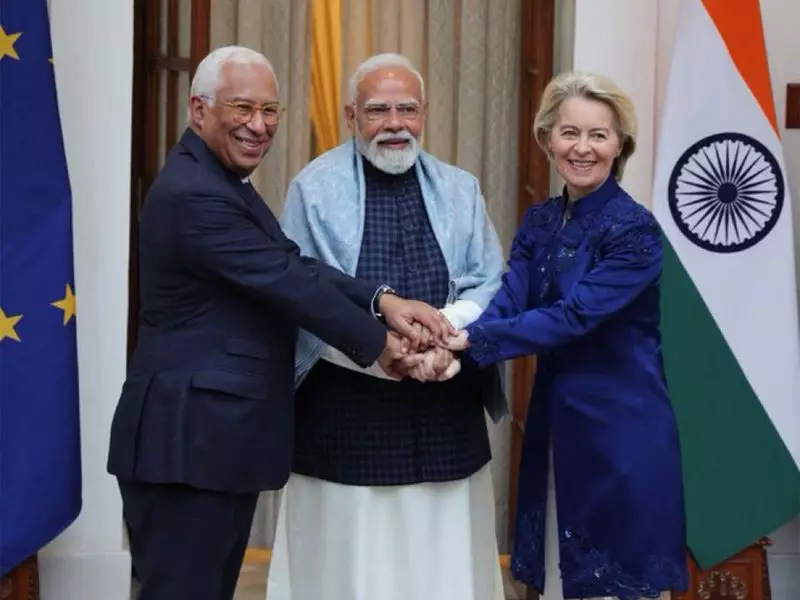
A recent analysis by Kotak Institutional Equities underscores the European Union-India Free Trade Agreement (FTA) as a pivotal development for India's economy, particularly benefiting labor-intensive export sectors. The report, which delves into the implications of this trade pact, suggests that it could serve as a substantial catalyst for growth in industries reliant on manual labor, thereby strengthening India's position in global markets.
Key Insights from the Kotak Report
The Kotak report emphasizes that the EU-India FTA is poised to be a game-changer for India's export landscape. By reducing tariffs and non-tariff barriers, the agreement is expected to enhance the competitiveness of Indian goods in the European market. This is especially crucial for labor-intensive sectors such as textiles, leather, and handicrafts, which have historically faced challenges in accessing developed economies due to high trade costs.
Impact on Labor-Intensive Industries
Labor-intensive industries in India, which employ a significant portion of the workforce, stand to gain immensely from this FTA. The report points out that these sectors often struggle with low profit margins and intense international competition. With the EU being one of the world's largest import markets, improved market access could lead to increased export volumes, higher revenues, and potentially more job creation within these industries.

Moreover, the Kotak analysis highlights that the FTA might encourage technological upgrades and quality improvements in production processes. As Indian exporters aim to meet EU standards, this could drive innovation and efficiency, further boosting their global appeal. The report also notes that such agreements often spur domestic reforms, aligning policies with international best practices.
Broader Economic Implications
Beyond the immediate benefits for export sectors, the EU-India FTA is seen as a strategic move to deepen economic ties between the two regions. The Kotak report suggests that this could attract foreign investment into India's manufacturing and export-oriented industries, leveraging the country's cost advantages and skilled labor force. Over time, this might contribute to a more diversified and resilient economy.
However, the report cautions that realizing these gains will require proactive measures from Indian businesses and policymakers. Addressing infrastructure bottlenecks, streamlining regulatory processes, and investing in workforce training are cited as essential steps to maximize the FTA's potential. The analysis concludes that with the right strategies, the EU-India FTA could mark a significant milestone in India's trade history, fostering sustainable growth and development.