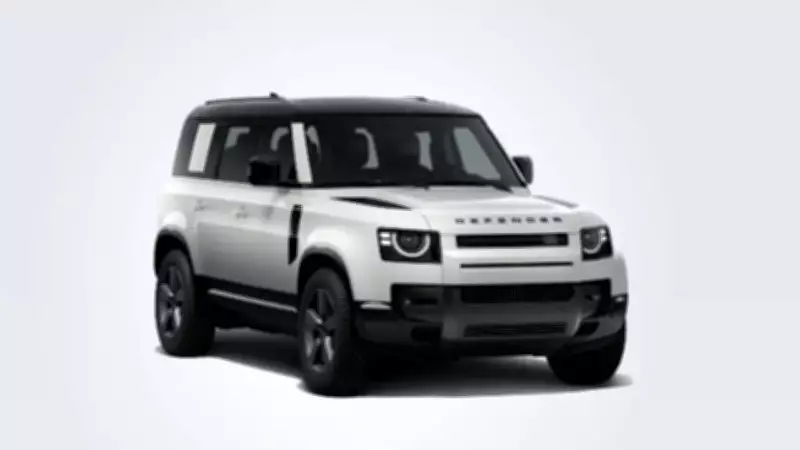
India-EU Free Trade Agreement Sparks Hope for Land Rover Defender Price Reductions
The recently finalized India–European Union Free Trade Agreement has ignited significant speculation about potential price reductions for imported luxury vehicles in the Indian market, with particular focus on models like the Land Rover Defender. This development follows similar expectations that emerged last year when the India-United Kingdom FTA was signed, though those hopes did not materialize for the Defender. Understanding the distinct outcomes between these two trade pacts requires examining the vehicle's manufacturing origins.
Why the UK FTA Failed to Lower Defender Prices While the EU Deal Might Succeed
The crucial distinction lies in where the Land Rover Defender is actually assembled. Contrary to what some might assume, the Defender is not manufactured in the United Kingdom. Instead, it is produced at Jaguar Land Rover's facility located in Nitra, Slovakia. Since Slovakia has been a full member of the European Union since 2004, the Defender qualifies as an EU-made vehicle. Consequently, it did not benefit from the duty concessions under the India–UK FTA, which specifically applied to UK-origin goods. However, under the newly signed India–EU FTA, the Defender becomes eligible for potential tariff reductions.
Proposed Duty Reductions and Their Gradual Implementation
Under the proposed frameworks of the India-EU trade agreement, import duties on vehicles manufactured within the European Union could see a substantial decrease. Currently, these duties stand at approximately 110 percent. The new agreement envisions a phased reduction to a range of roughly 10 to 40 percent. It is important to note that these reductions will be implemented gradually over time. Final details regarding the implementation schedule are still pending, and the benefits will be subject to annual quotas, potentially capped at up to 2.5 lakh units per year.

Financial Implications for Indian Consumers
To illustrate the potential impact, consider the current pricing structure of the Defender 110. The base cost of this model is around Rs 35 lakh before the application of import duties and taxes. If the import duty is reduced to 40 percent under the new agreement, the landed cost including Goods and Services Tax could approximate Rs 70 lakh. For context, luxury cars in India are now taxed at a flat GST rate of 40 percent, following the removal of the compensation cess. This replaces the previous structure of 28 percent GST plus an additional cess of up to 22 percent.
Looking further ahead, if import duties eventually drop to the lower end of the spectrum at 10 percent, the price could decrease to around Rs 55 lakh. However, it is worth considering that by the time such significant duty reductions are fully realized, local assembly of the Defender in India might already be underway. This domestic production would effectively bypass the Completely Built Unit import taxes altogether, offering an alternative pathway to more affordable pricing.
Future Prospects: Local Assembly and Strategic Considerations
Jaguar Land Rover has previously indicated plans to initiate local assembly of the Defender in India. Although no specific timeline has been officially announced, this move is anticipated to lower prices by approximately 20 percent once implemented. Therefore, the key factor to observe will be how the company strategically balances its allocation, manufacturing plans, and overall pricing approach in the coming years. The interplay between phased import duty reductions under the India-EU FTA and the potential for localized production will shape the final cost structure for Indian consumers.
In summary, the India-EU Free Trade Agreement presents a tangible opportunity for price reductions on the Land Rover Defender, thanks to its Slovakian production base. This contrasts sharply with the India-UK FTA, which offered no such benefits. As details of the agreement are finalized and implementation progresses, automotive enthusiasts and potential buyers will closely monitor how these trade dynamics translate into actual savings at the dealership.