

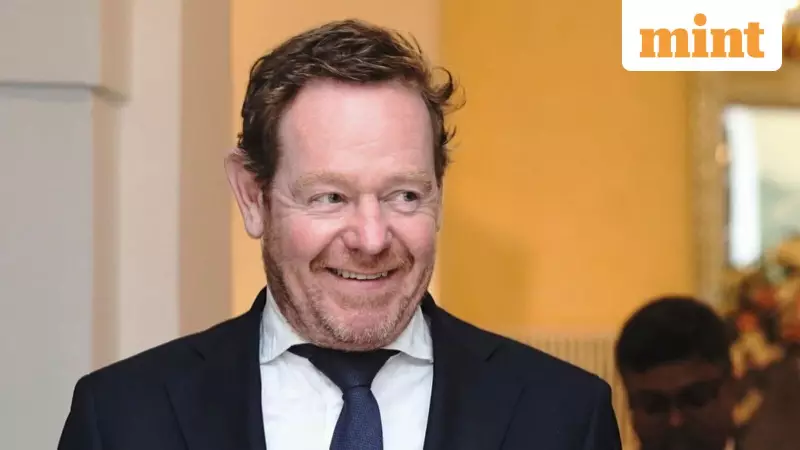
Negotiations for a landmark free-trade agreement (FTA) between India and the European Union (EU) have entered their conclusive phase and are expected to be wrapped up shortly, according to a senior European diplomat. The visiting Dutch Foreign Affairs Minister, David Van Weel, stated on Friday that no significant obstacles remain to finalize the pact.
Final Push for a Strategic Trade Deal
Speaking to the press in New Delhi at the end of his three-day maiden visit to India, Minister Van Weel expressed optimism about the ongoing talks. He revealed that the EU-India FTA was a key topic in his discussions with Indian ministers, including Defence Minister Rajnath Singh, External Affairs Minister S. Jaishankar, and National Security Adviser Ajit Doval.
"The EU-India free trade agreement is in the final stages of negotiation," Van Weel said. "I think from both sides... we have hoped that these negotiations will come to a fruitful conclusion in the short term." He emphasized that the broader goal is to elevate the partnership to a more strategic level.

However, he tempered expectations by noting that trade negotiations are inherently complex and often go down to the wire. "These are always very complicated negotiations that always carry on until the last moment," he cautioned, while adding that he was not aware of any major sticking points that could derail a conclusion.
Context of High-Stakes Trade and Recent Disputes
These comments follow a crucial visit by an EU negotiating team to New Delhi from December 3 to 9. The visit included review meetings between India’s Commerce Secretary and the EU’s Director-General for Trade on December 7, followed by ministerial-level talks on December 8-9 to provide strategic direction.
The push for an FTA gains immense importance as bilateral trade between India and the EU reached approximately $136.5 billion in the 2024-25 financial year, solidifying the bloc's position as one of India's largest trading partners. During this period, India's exports to the EU stood at about $75.8 billion, while imports were valued at $60.7 billion.
The negotiations, however, are not without underlying tensions. Earlier in December, India approached the World Trade Organization (WTO) seeking consultations with the EU after the bloc proposed tariffs and quotas on imports of ferro-alloys. India, which has a substantial trade interest in these products, invoked safeguard provisions, highlighting trade challenges even as the two sides work on the broader agreement.
Broadening the India-Netherlands Partnership
Beyond the EU-FTA, Van Weel's visit focused on deepening bilateral ties with India. The two nations signed a letter of intent on defence cooperation, creating a framework to enhance security collaboration. They also discussed expanding partnerships in critical and new-age domains.
An official statement from India's Ministry of External Affairs (MEA) noted that both sides are keen to collaborate in semiconductors, artificial intelligence, digital technologies, renewable energy, green hydrogen, and maritime development. A Memorandum of Understanding (MoU) was welcomed for the National Maritime Heritage Complex at Lothal, Gujarat.
During his trip, the Dutch minister also visited the Western Naval Command and Mazagon Docks in Mumbai, and engaged with the business community there.
Discussions on Global Issues
The ministers also exchanged views on pressing global and regional matters, including developments in the Indo-Pacific, Ukraine, South Asia, and West Asia. On the Russia-Ukraine war, Van Weel described it as an "existential security issue" for the Netherlands and the EU, stressing that Ukraine cannot lose the war. He expressed hope for a durable peace and mentioned that he encouraged Indian counterparts to use their channels with Russia to promote dialogue.
Furthermore, the Dutch minister conveyed condolences for the recent terror incident in Delhi. Both sides condemned terrorism in all its forms and underscored the need for strengthened international cooperation to combat it comprehensively.






