India-EU Free Trade Agreement Offers Hope to Leather Sector Amid US Market Challenges
With leather products and non-leather footwear exports to the United States facing significant pressure, the recently implemented India–European Union trade agreement is poised to become a crucial savior for exporters in this vital sector. Industry experts confirm that this strategic partnership arrives at a critical juncture for India's leather industry, which has been grappling with declining American demand.
Export Patterns Show EU Dominance Amid US Decline
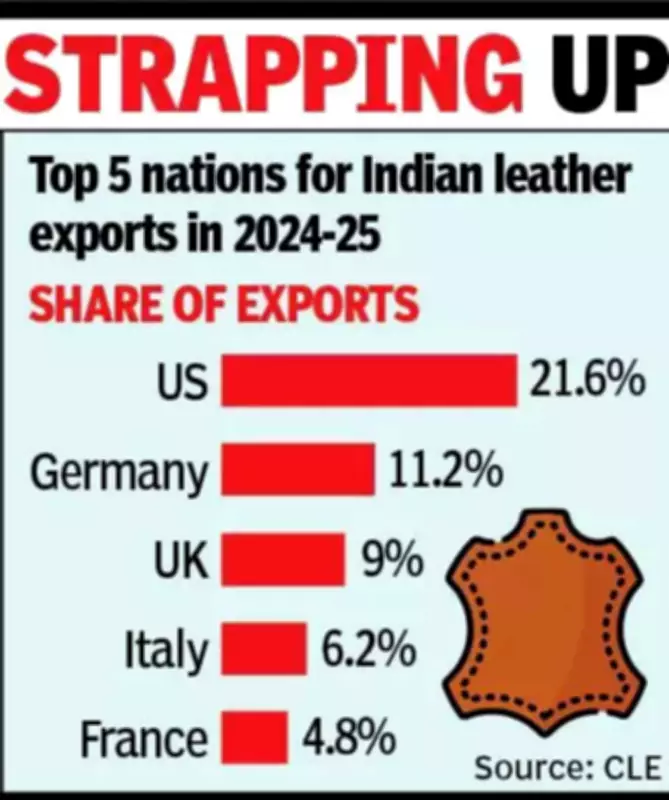
The European Union currently stands as the largest destination for Indian leather products, accounting for an impressive 46% of total exports. This is followed by the United States, which represents approximately one-fifth (22%) of India's leather export market. However, recent data reveals concerning trends in the American market, with leather exports to the US declining during FY26 following the implementation of Trump-era tariffs.
According to statistics shared by the Council for Leather Exports (CLE), which operates under the commerce and industry ministry, leather products and non-leather footwear exports grew by a mere one percent to reach $3.2 billion during the April–November period of the current fiscal year (FY26) compared to the same timeframe last year (FY25). More troubling is the month-on-month data showing exports to the United States further reduced by 2%–3% in December 2025 compared to November 2025.

Trade Agreement Eliminates Tariffs and Boosts Competitiveness
R Selvam, executive director of the Council for Leather Exports, emphasized how the free trade agreement between India and the European Union has emerged as a significant booster for the industry. "This development will facilitate more international brands establishing their manufacturing operations in India with a specific focus on the expansive EU market comprising 27 countries," Selvam explained.
He further noted that while the FTA provides India with a competitive edge over other leather-producing nations such as Vietnam and Indonesia, it also enables access to advanced technology that can enhance production capabilities. "This comprehensive advantage will help us realize our ambitious export target of $14 billion by 2030," Selvam told TOI. Importantly, the trade agreement eliminates existing tariffs ranging from 8% to 17% on various leather products exported to European countries.
Industry Leaders Express Optimism About EU Market Potential
K R Vijayan, managing director of Good Leather Company with operations in Ranipet district's leather manufacturing hub, provided additional context about current market dynamics. He revealed that despite challenges, the overall global export value in the leather segment did not decline this financial year because Indian exporters increased their export volume to the United States by 10% over the past nine months (April–December FY26 versus April–December FY25), albeit while compromising on profit margins.
"This strategic sacrifice makes the trade agreement with the European Union particularly significant," Vijayan stated. "It will effectively compensate for our losses in the American market over the coming years, providing much-needed stability and growth opportunities."
Projected Growth and Industry Events Signal Positive Momentum
Ateequr Rahman, chairman of The Indian Finished Leather Manufacturers and Exporters Association (IFLMEA), projected substantial growth in European exports, anticipating they will increase to 60% of India's total leather exports over the next three years. This optimistic forecast reflects growing confidence in the EU market's potential to absorb redirected export capacity.
Demonstrating this renewed industry momentum, IFLMEA is organizing its Leather Fashion Show on February 1 in Chennai. This event will prominently showcase India's expanding leather goods industry while fostering critical partnerships between manufacturers and retailers across the nation. Such initiatives highlight how the sector is proactively adapting to changing global trade dynamics and leveraging new opportunities presented by the India-EU trade agreement.