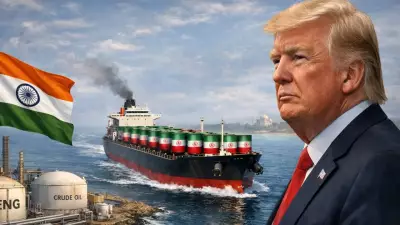
India must strategically utilize its growing geopolitical influence to secure reliable and affordable energy supplies for its rapidly expanding economy, leading energy experts emphasized during a recent high-level discussion. The country's position as a major global power provides unique opportunities to navigate the complex international energy landscape.
Strategic Partnerships and Energy Diplomacy
Experts participating in the 'Energy Security: Roadmap for India' discussion organized by the Center for Research in Rural and Industrial Development highlighted that India's strategic position in global politics offers significant advantages in energy negotiations. The country has successfully diversified its crude oil imports, reducing dependency on any single region while maintaining strong relationships with multiple energy-producing nations.
Former petroleum secretary Sudhir Bhargava stressed that India must leverage its strategic partnerships to ensure stable energy supplies. "Our diplomatic relationships with countries across the Middle East, Russia, Africa, and the Americas provide us with multiple options when it comes to energy procurement," he explained during the virtual discussion.

Diversification and Renewable Transition
The experts unanimously agreed that diversification remains crucial for India's energy security. While oil and gas continue to play vital roles in the energy mix, the country is simultaneously accelerating its transition toward renewable sources. This dual approach helps mitigate risks associated with price volatility and supply disruptions in global energy markets.
Professor Naresh Kumar Sharma from the Department of Geography at Panjab University highlighted that India has made significant progress in renewable energy capacity, particularly in solar and wind power. "Our renewable energy targets are among the most ambitious globally, and achieving them will substantially reduce our dependence on imported fossil fuels," he noted.
Infrastructure Development and Strategic Reserves
The discussion also focused on the importance of expanding India's strategic petroleum reserves and enhancing energy infrastructure. Currently, India maintains strategic petroleum reserves at three locations with a total capacity of 5.33 million metric tonnes, which can meet approximately 9.5 days of the country's crude oil requirements.
Energy economist Dr. Anoop Singh emphasized that increasing storage capacity and improving distribution networks are essential components of energy security. "We need to not only increase our strategic reserves but also ensure that we have robust infrastructure to distribute energy efficiently across the country," he stated.
The experts concluded that India's approach to energy security must be multi-dimensional, combining diplomatic outreach, infrastructure development, renewable energy expansion, and strategic partnerships. As one of the world's fastest-growing major economies, ensuring reliable and affordable energy supplies remains critical for India's continued development and the well-being of its 1.4 billion citizens.