

Farmers' Outcry Over India-US Trade Agreement Intensifies
Farmer organizations across India have launched a fierce opposition campaign against the recently negotiated India-US trade deal, expressing grave concerns about its potential impact on the agricultural sector. The Samyukt Kisan Morcha (SKM), a coalition of numerous farmer unions, has taken a leading role in denouncing the agreement, which they claim threatens the livelihood of Indian farmers.
Accusations of Government Surrender to Imperialism
The SKM has issued a strongly worded statement accusing the Narendra Modi government of "surrendering before imperialism" by agreeing to terms that could "destroy Indian farmers by flooding the market with American agricultural produce." The organization has announced plans for nationwide protests, including a significant strike scheduled for February 12, specifically targeting the agriculture-related provisions of the trade agreement.
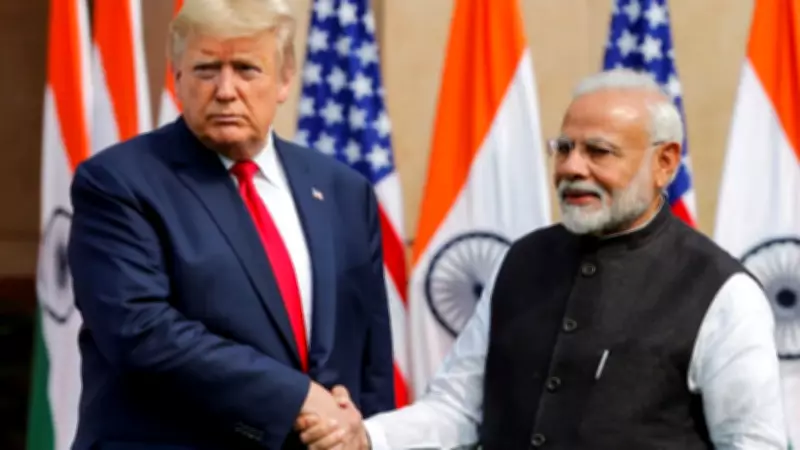
In their condemnation, the SKM recalled Prime Minister Modi's Independence Day 2025 declaration from the Red Fort, where he pledged readiness to "pay heavy price to protect the interests of the farmers." The farmer body now alleges the government is "bowing down to the diktats of US President Donald Trump" by allowing zero import tariffs on American agricultural goods, which they characterize as a "historic betrayal" of the farming community.

Government Assurance Versus Farmer Skepticism
Union Commerce and Industry Minister Piyush Goyal has repeatedly defended the trade deal in Parliament, asserting that India's sensitive sectors like agriculture and dairy are "fully protected." Goyal emphasized that the agreement would reduce US tariffs on Indian goods from 50% to 18%, potentially boosting India's export competitiveness in labor-intensive sectors.
"I want to repeat to this hallowed House that Bharat's priority sensitivity in the fertiliser and agriculture sectors has been kept in mind," Goyal told the Lok Sabha, maintaining that "the Indian side has been successful in safeguarding interests related to sensitive sectors, especially agriculture and dairy."
Growing Coalition of Opposition
The SKM is not alone in its resistance to the trade agreement. The All India Kisan Sabha (AIKS) has announced it will join the proposed agitations from February 4, demanding that the government present complete details of not only the India-US deal but also the India-United Kingdom and India-European Union free trade agreements in Parliament.
AIKS president Ashok Dhawale stated, "The AIKS strongly opposes the India-US trade deal. This is nothing but a surrender to the threats that came from the US President."
Bhartiya Kisan Union (BKU) spokesperson Rakesh Tikait has organized demonstrations planned for February 12 at all district headquarters, with memoranda demanding the exclusion of agriculture and dairy sectors from the agreement. Tikait warned, "If this deal goes ahead, the US will capture the agriculture and dairy markets of India and it will harm the farmers here."
He further explained his concerns: "Farmers in the US are getting more subsidies than farmers in India. How will Indian farmers compete with US companies? The general public will also suffer here because US firms will initially sell their produce at lower prices but will escalate the prices after capturing Indian agriculture and dairy sectors."
Cautious Response from RSS Farmer Wing
The Bharatiya Kisan Sangh (BKS), the farmer wing of the RSS, has adopted a more measured approach. National spokesperson Raghvendra Singh Patel stated, "The BKS is firm on its stand. But we will comment on the India-US deal only after getting clarity on it. There is no clarity so far that a deal has happened on these sectors (agriculture and dairy) or not." However, the organization maintains opposition to any international agreement that might "adversely impact the Indian farmers."

This growing farmer mobilization against the trade deal represents a significant challenge for the government as it seeks to balance international trade relations with domestic agricultural interests. The protests scheduled for early February are expected to draw widespread participation from farming communities across multiple states.





