

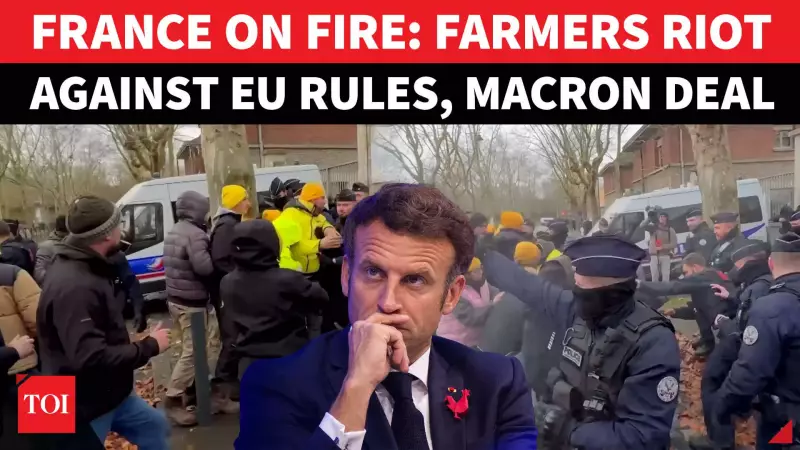
France is witnessing a massive agricultural uprising, as farmers across the country take to the streets in a fierce confrontation with authorities. The protests, which turned violent, are a direct challenge to strict European Union regulations and a looming international trade agreement that farmers say will destroy their livelihoods.
Clashes Erupt at Food Safety Agency HQ
The tension reached a boiling point on January 10, 2026, outside the headquarters of ANSES, the national agency for food and environmental safety. Enraged farmers, accusing the body of enforcing overzealous EU rules, clashed with riot police. Demonstrators hurled eggs at the building, symbolising their frustration with policies they deem suffocating.
In response, security forces deployed tear gas to disperse the crowds as the faceoff escalated. This incident was not an isolated one. Authorities reported approximately 60 coordinated protest actions unfolding simultaneously across France, indicating the scale and organisation of the farmer-led revolt.

The Core Grievances: EU Rules and the Mercosur Threat
At the heart of the fury are two major issues. First, French farmers are protesting against a web of complex EU regulations related to environmental standards and food safety, which they argue increase costs and bureaucratic burdens, making their operations unviable.
The second, and potentially more explosive trigger, is the proposed EU-Mercosur trade deal. This agreement aims to facilitate trade between the European Union and South American nations like Brazil and Argentina. Farmers in France and across Europe warn that it will flood their markets with cheap, imported meat and wine, against which they cannot possibly compete.
Agricultural unions have not minced words, describing the potential deal as a "death sentence" for the local agricultural sector. They fear a catastrophic domino effect that would not only wipe out family farms but also devastate associated industries like slaughterhouses, ultimately eroding the economic and social fabric of rural France.
Nationwide Unrest and a Warning to the Government
The widespread nature of the protests sends a clear political message to President Emmanuel Macron's administration. The farmers' revolt underscores a deep-seated anxiety about globalisation and the perceived failure of EU policies to protect local producers. The use of tear gas and the aggressive demonstrations highlight how high the stakes are for both sides.
As eggs flew and tear gas canisters exploded in Paris, the scene symbolised a broader European struggle. The French farmers' rebellion is a stark warning: they will fight aggressively against what they see as existential threats to their profession, their communities, and their way of life. The government now faces the immense challenge of balancing international trade ambitions with the survival of a cornerstone national industry.






