

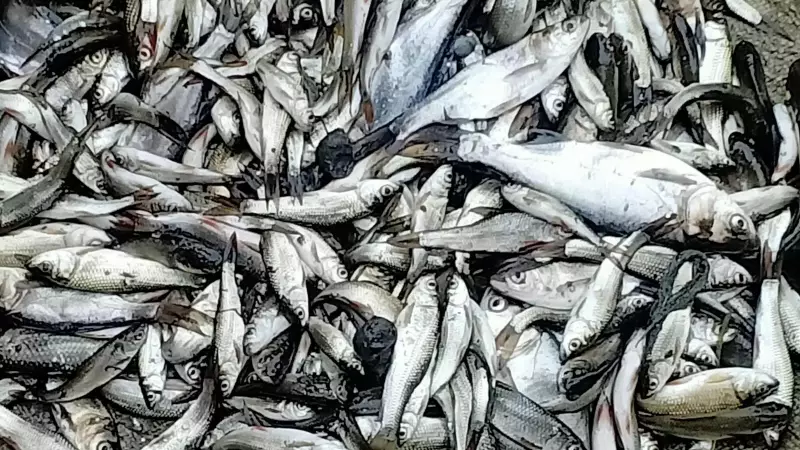
A remarkable economic transformation is underway in the riverbank villages along the Gandak River, where a small fish is making a big splash. Villages like Dhanaha, Bagaha, Piprasi, and Thakraha in Bihar’s West Champaran district, alongside Paniyhawa, Salikpur, and Mahdeva in Uttar Pradesh, are witnessing a rural economic revival driven by the humble Chepua fish.
The Daily Catch: A Lifeline for Thousands
This revival is powered by the daily efforts of over 2,000 fishermen from these areas who venture into the Gandak. Their fresh catch forms the backbone of a vibrant local supply chain, feeding into roadside dhabas and a growing pickle-making industry. This activity has turned the nutrient-rich Chepua into a thriving source of employment and steady income for countless families.
The popularity of this fish has turned destinations like Dhanaha, located about 25 km from Bagaha, into culinary hotspots. Hundreds of people from Uttar Pradesh and North Bihar flock here specifically to relish Chepua fish fry or curry, typically enjoyed with bhuja (puffed rice). Dhabas lining the roadsides are busy pan-frying the sought-after delicacy from morning till evening to meet the steady demand.

More Than Just Taste: Nutrition and Recognition
The Chepua fish isn't just loved for its taste; it's a nutritional powerhouse. A 2015 study by scientists from the American Food Society, India and Nepal, found Chepua to be more nutritious than the famed Hilsa. It is rich in Omega-3, Omega-6, protein, calcium, iron, and magnesium. This research catapulted Chepua to international recognition.
Following this, a 2018 initiative was launched to study its biology and promote sustainable harvesting. Fish researcher Ashish Panda from the Wildlife Trust of India notes that Chepua, scientifically known as Aspidoporia morar, is a small species abundant in the Gandak. He emphasizes its vital ecological role, serving as a key food source for crocodiles and dolphins in the river ecosystem.
Economic Ripples: From River to Market
The economic impact is tangible at every level of the supply chain. Ram Singh, a pickle seller in Majhaua, outlines the market dynamics: Fresh fish sells for Rs 250–350 per kg, while fried fish at dhabas commands Rs 600–700 per kg. These dhabas typically sell 20–25 kg daily. His own Chepua fish pickle, leveraging the high nutritional value, fetches up to Rs 1,200 per kg.
Dhaba owners like Madan Kushwaha highlight the broader social impact. With over 20 dhabas in areas like Paniyhawa and Dhanaha serving 20–25 kg of fish daily, each can earn a net profit of Rs 1,000–2,000 per day. "Chepua is not just a taste preference; it sustains rural livelihoods," says Kushwaha, pointing to the low cost, steady demand, and local availability that make it integral to the economy.
There is also significant potential for growth through aquaculture. Former Khadda MLA Jatashankar Tripathi revealed that after the 2015 research, he explored Chepua's breeding potential. The National Bureau of Fish Genetic Resources (NBFGR) collected samples and planned a project, but it remained pending. Experts firmly believe that successful artificial breeding could provide self-employment to thousands more, further amplifying the positive impact of this remarkable river fish.






