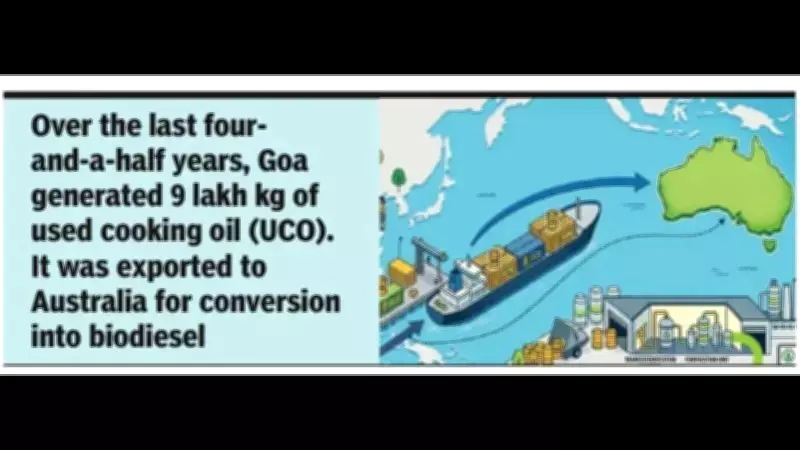
Panaji: In a first, the state government has drafted a policy to establish a unit that converts used cooking oil (UCO) into biodiesel, a move that is expected to reduce Goa’s dependence on imported fuel. Over the last four-and-a-half years, Goa generated nine lakh kilograms of UCO, which was previously exported to Australia for conversion into biodiesel.
UCO, also known as waste cooking oil or used vegetable oil, requires proper management to prevent environmental harm and promote sustainability, a senior government officer stated.
Policy Highlights
“Incentives, penalties, and firm aggregator oversight will close leakages, protect public health, and strengthen Goa’s tourism reputation. In India, initiatives like the Repurpose Used Cooking Oil (RUCO) programme, led by the Food Safety and Standards Authority of India (FSSAI), aim to achieve these goals by creating a structured ecosystem for UCO collection and recycling,” the draft policy said.

The policy aims to promote sustainable and environmentally friendly management of waste cooking oil and prevent it from re-entering the food chain. It describes UCO as a “second-generation” feedstock because it does not compete with food crops such as corn or soy for fuel production.
Health and Environmental Benefits
The draft policy stated that the initiative seeks to ensure that used cooking oil is not reused for cooking, thereby reducing associated health risks. “Collecting and processing UCO to produce biodiesel, animal feed, or other products helps conserve natural resources and reduce waste. Reducing the environmental impact of improper UCO disposal, such as water pollution and soil contamination, by implementing proper collection and disposal systems,” the policy said.
A senior government officer noted that the policy also focuses on educating the public, food business operators, and other stakeholders about proper UCO disposal and the benefits of recycling. It proposes guidelines and regulations for the safe collection, storage, and disposal of UCO, with penalties for non-compliance.
Market-Driven Incentives
The draft policy also proposes a market-driven incentive system to encourage UCO collection and recycling, promoting principles of circular economy and sustainability.
It outlines the roles of the Goa Energy Development Authority, Goa State Pollution Control Board, municipal councils, directorate of food and drugs administration, Travel and Tourism Association of Goa, and restaurant associations in implementing the policy and ensuring scientific disposal of UCO.