

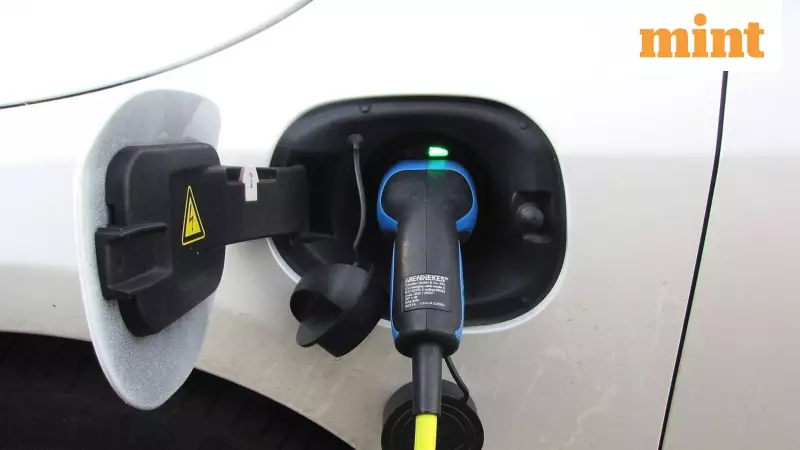
In a significant move to boost confidence in electric vehicle (EV) travel, the Indian government is actively considering setting up dedicated control and command centres on the country's major expressways. These hubs are designed to provide comprehensive roadside assistance and charging services, directly addressing the pervasive issue of range anxiety that discourages long-distance EV journeys.
Blueprint for Highway EV Support
According to two officials familiar with the discussions, the proposed EV Roadside Assistance (RSA) and On-Road Services (ORS) hubs will function in a public-private partnership (PPP) mode. This model will involve collaboration with vehicle manufacturers, fleet operators, and private service providers. The initiative aims to move beyond mere charging points to create a full-fledged support ecosystem for EV users on highways.
The Ministry of Road Transport and Highways (MoRTH) is examining revisions to its guidelines for way-side amenities (WSAs) on expressways. The goal is to formally incorporate EV-centric infrastructure. This would include facilities for rapid diagnostics, minor repairs, battery support, towing, and real-time assistance coordinated through integrated control centres.

Delhi-Mumbai Expressway as the Pioneer Corridor
The officials indicated that the under-construction 1,300-km Delhi–Mumbai Expressway is likely to be the first long-distance corridor where this new model will be implemented. This would establish an end-to-end EV-supportive route connecting two of India's largest metropolitan regions.
"The idea is to move beyond charging points and create a full ecosystem that supports EV users on highways, similar to how air traffic control and ground handling work together in aviation," explained one official. These command centres would coordinate assistance, track vehicle issues, manage response times, and build confidence for intercity EV travel.
Addressing a Critical Gap in EV Adoption
This development is crucial as EV penetration in India continues to rise but remains largely concentrated in urban areas. Industry estimates suggest around 5% of all four-wheelers in India were electric in 2025, with over two million EVs sold during the year. However, the fear of running out of charge mid-journey—range anxiety—remains a major barrier to using EVs for interstate travel.
Ashish Modani, Senior Vice-President and Group Head at ICRA, noted that while commuters on access-controlled expressways like Delhi-Mumbai expect charging infrastructure, the high upfront costs and currently low but growing EV population necessitate financial support or incentives from the government to make such PPP projects commercially viable.
The plan aligns with India's ambitious infrastructure vision, which includes spending ₹20 trillion to build 50,000km of access-controlled highways and expressways by 2047. Currently, India has about 5,100km of such expressways, with over 2,000km operational.
Business Model and Future Expansion
Under the proposed PPP framework, private players would operate RSA and ORS services as a viable business. They would offer B2C services for individual travellers and B2B solutions for commercial fleets and automakers. Potential services could include subscription-based assistance packages, data-driven predictive maintenance, and integration with vehicle telematics systems.
The government is also exploring the use of datasets to define "ease of living" indicators for EV users on highways, measuring metrics like response times and service availability. Beyond the Delhi-Mumbai corridor, MoRTH plans to extend this model to other expressways and national highways linking major metropolitan clusters with higher EV adoption.
Industry executives believe combining charging infrastructure with assured technical support could be transformative. "Charging stations alone do not solve the confidence gap for long-distance EV travel. A reliable service and support backbone is equally important," stated an official from an EV manufacturer.

This proposal to revamp WSA guidelines marks a strategic shift in India's highway planning—from fuel-agnostic infrastructure to mobility ecosystems specifically designed for the electric era. It complements existing efforts under schemes like PM E-Drive, which has allocated ₹2,000 crore to support the upstream costs of setting up charging and battery swapping stations.





