

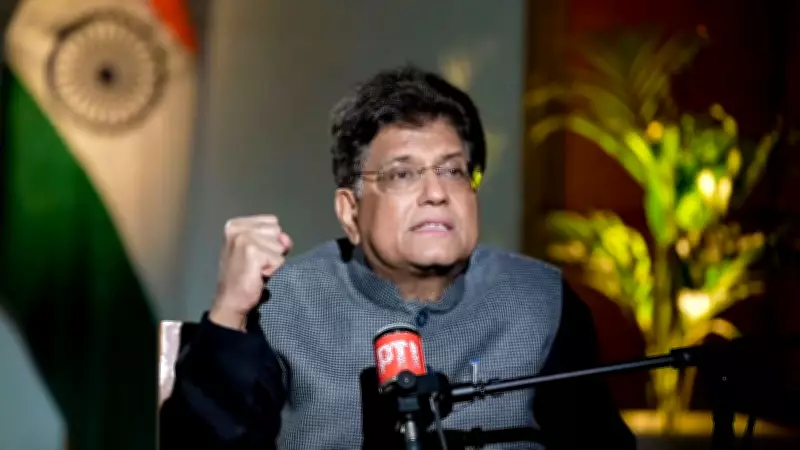
Piyush Goyal Defends India-US Trade Agreement Amid Farmer Criticism
Union Commerce and Industry Minister Piyush Goyal has directly addressed mounting concerns regarding the potential impact of the proposed India-United States trade agreement on the nation's agricultural sector. In a detailed interview with PTI, Goyal provided a robust defense of the deal, asserting that it will ultimately prove beneficial for Indian farmers by significantly increasing their incomes and providing access to higher-value markets.
Minister's Assurance on Farmer Benefits
Goyal emphasized that the US market presents a substantial opportunity for Indian agricultural producers. "The US market will provide our farmers with much greater value, and their incomes will see a marked increase," the Minister stated confidently. He highlighted that Indian farmers are already successful exporters, with agricultural and fish product exports currently valued at approximately $55 billion annually. The new trade framework, according to Goyal, is designed to build upon this existing foundation and expand market access.
"This agreement will ultimately help our farmers," Goyal reiterated, positioning the deal as a strategic move to enhance the global competitiveness of India's agricultural output. He pointed to the potential for premium pricing and stable demand from the American market as key drivers for income growth within the farming community.

Addressing the 18% Tariff Controversy
A significant point of contention has been the provision within the proposed agreement where India would accept an 18% tariff on its goods while granting duty-free access to certain US products. Critics have argued this represents an unequal concession. Minister Goyal firmly rejected this characterization.
He provided a counter-argument, explaining that the 18% tariff structure is, in fact, a calculated advantage. "This proposal will benefit Indian exports by providing them with a competitive edge," Goyal explained. He elaborated that this tariff rate is strategically lower than the duties faced by products from competitors like China and other nations in the US market. This differential, he argued, would make Indian goods more attractive and price-competitive for American importers.
Farmer Organizations Voice Strong Opposition
The Minister's clarifications come in direct response to fierce criticism and organized protests announced by various farmer groups across India. The Samyukt Kisan Morcha (SKM), a prominent coalition of farmer unions, has been particularly vocal in its opposition.
In an official statement cited by PTI, the SKM condemned the proposed interim trade agreement framework, labeling it a "total surrender" of Indian agriculture to American multinational corporations. This sentiment reflects deep-seated anxieties among sections of the farming community regarding market liberalization and the influence of large foreign agribusinesses.
Broader Implications and Ongoing Debate
The debate surrounding the India-US trade deal underscores the complex balancing act between securing international market access and protecting domestic agricultural interests. Proponents, led by Minister Goyal, view it as an essential step to integrate Indian farmers into high-value global supply chains and boost export earnings.
Opponents, however, fear it may undermine local markets and increase dependency. As negotiations and discussions continue, the government faces the critical task of addressing these valid concerns while pursuing its trade policy objectives. The outcome of this dialogue will have significant implications for India's agricultural economy and its strategic trade relationship with the United States.






