

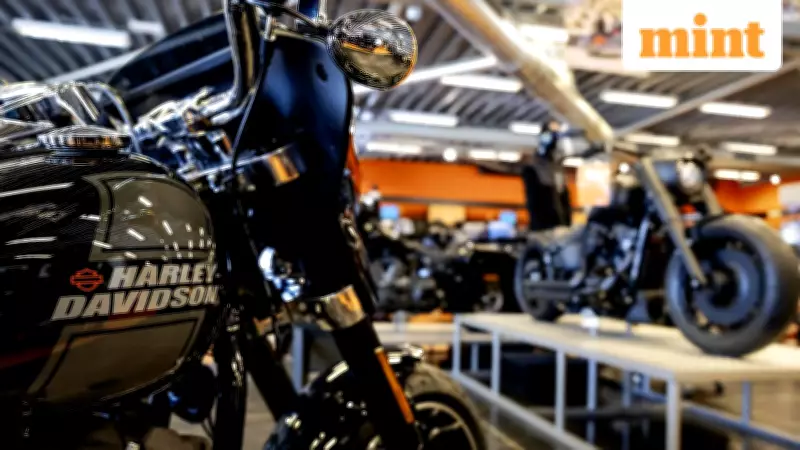
Harley-Davidson's Barrier-Free Entry: A Marginal Yet Symbolic Revolution in India-US Trade
The recent framework agreement between India and the United States to eliminate import duties on Harley-Davidson motorcycles represents what appears to be a minor adjustment with potentially significant diplomatic implications. This development directly addresses a longstanding grievance voiced by former US President Donald Trump, who frequently criticized India's trade policies by labeling the country a "tariff king."
From Trade Tension to Tariff Reduction
Ever since Donald Trump first assumed the US presidency, India's substantial import duty on Harley-Davidson motorcycles has served as a persistent point of contention in bilateral trade discussions. The 40% duty on motorcycles with engine capacities ranging from 800 to 1,600cc became emblematic of broader trade friction between the two nations. This duty had already been reduced from even higher levels as a conciliatory gesture following Trump's re-election, but its complete elimination under the new trade framework marks a more substantial concession.
The agreement ensures that these iconic American leisure motorcycles can now enter the Indian market without the previous tariff barriers, fulfilling what had become a prerequisite for any early-harvest trade pact between the two countries during the Trump administration.

Market Realities Versus Political Symbolism
Despite the political significance of this development, the practical market impact remains limited. The premium leisure motorcycle segment that Harley-Davidson occupies represents only a minuscule portion of India's overwhelmingly utilitarian two-wheeler market. Domestic manufacturers face minimal disruption from this policy change, particularly since Hero MotoCorp already maintains a partnership with Harley-Davidson to distribute their products within India.
This reveals that Trump's apparent fixation on Harley-Davidson tariffs was largely symbolic rather than substantive from a market perspective. The actual economic impact on either country's automotive industry remains marginal at best.
Leveraging Small Concessions for Larger Gains
The true importance of this tariff elimination may lie in its potential to reshape diplomatic narratives rather than market dynamics. By addressing what had become a recurring theme in White House rhetoric about India's trade openness, this concession could enhance the political viability of deeper economic cooperation between the two nations.
Sometimes relatively minor policy adjustments can serve as levers for disproportionate diplomatic effects. The removal of Harley-Davidson tariffs exemplifies how targeted trade concessions can:
- Address specific bilateral irritants that have gained symbolic importance
- Create positive momentum for broader trade negotiations
- Improve the perception of trade openness in diplomatic circles
- Facilitate discussions about more substantial economic partnerships
This development demonstrates how carefully calibrated trade policy adjustments can serve strategic diplomatic purposes beyond their immediate economic impact. While the direct effect on motorcycle sales may be limited, the potential to improve the overall trade relationship between India and the United States could prove substantially more valuable in the long term.






