

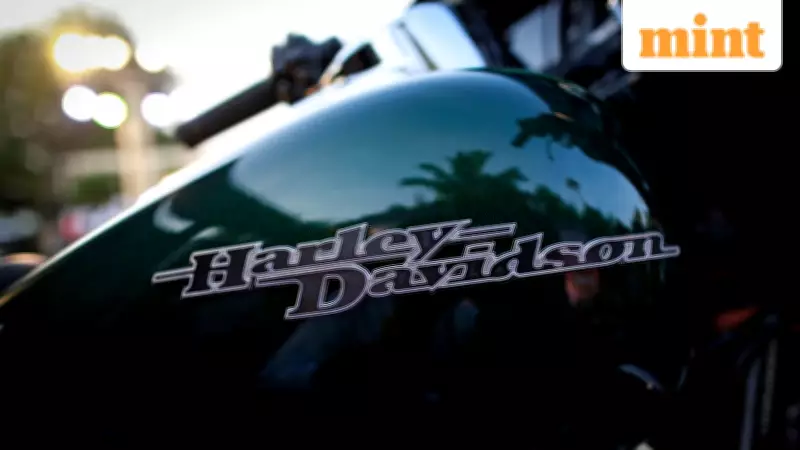
Harley-Davidson Bikes Poised for Major Price Reduction in India Under New Trade Pact
American premium motorcycle manufacturer Harley-Davidson is set to become the primary beneficiary of India's decision to grant zero-duty access to American motorcycles as part of an interim trade agreement between the two nations. According to official reports, the Indian government will implement this exemption specifically for motorcycles with engine capacities ranging from 800 to 1,600 cc and above, effective from the date the interim trade pact is formally implemented, which is anticipated to occur by mid-March.
Substantial Duty Reduction from 110% to 30%
Currently, combined taxes on high-end imported American vehicles can reach as high as 110%, creating a significant barrier to market entry. Under the new agreement, these rates are expected to plummet to as low as 30%, directly benefiting Harley-Davidson's lineup. This development follows previous duty adjustments in 2025, where the government reduced import duties on completely built-up (CBU) motorcycles with engine capacities up to 1,600 cc from 50% to 40%, and for those over 1,600 cc from 50% to 30%.
Strategic Significance for Harley-Davidson's Indian Market Return
The zero-duty access holds particular importance as Harley-Davidson had previously withdrawn from the Indian market in 2020 due to persistently low sales volumes. Later that same year, the company announced a strategic partnership with Hero MotoCorp, aiming to collaboratively develop and market a range of premium motorcycles within the country. As part of this alliance, Hero MotoCorp will manage service and parts requirements for Harley bikes in India.

This policy shift aligns with persistent advocacy from US President Donald Trump, who has repeatedly urged for lower tariffs to enhance Harley-Davidson's sales performance in India. The brand's portfolio, which includes models like the Street 750 and Iron 883, primarily competes with domestic high-end bike producer Eicher Motors in the Indian market.
Broader Implications for the Automotive Sector
The trade agreement extends beyond motorcycles, offering concessions for certain automotive segments. Union Commerce Minister Piyush Goyal indicated that elementary auto parts exported by Indian manufacturers will face zero tariffs in the United States, though some components will remain subject to duties. Additionally, India is expected to provide import duty concessions on US diesel vehicles with engine capacities of 2,500 cc and above, and petrol vehicles of 3,000 cc and above.
This move is particularly advantageous for Jeep, which holds a stronger position in the domestic auto market compared to other American manufacturers like Ford and General Motors, both of which have significantly scaled back their Indian operations. India, as the world's third-largest car market after the US and China, has historically protected its domestic auto industry with steep import tariffs ranging from 70% to 110%.
Electric Vehicles Excluded from Current Benefits
Notably, the interim agreement does not currently include any exemptions or duty cuts for electric vehicles (EVs). This omission is likely to impact Tesla and its CEO Elon Musk, who has actively lobbied for reduced duties to facilitate the company's expansion into the Indian market. Conversely, domestic auto majors such as Mahindra & Mahindra and Tata Motors Passenger Vehicles may find relief in this exclusion, as it maintains a level of protection for local EV manufacturers.
In parallel developments, India has also proposed auto sector benefits to the European Union under a separate free trade agreement (FTA), where tariffs could be reduced to as low as 10% for various vehicles, including some electric models. The Union Commerce Ministry has not provided an immediate response to queries regarding these trade negotiations.






