

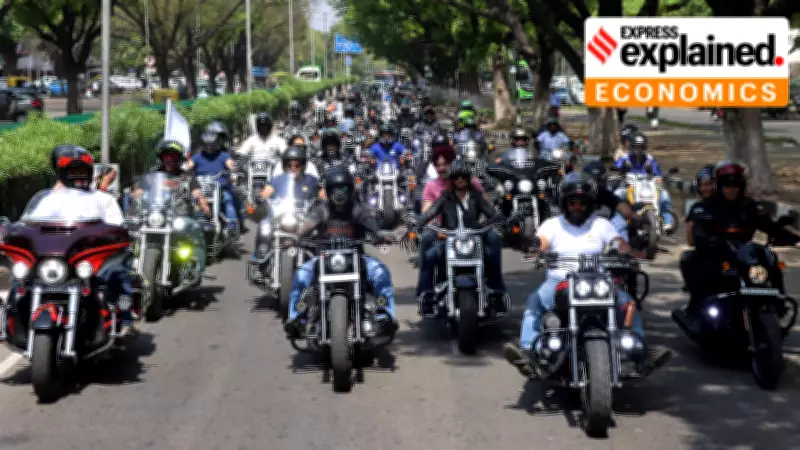
Harley-Davidson's Potential Indian Revival After US Trade Agreement
The legendary American motorcycle manufacturer Harley-Davidson may be preparing for a significant comeback in the Indian market, driven by a newly established trade agreement between India and the United States. This development directly addresses one of former US President Donald Trump's persistent concerns regarding market access for American products.
Zero-Duty Access Opens Doors for Premium Bikes
Under the terms of the trade pact, India has granted zero-duty access to US motorcycle manufacturers for bikes with engine capacities ranging from 800 to 1,600 cubic centimeters. This crucial concession provides a clear pathway for Harley-Davidson to re-enter a market it previously exited in 2020 after years of struggling to establish a strong foothold.
India represents one of the world's largest motorcycle markets overall, yet it remains a relatively niche segment for high-end, premium bikes. The brand's initial challenges were compounded by what Trump described as prohibitively high tariffs, which he claimed reached up to 150% during discussions with company representatives.

The Hero MotoCorp Partnership and Market Strategy
Even before this trade breakthrough, Harley-Davidson had laid groundwork for a potential return through a strategic partnership announced in October 2020 with India's Hero MotoCorp. This collaboration envisioned Hero developing and selling a range of premium motorcycles under the Harley-Davidson brand within the country.
The agreement also entrusted Hero MotoCorp with critical after-sales responsibilities, including:
- Managing service and parts requirements for existing and future Harley-Davidson motorcycles
- Selling Harley accessories, general merchandise, riding gear, and apparel
- Utilizing both brand-exclusive Harley-Davidson dealers and Hero's extensive existing sales network
Trump's Persistent Focus on Reciprocity and Tariffs
Former President Trump repeatedly highlighted India's tariff structure as a major obstacle for American businesses during his presidency and subsequent campaign events. Speaking at an election rally in Detroit in October 2024, Trump emphasized his "reciprocity" approach to trade, noting that while the US is generally liberal with tariffs, countries like India impose significantly higher charges.
"India is a very big charger. We have a great relationship with India. I did. And especially with the leader, Modi. He's a great leader... I think they probably charge more than in many ways, China. But they do it with a smile," Trump told members of the Detroit Economic Club, recalling his discussions with Harley-Davidson executives about the Indian market challenges.
Broader Trade Concessions Beyond Motorcycles
The trade agreement extends beyond motorcycles to include additional automotive sectors. India has committed to providing duty concessions on imports of specific US vehicles, including diesel vehicles with engine capacities of 2,500 cc and above, as well as petrol vehicles of 3,000 cc and above.
This comprehensive approach to trade negotiations reflects ongoing efforts to balance economic interests between the two nations while addressing specific industry concerns that have persisted through multiple administrations.
The combination of tariff relief through the trade deal and the established partnership with Hero MotoCorp creates a substantially more favorable environment for Harley-Davidson's potential return to India, marking a significant shift from the market conditions that led to its departure just a few years earlier.






