The relentless pursuit of two fundamental commodities—gold and oil—is quietly reshaping the global order, revealing a profound and often overlooked paradox. Nations, in their quest for energy security and wealth preservation, are inadvertently making choices that erode the very bedrock of their independence: their sovereignty. This modern geopolitical dilemma places countries like India in a precarious position, forced to navigate between essential needs and strategic autonomy.
The Allure and the Trap of Black Gold
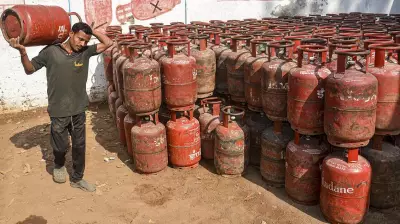
For decades, crude oil has been the lifeblood of industrial economies. Its import is non-negotiable for nations lacking sufficient domestic reserves. However, this dependency creates a significant vulnerability. When a country imports oil, it must pay in a currency that the seller accepts, predominantly the US dollar. This necessity fuels a continuous demand for dollars, effectively outsourcing a portion of monetary sovereignty to the United States Federal Reserve.
The mechanism is straightforward but powerful. To acquire dollars for oil payments, a nation must export goods and services or attract foreign capital. This dynamic subjects its domestic economic policies to external pressures and global market sentiments. The recent volatility in global oil prices, influenced by conflicts in West Asia and production decisions by OPEC+, directly impacts India's trade deficit, currency valuation, and inflation rates. Thus, the pursuit of energy security through oil imports forces a compromise on economic sovereignty, making national stability hostage to international supply chains and geopolitical events far beyond its borders.

Gold: The Ancient Store of Value with a Modern Cost
On the other side of the spectrum lies gold, the timeless symbol of wealth and financial security. India's cultural and economic affinity for gold is legendary, making it one of the world's largest consumers. Yet, this appetite comes with a heavy price. Massive gold imports are a primary contributor to the country's current account deficit. To finance this deficit, India must, again, attract foreign investment or borrow from international markets.
This reliance on external capital inflows creates another layer of dependency. Foreign investors and institutions demand policy stability, predictable regulations, and attractive returns. Their perceptions can lead to sudden capital flight during global risk aversion, destabilizing the rupee and depleting foreign exchange reserves. Therefore, the private accumulation of gold as a safe-haven asset ironically weakens the nation's collective financial resilience and constrains policy options for its government and central bank.
The Sovereign Dilemma and Strategic Pathways
This dual dependency on imported oil and gold paints a stark picture of fragile sovereignty in an interconnected world. The state's ability to act independently in the interest of its citizens is circumscribed by these commodity flows. The challenge is not merely economic but fundamentally geopolitical, affecting a nation's strategic posture and negotiating power on the world stage.
For India, addressing this paradox requires a multi-pronged, long-term strategy. The solutions are complex but essential. Firstly, accelerating the transition to renewable energy sources and enhancing domestic exploration can reduce the stranglehold of imported oil. Secondly, formalizing the gold market through schemes like the Gold Monetisation Scheme can mobilize idle domestic stocks, reducing the need for imports. Thirdly, and most crucially, promoting the international use of the rupee in trade settlements, especially for commodities, can diminish dollar dependency.
These steps are not quick fixes but strategic imperatives. The era where sovereignty was an absolute concept is fading. In today's world, true sovereignty may be defined not by isolation but by the intelligent management of interdependence. For nations like India, the path forward lies in building internal economic strength, diversifying energy sources, and innovating within the global financial architecture to carve out a space for autonomous action. The fragility exposed by gold and oil is a warning, but also a roadmap for building a more resilient future.