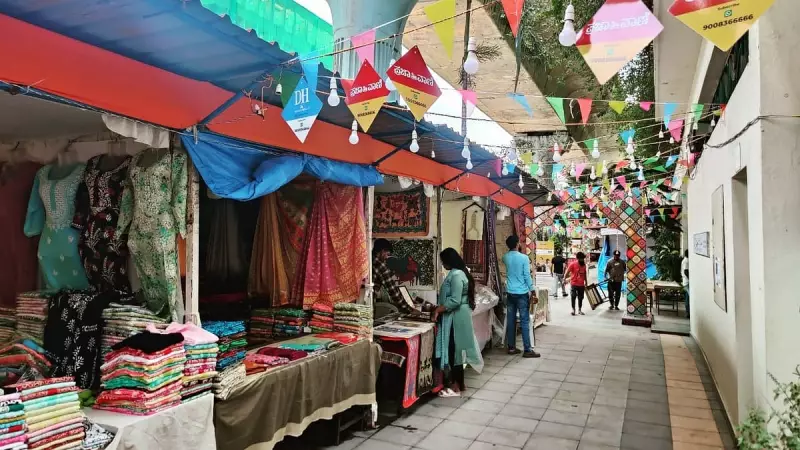
For centuries, the bustling village haat has been more than just a marketplace in India. It has served as a vital hub for economic exchange, social interaction, and cultural fusion, particularly in regions near the country's borders. However, these indispensable lifelines for countless communities now confront a severe and growing threat to their very existence.
The Squeeze of Security and Rising Tensions
The traditional haat finds itself caught in a dangerous crossfire. On one side, there is an increasingly militarised approach to border security. Enhanced surveillance, restrictive movement protocols, and the physical fortification of frontiers have severely disrupted the age-old rhythms of these markets. Many haats, which thrived on the free flow of people and goods across porous borders, are now isolated and struggling to survive.
Compounding this pressure is the rise of fundamentalism and communalism in certain areas. This social shift fosters suspicion and erodes the trust and camaraderie that once defined these neutral trading grounds. The haat, historically a space where diverse communities met as equals to barter and socialise, is becoming a casualty of polarisation.

An Existential Threat to Economic and Social Fabric
The consequences of this dual assault extend far beyond the loss of a weekly market. The economic impact is immediate and devastating for small farmers, artisans, and local traders who depend on the haat for their livelihood. It is often their primary, if not sole, channel to sell produce, buy essentials, and access a wider economy.
Perhaps more insidiously, the erosion of the haat strikes at the social and cultural heart of rural India. These markets have long been engines of social cohesion, places where news is exchanged, disputes are settled informally, and inter-community bonds are strengthened. Their decline signifies not just an economic loss but a fading of a unique, pluralistic way of life.
Looking Ahead: A Precarious Future
The situation, as highlighted in recent discourse, presents a complex challenge. While national security is paramount, a one-size-fits-all, heavily militarised response can inadvertently strangle the legitimate economic and social capillaries of border communities. The existential threat to haats calls for a more nuanced policy framework.
Potential solutions must balance security imperatives with the need to preserve these vital institutions. This could involve creating secured trade corridors or designated market zones with streamlined security checks, ensuring that the economic lifeline for border populations is not severed. The future of India's traditional haats hangs in the balance, dependent on finding this delicate equilibrium between safety and sustenance.