

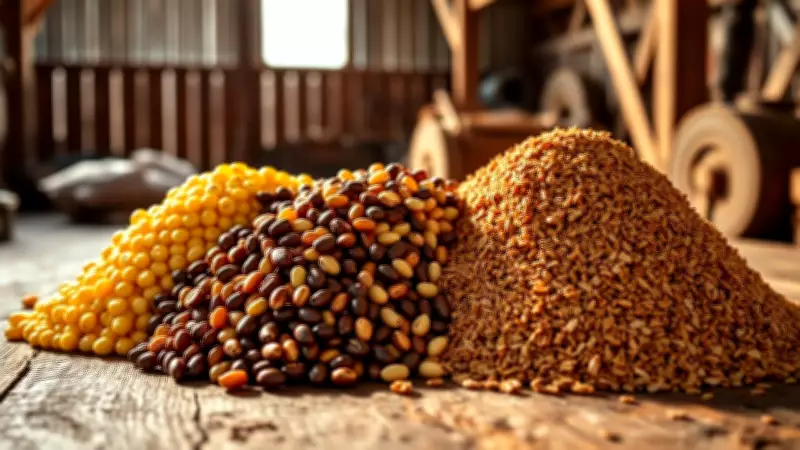
India Approves Limited US DDGS Import Quota Under Bilateral Trade Agreement
In a strategic move under the first phase of a bilateral trade pact, India has authorized a duty concession on imports of dried distillers' grains (DDGS) from the United States, but with a strictly limited volume of only 5 lakh tonnes. An official familiar with the matter emphasized to PTI that this quantity represents a mere 1 per cent of India's total domestic animal feed consumption, highlighting the measured approach of the policy.
Balancing Domestic Needs and Import Strategy
The official clarified that this restricted quota is intentionally designed to supplement domestic animal feed availability without compromising food security. The primary objective is to ensure that food grains intended for human consumption are not diverted for animal feed purposes, thereby maintaining a delicate balance in resource allocation.
"Animal feed domestic consumption stands at 500 lakh tonnes, whereas the quota allocated to the US is only 5 lakh tonnes. This is equivalent to just 1 per cent of total consumption," the official stated, as reported by PTI. This modest import volume is seen as a pragmatic step to diversify sources and reduce reliance on traditional feed ingredients like corn and soyabean.

Economic and Agricultural Benefits
Access to DDGS imports is anticipated to deliver multiple advantages for India's agricultural and livestock sectors:
- Reduction in Feed Cost Volatility: By introducing an alternative feed source, the move aims to stabilize costs for poultry, dairy, aquaculture, and livestock producers.
- Containment of Food Inflation: Stabilizing feed prices can help mitigate broader food inflation pressures, benefiting consumers.
- Eased Pressure on Domestic Markets: The imports are expected to alleviate strain on domestic corn and soybean markets, supporting the availability and affordability of staple food grains.
The official elaborated, "India's feed demand growth is large, structural, and long-term. This 1 per cent quota for DDGS imports is a pragmatic, low-risk measure. It diversifies small quantities of imports to the US, reduces corn and soyabean imports for feed, supports livestock growth, stabilises prices, and aligns with national food security and export objectives."
Rising Demand and Structural Challenges
Demand for animal-based products in India is on a steady upward trajectory, driven by factors such as population growth, increasing income levels, and rapid urbanisation. This trend is fueling a parallel surge in demand for animal feed, creating significant supply challenges.
Current consumption estimates highlight the scale of the market:
- Corn for feed: Approximately 200 lakh tonnes
- Wheat for feed: About 65 lakh tonnes
- Soybean meal for feed: Around 62 lakh tonnes
Together, these ingredients constitute nearly two-thirds of India's total animal feed consumption, which is estimated at about 500 lakh tonnes annually.
Future Import Necessities and Current Trade Patterns
Domestic feed supply is constrained by structural issues, including limited arable land and productivity challenges. Officials project that feed demand will outpace domestic supply growth, making imports increasingly essential by the early 2030s under most realistic scenarios.
India has previously turned to imports to address domestic shortages. In 2021, the country imported about 15 lakh tonnes of soybean meal due to price pressures. Presently, India sources over 6 lakh tonnes of animal feed from various suppliers, including Sri Lanka, China, the US, Thailand, and Nepal.
Additionally, India imports approximately 6 lakh tonnes of soyabean from nations such as Niger, Togo, Benin, and Mozambique, and about 9 lakh tonnes of corn from Myanmar, Ukraine, Singapore, and the UAE. This diversified import strategy underscores the ongoing need to supplement domestic production to meet growing demand.






