

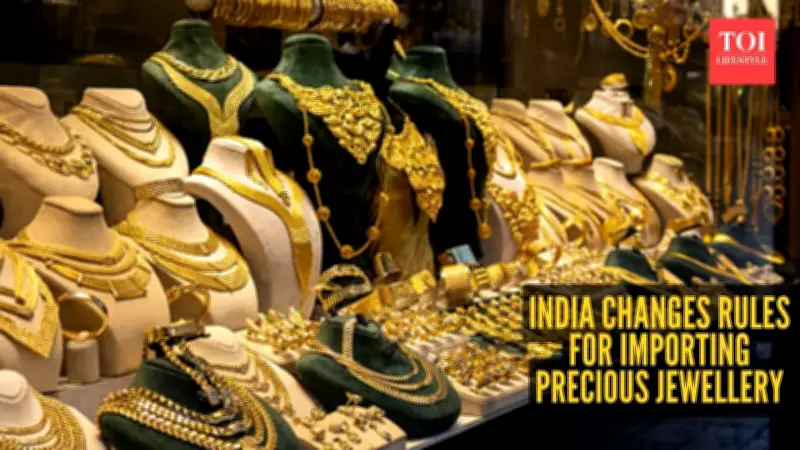
India Slams Brakes on Free Gold and Silver Jewellery Imports in Sudden Policy Shift
In a decisive and immediate regulatory intervention, the Indian government has fundamentally altered the import landscape for precious metal jewellery. The Directorate General of Foreign Trade (DGFT) has officially reclassified imports of gold, silver, and platinum jewellery under Customs Tariff Heading 7113, moving them from the "Free" category to "Restricted." This abrupt policy change eliminates the previously straightforward import process, replacing it with a mandatory requirement for prior government permissions, specific licenses, and comprehensive bureaucratic clearances.
Zero Transition Period Creates Immediate Compliance Challenges
Unlike typical policy implementations that include adjustment periods or transitional relaxations, this regulation has been enforced with immediate effect. The DGFT has explicitly stated that no exceptions or grace periods will be granted, regardless of existing contractual agreements, completed payments, or shipments already in transit. All incoming cargo will be subject to the new restrictive framework upon arrival at Indian ports, creating significant compliance challenges for traders and importers who must now navigate a complex approval process.
Primary Motivation: Closing Costly Free Trade Agreement Loopholes
The government's sudden regulatory action stems directly from systematic misuse of Free Trade Agreements, particularly the India-ASEAN pact. Authorities discovered that certain traders were exploiting these agreements by routing precious metals through countries like Thailand and declaring them as finished jewellery to circumvent higher import duties applicable to raw gold and silver. This clever but illicit practice resulted in substantial revenue losses for the government, prompting the decisive regulatory response to effectively seal this costly loophole.

Exemptions Preserve Export-Oriented Business Operations
While the new restrictions are comprehensive, the government has implemented targeted exemptions to protect legitimate export-driven enterprises. Businesses operating within Special Economic Zones (SEZs) and 100% Export Oriented Units (EOUs) remain exempt from these import restrictions. Additionally, imports connected to government-approved export schemes specifically designed for the gems and jewellery sector will continue without limitations. This calibrated approach demonstrates the policy's focused intent on curbing domestic market misuse while safeguarding genuine export businesses.
Industry Reaction: Understanding Mixed with Operational Concerns
Across India's major jewellery manufacturing and trading hubs, reactions to the policy shift have been decidedly mixed. Many industry stakeholders acknowledge the necessity of addressing unfair trade practices that disadvantage legitimate businesses. However, significant concerns have emerged regarding potential operational disruptions. The primary apprehension centers on anticipated bureaucratic delays, with traders fearing extended approval processes and administrative hurdles that could impede business continuity. Industry representatives emphasize the critical importance of establishing an efficient, transparent licensing system to prevent even compliant businesses from facing unnecessary operational challenges.
The overarching message from this regulatory development is unequivocal: the era of unrestricted jewellery imports has concluded, marking a new chapter of controlled trade in precious metal products within India's economic framework.






