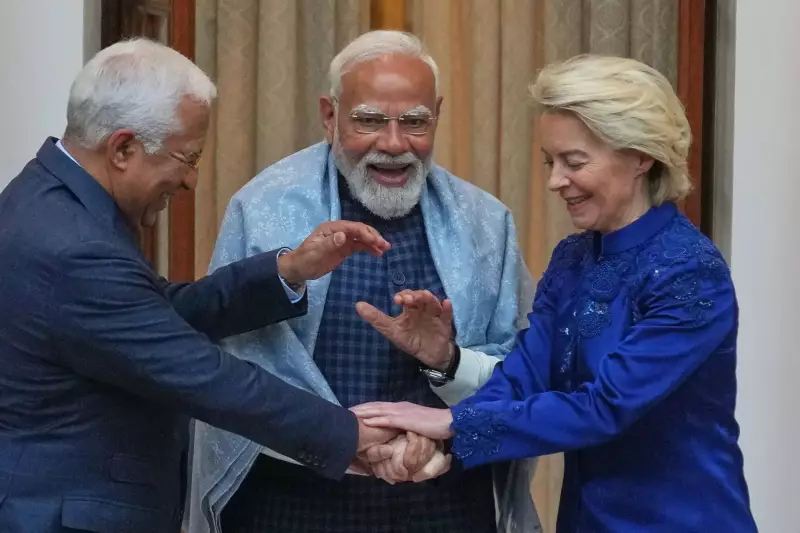
India and European Union Seal Historic Free Trade Agreement
In a significant development for global trade, India and the European Union (EU) officially announced a landmark Free Trade Agreement (FTA) on Tuesday. This pact, which European Commission President Ursula von der Leyen had previously termed the "mother of all deals," marks a new chapter in the economic relationship between the two major economies.
Timing and Significance
The announcement came just one day after the Republic Day parade in New Delhi, where both von der Leyen and European Council President Antonio Costa were present as chief guests. This timing underscores the strategic importance both sides place on strengthening their partnership. The agreement is anticipated to come into full effect by the year 2027, setting the stage for a transformative period in bilateral trade and cooperation.
Key Benefits for India Under the FTA
The Free Trade Agreement offers a comprehensive package of advantages for India, designed to boost exports, enhance market access, and foster economic growth. Key highlights include:

- Duty-Free Access: Over 99% of Indian export value will now enter the EU market without any tariffs, providing a substantial competitive edge.
- Boost to Labour-Intensive Sectors: Sectors such as textiles, leather, marine products, and jewellery, which are collectively worth approximately $33 billion, are set to gain immensely from preferential access under the agreement.
- Tariff Line Clearance: A total of 9,425 tariff lines have been cleared for Indian goods, facilitating smoother trade flows.
- Services Sector Access: India gains access to 144 EU sub-sectors, including information technology, finance, and education, expanding opportunities for service providers.
- Commitments for Service Suppliers: The EU has offered commitments in 37 sectors or sub-sectors for contractual service suppliers and 17 for independent professionals, enhancing mobility and business prospects.
- Benefits for Students and Professionals: Indian students will benefit from a guaranteed post-study visa framework of at least nine months, while practitioners of Indian traditional medicine will gain access to work in EU states under their home titles.
- Support for MSMEs: Secure financial and technical support will be provided to Indian Micro, Small, and Medium Enterprises to help them comply with carbon requirements, promoting sustainability.
- Family and Social Security Provisions: The agreement includes entry and working rights for dependents and families of intra-corporate transferees, along with a framework to engage in social security over a five-year period.
- Cooperation in Key Areas: Enhanced cooperation in artificial intelligence, clean technology, and semiconductors is a key component, aiming to drive innovation and technological advancement.
- Automotive Sector Opportunities: A "calibrated" and "carefully-crafted" quota-based liberalisation package on automobiles opens possibilities for Make In India initiatives and exports from India to the EU.
- Financial Innovation: Cooperation to advance innovation and secure cross-border electronic payments will modernize financial transactions between the two regions.
Global Economic Impact
This Free Trade Agreement brings together India, the world's fourth-largest economy, and the European Union, the second-largest. Together, they account for about 25% of global GDP and nearly one-third of global trade, highlighting the pact's potential to reshape international economic dynamics. The European Union now becomes India's 22nd FTA partner, following recent agreements such as the free trade pact with the United Kingdom finalized in July last year and discussions concluded with New Zealand in December 2025.
This landmark deal is poised to not only enhance bilateral trade but also foster deeper economic integration, innovation, and sustainable development, positioning both India and the EU as key players in the global marketplace.