Historic India-EU Free Trade Agreement Concluded, PM Modi Hails Milestone Achievement
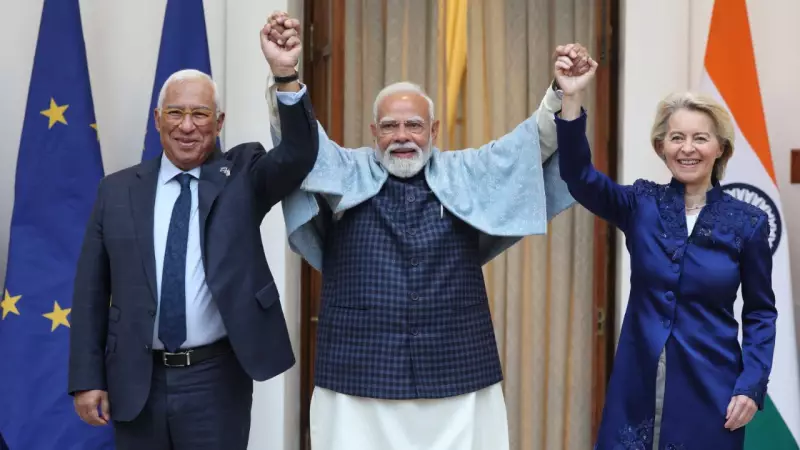
In a landmark development for international trade relations, Prime Minister Narendra Modi has officially announced the conclusion of the comprehensive India-European Union Free Trade Agreement. The announcement, made through a social media post on Tuesday, marks what the Prime Minister described as a "milestone" moment that will establish new pathways for economic growth, substantial investment opportunities, and enhanced strategic cooperation between the two major global entities.
A Day to Be Remembered in Shared History
"Today is a day that will be remembered forever, marked indelibly in our shared history," declared Prime Minister Modi in his statement. He expressed mutual delight alongside European Council President António Costa and European Commission President Ursula von der Leyen in reaching this significant agreement. The Prime Minister emphasized that this achievement represents a crucial turning point in bilateral relations that promises to deliver multiple benefits.
The comprehensive agreement is designed to:

- Substantially strengthen economic ties between India and the European Union
- Generate significant employment opportunities for India's youth population
- Create expansive new opportunities for businesses across both regions
- Foster shared prosperity through enhanced economic collaboration
- Build more resilient and stronger global supply chains
Implementation Timeline and Strategic Benefits
The landmark trade pact is expected to be formally implemented in the coming year, with both parties working toward finalizing the operational details. Prime Minister Modi further elaborated on the agreement's broader implications, noting that it will "drive trade, investment and innovation" while simultaneously strengthening the strategic relationship between India and the European Union.
"This agreement reflects our shared resolve to shape a stable, prosperous and future-ready economic relationship," the Prime Minister added, highlighting the forward-looking nature of the partnership.
Creating a Free Trade Zone of Two Billion People
European Commission President Ursula von der Leyen echoed the historic significance of the agreement, proclaiming that "Europe and India are making history today." She characterized the pact as "the mother of all deals" that establishes a massive free trade zone encompassing approximately two billion people, with both sides positioned to reap substantial benefits from this arrangement.
"This is only the beginning," President von der Leyen emphasized. "We will grow our strategic relationship to be even stronger in the coming years."
Economic Significance and Sectoral Impact
The newly concluded India-EU trade agreement brings together two of the world's economic powerhouses:
- India, currently ranked as the world's fourth-largest economy
- The European Union, recognized as the world's second-largest economic bloc
Collectively, these two entities account for nearly 25 percent of global GDP and approximately one-third of worldwide trade volume. A central pillar of the agreement involves preferential market access provisions, with over 99 percent of Indian exports expected to enter European Union markets under favorable terms, thereby unlocking significant growth potential for Indian industries.
Benefits for MSMEs and Employment Generation
The trade deal is particularly poised to open new avenues for micro, small, and medium enterprises (MSMEs) across India, while simultaneously generating substantial employment opportunities for women, artisans, youth, and professionals. Labor-intensive sectors stand to benefit most significantly from this agreement, with exports worth an estimated $33 billion in key industries likely to experience a major boost.
The sectors expected to see substantial growth include:

- Textiles and apparel manufacturing
- Leather goods and products
- Marine products and fisheries
- Gems and jewelry industries
This development comes at a significant time for India's international trade relations, particularly as the country navigates complex global economic dynamics and trade relationships with other major partners.