India-EU Free Trade Agreement: A Landmark Deal Set to Revolutionize Trade and Economy
Prime Minister Narendra Modi has heralded the India-European Union Free Trade Agreement (FTA) as a transformative pact that will significantly boost India's manufacturing and services sectors while strengthening global investor confidence. Dubbed the "mother of all deals," this comprehensive trade agreement is poised to be one of the most extensive India has ever signed, with far-reaching implications for the economy.
Prime Minister Modi's Vision for the FTA
During a virtual inauguration of India Energy Week, Prime Minister Modi emphasized that the India-EU FTA will not only enhance manufacturing capabilities within India but also expand services-related industries. He highlighted that this agreement complements existing trade deals with the UK and Australia, providing robust support to both trade and global supply chains.
Modi stated, "People around the world are discussing it as the 'Mother of All Deals'. This agreement has brought massive opportunities for 1.4 billion Indians and millions of people in European countries. It has become a wonderful example of synergy between two of the world's major economies."

The Prime Minister further noted that the FTA represents approximately 25% of global GDP and about one-third of global trade, underscoring its monumental significance on the world stage.
Key Benefits for Labor-Intensive Sectors
The trade agreement is expected to deliver substantial benefits to India's labor-intensive sectors, which are crucial for employment and economic growth. Key industries set to gain include:
- Marine products
- Textiles
- Footwear
- Sports goods
- Gems and jewelry
- Leather
- Jute
In a strategic move, India is also likely to open its automobile and alcoholic beverage sectors to accommodate the EU's strong interest in these areas, further enhancing bilateral trade opportunities.
Strengthening Global Confidence and Shared Values
Beyond economic gains, the India-EU FTA reinforces the shared commitment to democracy and the rule of law between India and the European Union. Modi emphasized that this agreement will bolster confidence among global businesses and investors, positioning India as a reliable and attractive destination for international trade and investment.
He added, "This free trade agreement will further strengthen confidence in India for every business and investor in the world."
Negotiation Timeline and Implementation
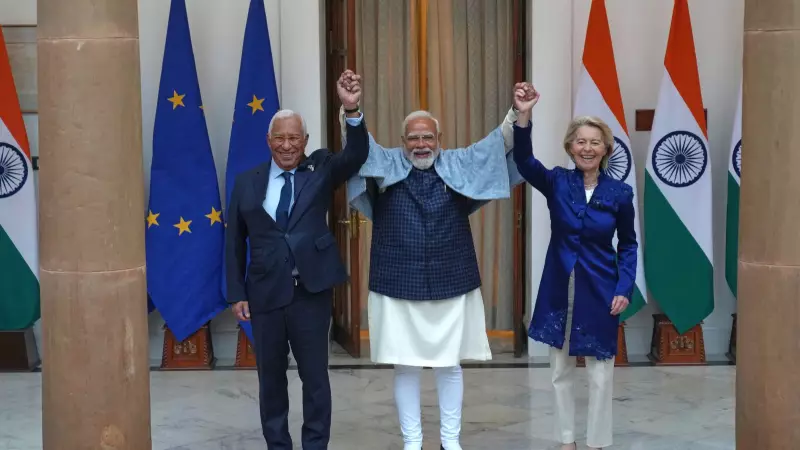
Official-level negotiations for the trade deal have been successfully concluded, with both sides set to announce the completion of talks at the India-EU Summit in Delhi. The formal signing of the agreement is scheduled for later this year, following a legal scrubbing process expected to take four to five months.
An official noted on Monday, "After subsuming a few chapters, India and the EU have completed talks on 21 chapters. While the legal scrubbing of the deal would take four to five months, the trade deal will come into effect by early next year after being ratified by the European Parliament."
Geopolitical Context and Urgency
The India-EU talks gained urgency amid dramatic shifts in American trade policies, which have compelled global trade partners to seek new markets. India faces steep 50% tariffs, while the EU continues to grapple with the risk of higher US tariffs due to tech regulations and differences over Greenland.
A key driver behind the FTA has been the shared challenge posed by China. Indian industries, particularly in the solar energy sector, have encountered pricing challenges, while the EU is concerned about China's dominance in critical technologies and its leading global manufacturing position, which exposes the EU to potential risks.
Historical Significance and Future Prospects
This trade deal holds historical significance, as negotiations first began in 2007 but were abandoned in 2013 due to differences in market access for automobiles. The revival and successful conclusion of talks mark a pivotal moment in India-EU relations, promising to reshape economic landscapes and foster deeper collaboration.

As the India-EU FTA moves toward implementation, it is expected to catalyze growth, create employment opportunities, and solidify India's position as a key player in the global economy. The deal stands as a testament to the strategic partnership between India and the European Union, paving the way for a prosperous and interconnected future.