India-EU Free Trade Agreement Finalized: A New Chapter in Economic Relations
After nearly two decades of intermittent negotiations, India and the European Union have successfully finalized a landmark free trade agreement. This significant development marks a major milestone in bilateral economic relations between two of the world's largest economies.
The EU, representing approximately 25% of global GDP and 33% of global trade, stands as one of India's most substantial trade partners. This comprehensive agreement is expected to further open India's markets to European goods while strengthening collaboration across crucial policy domains including trade, security, and defense cooperation.
Market Focus Shifts to India-US Trade Deal Prospects
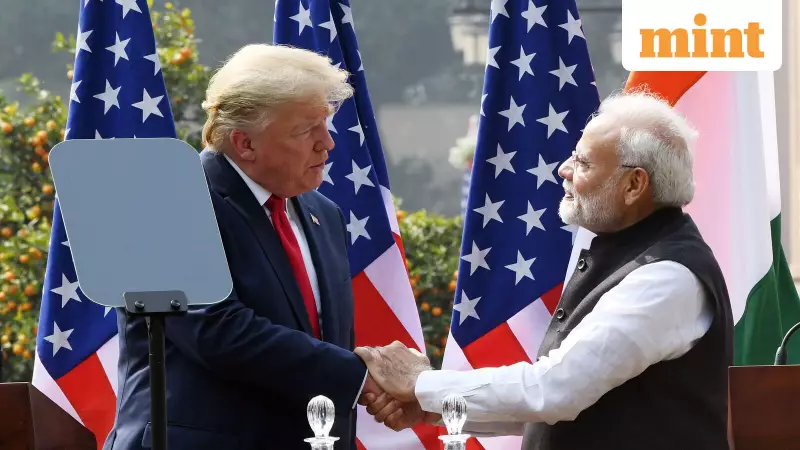
While the India-EU trade deal represents a significant positive development for the Indian economy and stock markets, investor attention remains firmly fixed on the prospects of a long-discussed India-US trade agreement. According to various reports, the United States continues to be India's largest trading partner, making this potential agreement particularly consequential.

Sujan Hajra, Chief Economist and Executive Director at Anand Rathi Group, expressed optimism about the potential ripple effects: "With this new India-EU FTA after dragging for almost two decades, there are hopes that now the US will also be under some kind of compulsion to close a deal with New Delhi."
Complex Dynamics in India-US Trade Relations
The path to an India-US trade agreement remains fraught with challenges stemming from complex political, economic, and strategic considerations. The United States has consistently pushed for greater market access in several key areas:
- Agricultural products and market liberalization
- Medical devices and healthcare equipment
- Digital trade regulations and frameworks
- Labor standards and environmental protections
Recent geopolitical tensions have further complicated negotiations, with former US President Donald Trump's administration criticizing India for its continued purchase of Russian oil. US representative Jamieson Greer recently emphasized that New Delhi needs to address American concerns regarding this issue more comprehensively.
India's Strategic Positioning and National Interests
India remains steadfast in its commitment to protecting domestic interests, particularly in the agricultural sector where increased US imports could significantly impact local farmers. The Indian government has repeatedly emphasized that national interests will remain paramount in all trade negotiations.
VK Vijayakumar, Chief Investment Strategist at Geojit Investments, highlighted potential complications: "It is possible that Trump may be further infuriated by this India-EU deal, and he might put even more conditions on India."
Structural Differences in Trade Relationships
The economic dynamics between India and the United States differ substantially from India-EU relations. India maintains a considerable trade surplus with Washington, meaning any bilateral agreement would likely require New Delhi to offer meaningful concessions to address this trade imbalance.
The successful conclusion of the EU agreement signals India's willingness to move beyond defensive trade policies and pursue comprehensive economic partnerships. However, experts caution that an India-US deal will depend on multiple evolving factors:
- Policy shifts in both countries' administrations
- Geopolitical developments including the Russia-Ukraine conflict
- Sector-specific trade-offs and concessions
- Domestic political considerations in both nations
Vijayakumar further elaborated on the broader implications: "An India–US trade deal will depend more on New Delhi’s willingness to liberalise further and Washington’s readiness to compromise. India’s trade policy is becoming more outward-looking, which is a structural positive for long-term growth."

Market Implications and Future Outlook
Despite the breakthrough with the European Union, market analysts note that immediate dramatic rallies have been tempered by ongoing uncertainties surrounding US trade relations. The Trump administration's tariff-based approach to international trade adds another layer of complexity, as demonstrated by threats against other trading partners pursuing agreements with strategic competitors.
Several occasions over recent months have suggested that an India-US deal might be imminent, yet despite multiple negotiation rounds, a final agreement remains elusive. The structure of future talks will likely need to address fundamental differences in economic priorities while navigating the intricate web of global geopolitical tensions.
As India continues to expand its network of international trade agreements, the country's evolving trade policy reflects a strategic shift toward greater global economic integration while maintaining protective measures for critical domestic sectors.