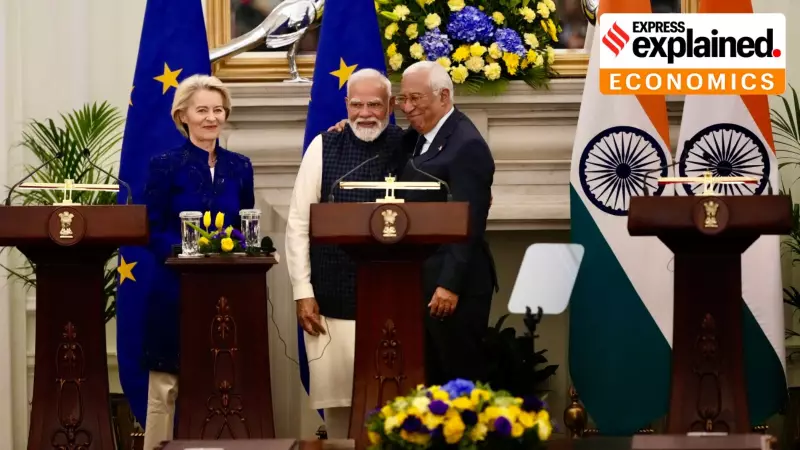
Historic India-EU Free Trade Agreement Concluded After Two Decades of Negotiations
The long-awaited Free Trade Agreement between India and the European Union has finally been sealed, marking the culmination of nearly twenty years of complex negotiations. This landmark deal represents one of the most comprehensive trade agreements India has ever signed, promising to reshape economic relations between the world's largest democracy and one of its most significant trading blocs.
From Near-Miss to Success: Learning from Past Failures
The journey to this agreement has been anything but smooth. Back in 2013, India and the EU came tantalizingly close to finalizing a trade deal, only to see negotiations collapse when the bloc's chief negotiator was abruptly reassigned. That experience proved instructive for both sides, who approached the renewed negotiations with a palpable sense of urgency and determination not to let the window of opportunity close again.
Officials involved in the process have acknowledged that key lessons were learned from the 2013 near-miss. Both negotiating teams made concerted efforts to maintain regular updates with top political leadership and worked more diligently to outline agreement frameworks earlier in the process. This strategic shift in approach proved crucial in navigating the complex landscape of international trade diplomacy.

Geopolitical Shifts: The Unseen Driver of Agreement
The most significant difference between the current successful negotiations and the failed 2013 attempt lies in the dramatically changed geopolitical landscape. America's evolving role in global trade and politics has created broader strategic imperatives that extend beyond mere economic gains. The growing rivalry between China and the United States, along with Washington's increasingly unpredictable trade policies, has forced both India and the EU to reconsider their economic partnerships.
According to officials familiar with the negotiations, the "Trump factor" loomed large in discussions, with both sides recognizing the need to diversify trade relationships in response to America's tariff actions and penchant for alienating traditional allies. The recent US decision to raise tariffs on imports from South Korea served as yet another reminder that Washington continues to use tariffs as leverage, making one-sided trade engagements increasingly untenable.
Shared Challenges and Strategic Alignment
Both India and the European Union face common challenges that have drawn them closer together. Indian industry has been grappling with pricing pressures, particularly in scaling up solar energy and automotive sectors, while the EU remains concerned about China's dominance in critical technologies and manufacturing capabilities.
This convergence of interests has fostered what officials describe as "shared strategic autonomy and economic security goals" with a mutual interest in shaping a resilient multipolar global order. The agreement is being framed within a larger strategic framework that could lead to closer cooperation in developing new global supply chains, protecting both economies from the volatility characterizing current international relations.
Pragmatic Approach to Contentious Issues
The finalized agreement demonstrates remarkable pragmatism in addressing traditionally difficult areas. Automobiles and alcoholic beverages, which proved deal-breakers in previous negotiations, have been approached with graded liberalization. The automotive sector will see phased tariff reductions over ten years with price barriers for imports, recognizing India's strength in smaller, more affordable vehicles and Europe's dominance in larger automobiles.
Perhaps most significantly, agriculture and food products have been entirely excluded from the agreement, removing what negotiators described as issues that had "blocked progress for a long time." This pragmatic exclusion allowed negotiations to move forward on other fronts where mutual benefits were more readily achievable.

Economic Benefits and Market Access
The trade agreement promises substantial benefits for India's labor-intensive sectors, including marine products, textiles, footwear, and sports goods. For the European Union, the goal has been to secure tariff liberalization for 97-99% of its exports to India, creating significant new market access opportunities.
Current trade statistics highlight the agreement's potential impact. India accounts for approximately 5% of EU textile and apparel imports, trailing behind China, Bangladesh, Turkey, and Vietnam. With the new agreement, Indian exporters hope to improve their competitive position in the European market, particularly as countries like Bangladesh and Vietnam already enjoy zero-duty access through various trade concessions.
Navigating Regulatory Challenges
The agreement also addresses complex regulatory issues that have historically posed challenges for developing countries. The European Union's Carbon Border Adjustment Mechanism and Deforestation Regulation present particular compliance challenges for Indian exporters, especially small and medium-sized enterprises that account for nearly 40% of India's exports.
To address these concerns, both sides have agreed to establish a "rapid response forum" that can escalate trade barrier issues to the highest levels for quick resolution. This institutional arrangement represents an innovative approach to managing the complex regulatory landscape that characterizes modern international trade.
The Road Ahead: Implementation and Ratification
While negotiations have concluded successfully, several steps remain before the agreement becomes operational. Legal vetting of the agreement text is expected to take approximately five months, followed by translation into the EU's 24 official languages. The European Parliament must then ratify the agreement before it can come into effect.
The formal signing is anticipated later this year after completion of the legal review process. Both sides have emphasized that the agreement represents not just an economic partnership but a reinforcement of broader political and strategic links at a time of significant global uncertainty.
As world affairs face increasing strain, the India-EU Free Trade Agreement is being positioned as a cornerstone for reconstructing a rules-based global order in an emerging multipolar world. The convergence of European and Indian positions on trade and climate issues could significantly influence the redesign of international institutions and regulations in the coming years.