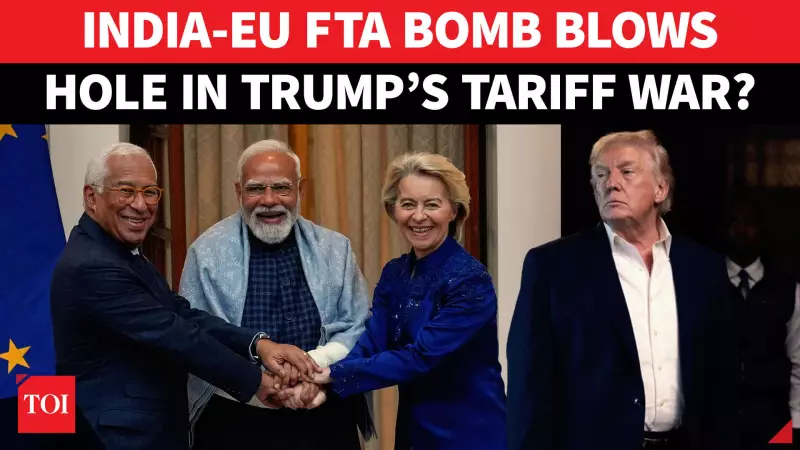
Historic India-EU Free Trade Agreement Concluded After Two Decades of Negotiations
In a landmark development for international trade, India and the European Union have officially sealed a comprehensive free trade pact, ending nearly twenty years of protracted negotiations. This monumental agreement, described by leaders as the "mother of all deals," represents a significant shift in global economic alliances and trade patterns.
Key Provisions and Economic Impact
The newly finalized agreement eliminates or substantially reduces tariffs on more than ninety percent of European Union exports to India. This sweeping tariff reduction covers critical sectors including:
- Aircraft and aerospace technology
- Space exploration equipment
- Advanced medical devices
- Clean-energy infrastructure and hardware
Trade analysts project that this agreement could potentially double European Union exports to India by 2032, while simultaneously cutting billions of dollars in import duties that have historically hindered trade flows between these major economic powers.

Strategic Implications Amid Global Trade Tensions
The timing of this agreement carries particular significance as it emerges during a period of heightened global trade tensions. With the United States implementing aggressive tariff policies under the Trump administration, which have strained traditional alliances, India and the European Union are strategically positioning themselves as counterweights in the evolving global trade landscape.
This partnership represents a deliberate hedging strategy by both Delhi and Brussels, creating an alternative economic framework that could potentially rewire global supply chains and reduce dependency on traditional trade routes and partnerships.
Long-Term Economic Transformation
Beyond immediate tariff reductions, the India-EU free trade agreement establishes a framework for deeper economic integration that extends far beyond simple trade facilitation. The pact includes provisions for:
- Enhanced regulatory cooperation across multiple sectors
- Intellectual property protection mechanisms
- Sustainable development commitments aligned with climate goals
- Digital trade facilitation for emerging technologies
Officials from both sides emphasize that this agreement represents more than just a trade deal—it establishes a comprehensive economic partnership that will influence global trade dynamics for decades to come. The successful conclusion of these negotiations after twenty years of effort demonstrates both parties' commitment to creating a more balanced and diversified global trading system.