India-EU Free Trade Agreement: A Comprehensive Analysis of Benefits for SMEs, IP Protection, and Administrative Reforms
The historic India-European Union Free Trade Agreement (FTA), officially concluded during the 16th India-EU Summit, marks a significant milestone in bilateral economic relations. This landmark pact, announced on Monday, is poised to reshape trade dynamics between two of the world's largest economies, collectively representing 25% of global GDP and one-third of international commerce.
Strategic Partnership and Economic Implications
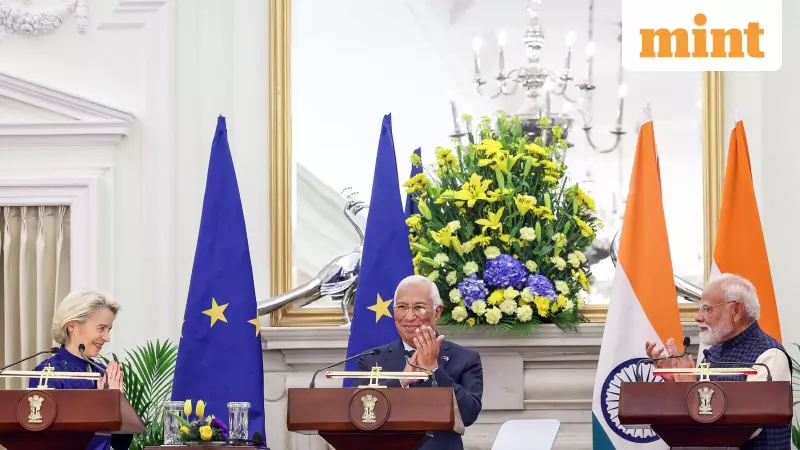
Prime Minister Narendra Modi, alongside European Commission President Ursula von der Leyen and European Council President António Costa, heralded the agreement as a testament to strengthened diplomatic and economic ties. The official statement emphasized that "the conclusion of this FTA positions India and the European Union as trusted partners committed to open markets, predictability, and inclusive growth." Union Minister for Commerce and Industry Piyush Goyal described it as "a defining achievement in India's economic engagement and global outlook," highlighting its alignment with India's strategy of forging balanced, mutually beneficial partnerships.
The European Union stands as India's premier commercial ally, with bilateral trade showing consistent growth. During the 2024-25 fiscal year, two-way commodity exchange reached an impressive ₹11.5 lakh crore ($136.54 billion), comprising exports worth ₹6.4 lakh crore ($75.85 billion) and imports totaling ₹5.1 lakh crore ($60.68 billion). Additionally, service-based trade between India and the EU hit ₹7.2 lakh crore ($83.10 billion) in 2024, underscoring the multifaceted nature of this economic relationship.

Empowering Small and Medium Enterprises (SMEs)
A dedicated section within the FTA specifically addresses the needs of small and medium enterprises, aiming to level the playing field for smaller entities in international trade. Key provisions include:
- Streamlined access to comprehensive operational data for establishing and running ventures in both EU and Indian markets
- Establishment of SME liaison offices to facilitate smoother commercial exchanges through coordinated support mechanisms
- Reduction of tariff barriers and elimination of technical obstacles that traditionally disadvantage smaller players
- Enhanced regulatory clarity and consistent frameworks to simplify cross-border transactions
These measures collectively promise to make international trade more accessible, affordable, and efficient for small businesses, potentially unlocking new growth opportunities across sectors.
Strengthening Intellectual Property Rights Protection
The agreement significantly bolsters intellectual property safeguards, building upon the foundation established by the TRIPS agreement while addressing contemporary challenges. Notable advancements include:
- Enhanced protection for copyrights, trademarks, industrial designs, trade secrets, and geographical indications
- Recognition and protection of traditional knowledge through support for digital archives, particularly India's Traditional Knowledge Digital Library (TKDL) initiative
- Commitment to upholding the Doha Declaration principles regarding public health and intellectual property
- Implementation of robust monitoring mechanisms and enforcement protocols to ensure rigorous protection of intellectual assets
- Establishment of specific legal pathways for addressing IP violations and disputes
This comprehensive framework aims to create a secure environment for innovation and creativity while respecting traditional knowledge systems.
Reducing Administrative Burdens and Streamlining Processes
Both India and the EU have committed to substantial administrative reforms designed to facilitate smoother trade flows. Key initiatives include:

- Simplification of regulatory workflows and creation of more predictable legislative environments
- Accelerated border clearance procedures for shipments to reduce transit times and associated costs
- Enhanced cooperation on logistics security to ensure safe and efficient movement of goods
- Improved risk assessment mechanisms and oversight systems at the EU's external boundaries
- Harmonization of standards and certification processes to minimize duplication and delays
These measures collectively address the persistent challenge of bureaucratic red tape that has historically impeded efficient trade between the two regions.
Broader Economic Impact and Future Prospects
The India-EU FTA represents more than just a trade agreement; it symbolizes a strategic alignment between the world's second and fourth largest economies. By reducing tariffs, eliminating non-tariff barriers, and creating more transparent regulatory environments, the pact is expected to:
- Stimulate bilateral trade growth across both goods and services sectors
- Encourage greater foreign direct investment flows between the regions
- Foster innovation through strengthened IP protection frameworks
- Create employment opportunities by supporting SME growth and expansion
- Enhance India's position in global value chains through improved market access
As implementation progresses, the true impact of this agreement will unfold, potentially serving as a model for future trade partnerships between developed and emerging economies. The success of this FTA will depend on effective execution, continuous dialogue between stakeholders, and adaptive mechanisms to address emerging challenges in the evolving global trade landscape.