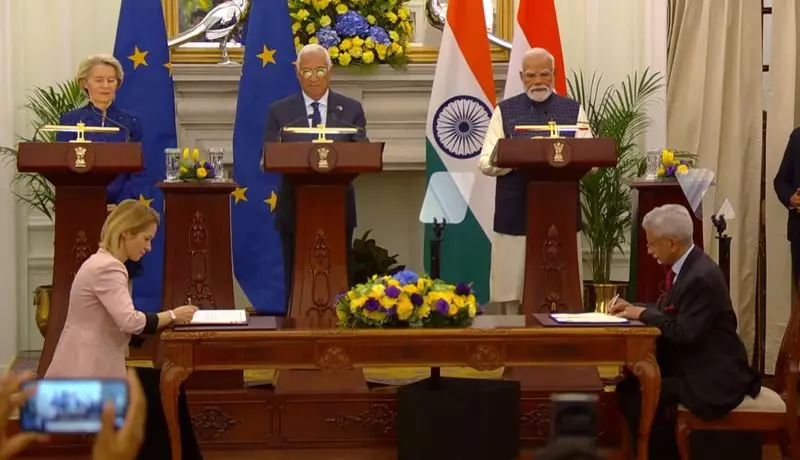
India and EU Launch Joint Briefing on Landmark Free Trade Agreement
In a significant development for global trade dynamics, India and the European Union have officially commenced a joint briefing session focused on their proposed Free Trade Agreement (FTA). This high-stakes negotiation, frequently referred to as the 'Mother of All Deals' due to its potential scale and impact, represents a crucial milestone in strengthening economic ties between the two major economies.
Key Highlights of the FTA Negotiations
The joint briefing underscores the commitment of both parties to address complex trade issues and explore mutual benefits. Key areas under discussion include:
- Tariff Reductions: Efforts to lower or eliminate customs duties on a wide range of goods, boosting bilateral trade volumes.
- Services Sector: Enhancing market access for services such as IT, finance, and healthcare, which are vital for India's economy.
- Intellectual Property Rights: Aligning standards to protect innovations while fostering collaboration in technology and research.
- Sustainable Development: Incorporating environmental and labor standards to ensure the agreement supports long-term growth and social welfare.
This initiative is expected to create a more robust framework for trade and investment, potentially increasing economic cooperation and job creation in both regions.

Implications for India's Economic Landscape
The India-EU FTA holds profound implications for India's economic strategy and global positioning. By forging closer ties with the European Union, India aims to:
- Diversify Export Markets: Reduce dependency on traditional partners and tap into the EU's vast consumer base.
- Attract Foreign Investment: Encourage European companies to invest in India's manufacturing and infrastructure sectors.
- Boost Competitiveness: Enhance domestic industries through technology transfers and best practices from EU counterparts.
Experts suggest that a successful agreement could elevate India's role in international trade, aligning with its broader goals of economic self-reliance and global integration.
Challenges and Future Prospects
Despite the optimism, the negotiations face several challenges, including differences in regulatory standards and concerns over market access for agricultural products. However, the joint briefing signals a proactive approach to resolving these issues through dialogue and compromise.
As the discussions progress, stakeholders from both sides are closely monitoring the outcomes, anticipating that this 'Mother of All Deals' could set a precedent for future trade pacts and reinforce India's commitment to open and fair trade practices on the world stage.