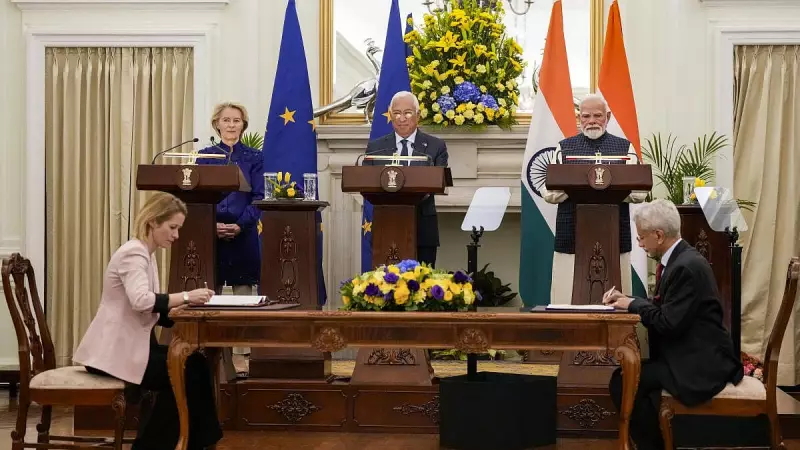
India and EU Forge Ahead with Free Trade Agreement: A Comprehensive Overview
The India-European Union Free Trade Agreement (FTA) represents a landmark pact poised to reshape economic relations between two of the world's largest economies. After years of negotiations, this agreement is set to unlock new opportunities for trade, investment, and collaboration across various sectors. By fostering a more integrated market, it aims to drive growth, create jobs, and enhance competitiveness on both sides. The FTA is not just about reducing barriers; it's a strategic move to strengthen geopolitical ties and promote sustainable development in a rapidly changing global landscape.
Key Highlights of the India-EU Free Trade Agreement
The agreement encompasses several critical areas designed to facilitate smoother trade and deeper economic integration. Here are the main highlights:
- Tariff Reductions: Significant cuts in tariffs on a wide range of goods, including agricultural products, textiles, and machinery, to boost exports and imports.
- Services and Investment: Enhanced market access for services such as IT, finance, and healthcare, along with provisions to protect investments and intellectual property rights.
- Digital Trade: Cooperation on e-commerce, data flows, and digital innovation to support the growth of the digital economy and tech startups.
- Sustainability and Labor Standards: Commitments to uphold environmental protections and fair labor practices, aligning with global sustainability goals.
- Dispute Resolution Mechanisms: Established frameworks to address trade disputes efficiently, ensuring a stable and predictable business environment.
Economic Implications for India
This FTA is expected to have profound effects on India's economy, potentially increasing bilateral trade volumes and attracting foreign investment. Key sectors like manufacturing, agriculture, and technology stand to benefit from reduced tariffs and improved market access. Moreover, the agreement could enhance India's position in global supply chains and foster innovation through knowledge sharing and joint ventures. However, it also presents challenges, such as the need for domestic industries to adapt to increased competition and comply with higher standards.

Broader Impact on Global Trade and Diplomacy
Beyond economic gains, the India-EU FTA signifies a strategic alignment in the face of shifting global dynamics. It reinforces India's role as a key player in international trade and diplomacy, offering an alternative to other major trade blocs. The agreement may also influence future trade deals and set benchmarks for sustainability and digital cooperation in other regions. As both parties work towards implementation, this pact is likely to serve as a model for inclusive and forward-looking trade agreements worldwide.