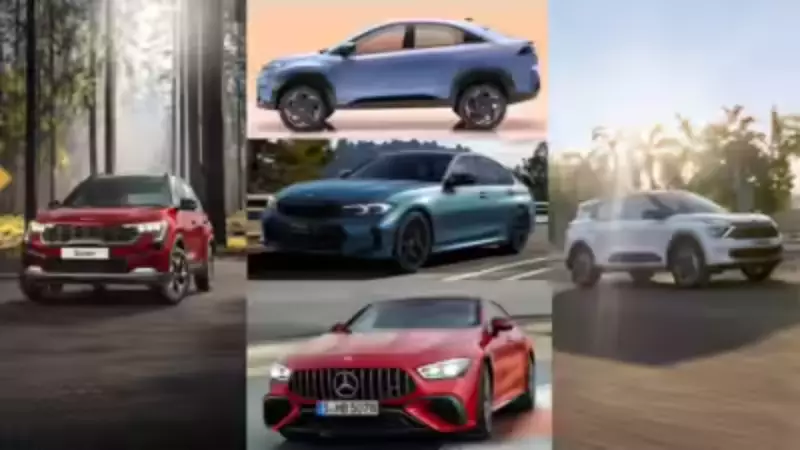
India-EU Free Trade Agreement Formalized, But Luxury Car Buyers May Face Price Hikes
NEW DELHI: The much-anticipated India-European Union Free Trade Agreement (FTA) was officially signed on Tuesday, marking a significant milestone in bilateral trade relations. However, contrary to expectations of cheaper European luxury vehicles, consumers might actually see prices increase in the near term due to the ongoing depreciation of the Indian rupee against the Euro.
Rupee Depreciation Offsets Duty Benefits
The Indian rupee has depreciated by approximately 19% against the Euro in 2025 alone, creating severe profitability pressures for European automakers operating in India. This currency devaluation has already prompted several premium brands to implement price increases at the beginning of the year, and further hikes may be necessary despite the FTA's eventual duty reductions.
Major European automotive brands including Mercedes-Benz, BMW, Audi, Renault, Citroen, Volkswagen, and Skoda are likely to maintain or even increase their price points rather than reduce them immediately following the agreement's signing.

Phased Implementation Over 18-24 Months
The FTA outlines a gradual reduction of import duties on European vehicles from the current peak of 110% down to 10% over a five-year period. However, this reduction applies only to a quota of 250,000 cars annually and will not take effect immediately.
Top government sources indicate that the agreement must first undergo discussions within various EU constituents before implementation, with the FTA likely to come into force only over the next 18 to 24 months. "The agreement will be discussed within the various EU constituents and thus will not come into effect anytime soon," confirmed senior officials familiar with the negotiations.
Electric Vehicles and Super-Luxury Segments
Import duties on electric vehicles from Europe will remain unchanged for at least five years under the current agreement terms, meaning prices for European EVs entering India through import routes will likely stay stable for the foreseeable future.
While super-luxury European brands such as Lamborghini, Porsche, and Ferrari are expected to benefit significantly from eventual duty reductions, these price benefits will only materialize after the FTA receives final approval and ground-level implementation. These manufacturers have limited incentive to establish local production in India given their relatively small sales volumes in the market.
European Automakers Welcome Agreement
European automotive executives have broadly welcomed the FTA, emphasizing its potential to facilitate technology transfer and introduce new models to the Indian market.
Piyush Arora, MD & CEO of Skoda Auto Volkswagen India, stated: "I heartily welcome the forward-looking India–EU Free Trade Agreement, which will further strengthen cooperation between the two regions. Greater tariff certainty and a more predictable trade framework will allow us to evaluate the introduction of a wider range of European models for Indian customers."
Balbir Singh Dhillon, Brand Director of Audi in India, noted that the agreement recognizes the potential to deepen economic ties between two of the world's largest trading blocs. "This constructive approach to trade could support the broader automotive ecosystem, including innovation, supply-chain efficiency, and technology collaboration," he said.
Santosh Iyer, MD & CEO of Mercedes-Benz India, highlighted the positive cascading effect on customer sentiments for the luxury segment. "The FTA opens up new avenues for customers with improved vehicle allocations, better availability of top-end global models for the Indian market, faster access to latest technology and creating a stronger luxury car ecosystem," Iyer explained.
Hardeep Singh Brar, President and CEO of BMW Group India, called the FTA a "historic and ambitious milestone" reflecting India's growing strategic and economic relevance globally. However, he clarified that BMW "does not foresee any immediate price changes in the near term."

Indian Automakers Adopt Wait-and-Watch Approach
Domestic automotive manufacturers including Maruti Suzuki, Tata Motors, and Mahindra & Mahindra are carefully assessing the competitive implications of reduced-duty European imports. The FTA's concessions apply specifically to vehicles priced above 15,000 Euros (approximately ₹16.4 lakh).
Anish Shah, Group CEO and MD of Mahindra Group, described the FTA as a significant milestone providing the next wave of economic impetus for India. "We feel this will not change any competitive dynamics in the industry," Shah stated, noting that the agreement's design lowers in-quota duties only at higher price segments relevant to 'Make in India for the World' initiatives.
Shailesh Chandra, President of SIAM and MD & CEO of Tata Motors Passenger Vehicles Division, emphasized the FTA's role in India's progress toward 'Viksit Bharat'. "The calibrated approach to balance market access and domestic manufacturing should give us a win-win between increased global participation on one hand and growth of the domestic auto industry with investments and employment on the other hand," Chandra said.
Limited Overall Impact Expected
Industry analysts suggest the FTA's overall impact on the Indian automotive sector may be limited. Saurabh Agarwal, Partner & Automotive Tax Leader at EY India, noted that vehicles imported in completely knocked down (CKD) form continue to attract significantly lower duties of around 15%, a route widely used by European, Japanese, and Korean manufacturers.
"This model is likely to continue, helping maintain price stability for consumers while supporting local manufacturing, investment and employment in India," Agarwal concluded, suggesting that established import practices may mitigate the FTA's immediate market effects.