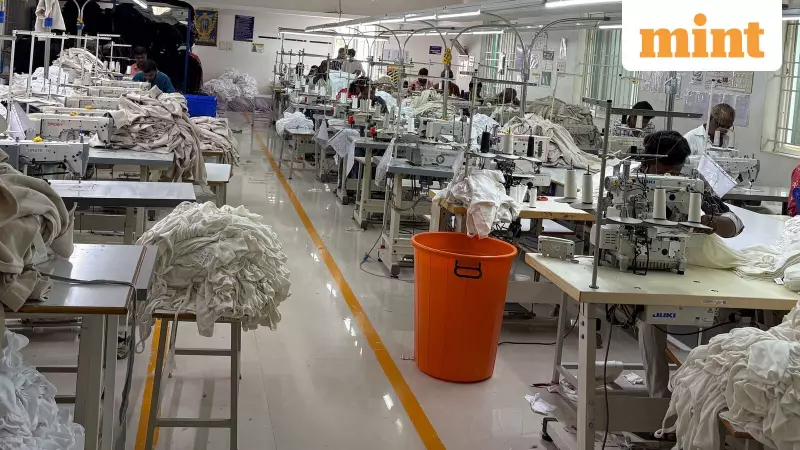
Mumbai: India's landmark free trade agreement (FTA) with the European Union (EU), finalized this week, promises to transform the fortunes of the nation's labor-intensive textile and apparel sectors. The deal, which will eliminate import duties on Indian garments entering the EU, arrives as a crucial lifeline for exporters still reeling from punishing tariffs imposed by the United States last year.
A Strategic Response to Global Trade Challenges
The agreement, announced on Tuesday, marks the conclusion of extensive negotiations and will see the EU remove tariffs on an impressive 99.5% of items exported from India. For the textile industry, this means the elimination of current duties ranging between 9% and 12% across various product categories. This development is particularly significant as the EU represents a vital market, accounting for approximately one-fifth of India's annual textile and apparel exports, which are valued at around $36.7 billion according to government estimates.
Leveling the Competitive Playing Field
This tariff elimination is expected to place Indian exporters on equal footing with their primary competitors in the European market: Bangladesh and Vietnam. Both nations currently enjoy duty-free access to Europe, with Bangladesh benefiting from its status as a least developed country. Commerce and Trade Minister Piyush Goyal highlighted this disparity during a press briefing, noting that Bangladesh exports over $30 billion worth of textiles and apparel to Europe annually.

"Now, we see before our eyes a potential to grow from $7 billion to at least $30-40 billion very quickly in the textile sector alone," Minister Goyal stated optimistically. He emphasized that this expansion would carry "tremendous potential" for job creation across India, providing a significant boost to employment in manufacturing hubs.
Timeline and Immediate Benefits
The benefits from this historic FTA are scheduled to accrue from the day it comes into force, which Minister Goyal anticipates will occur before the end of 2026. This timeline gives Indian exporters a clear window to prepare for expanded market access while offering immediate strategic advantages in their business planning.
Offsetting US Tariff Impacts
A surge in exports to the EU would help Indian garment manufacturers substantially offset the impact of the 50% tariffs levied by the US, which remains India's largest apparel export destination. Narendra Goenka, former chairman of the Apparel Export Promotion Council (AEPC), captured the industry's sentiment: "In this market condition, the India-EU FTA has created an avenue for growth. All European customers have been waiting for this for many years."
Regional Impact and Industry Vision
The Tiruppur Exporters Association, representing knitwear exporters in Tamil Nadu's major textile hub, has expressed confidence that the FTA will accelerate progress toward India's vision of increasing annual textile exports to $40 billion by 2030, up from the current $13 billion. Notably, exports from Tiruppur alone exceeded ₹44,000 crore in the 2024-25 fiscal year, demonstrating the sector's existing capacity.
Prabhu Dhamodharan, convenor of the Coimbatore-based Indian Texpreneurs Federation (ITF), described the agreement as "a structural inflection point for India's apparel exports." He further explained that while India's exports to the EU have grown steadily in high-technology sectors over the past five years, labor-intensive segments like apparel have remained subdued due to intense competition from Bangladesh and Vietnam.
Resetting Export Imbalances
"The FTA can reset this imbalance and unlock growth in labor-intensive exports, especially apparel," Dhamodharan asserted. The textiles segment encompasses raw materials such as fibers, yarns, and fabrics used in apparel manufacturing, meaning the agreement's benefits will ripple through the entire supply chain.
This comprehensive trade pact not only addresses immediate competitive disadvantages but also positions India for sustainable export growth in one of its most employment-generating industries. As implementation approaches, industry stakeholders are preparing to capitalize on this unprecedented access to the valuable European market.