Historic India-EU Trade Pact Finalized: A New Era of Economic Partnership
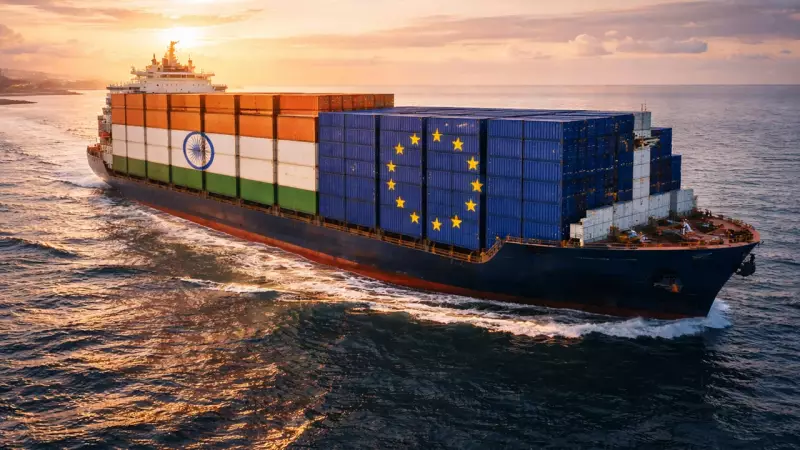
In a landmark development for global trade, India and the European Union on Tuesday announced the finalization of what is being hailed as the "mother of all FTAs" (Free Trade Agreements). This comprehensive pact is set to transform bilateral economic relations by implementing a gradual tariff reduction for a staggering 96% of exports from both sides. The agreement strategically excludes contentious items such as cereals and dairy products from its ambit, addressing key domestic sensitivities.
Key Benefits for Indian Export Sectors
The trade deal promises significant advantages for several crucial Indian industries. Indian textiles, marine products, leather and footwear, gems and jewelry, toys, and sports goods will gain zero-duty access to the vast European market. This immediate tariff elimination is expected to provide a substantial competitive edge to these export-oriented sectors.
In a carefully calibrated approach, the government has opted for a phased opening of the Indian market for specific European products. European cars priced above Rs 25 lakh and wine costing upwards of $3-3.25 per bottle will see gradual market access. The tariff reductions will apply to specific quantities, with higher quotas allocated for more expensive products. Notably, the automobile sector will be exempted from tariff reductions for an initial period of five years, providing crucial protection for domestic manufacturers.

"Small cars have been protected, which constitutes the bulk of the Indian market," explained an official involved in the negotiations, highlighting the government's focus on safeguarding domestic interests.
Steel and Carbon Mechanism Considerations
The agreement includes a separate package addressing the steel sector, though the European Union has maintained its position on the carbon border adjustment mechanism. This represents a significant point where India's major demand for concessions was not met, indicating the complex balancing act involved in the negotiations.
Beyond Goods: Services and Mobility
The comprehensive pact extends well beyond merchandise trade. The services sector forms a crucial component, with the European Union agreeing to open 144 of its 155 sub-sectors. In reciprocal fashion, India will liberalize 104 service sub-sectors, creating new opportunities for professionals and businesses across both economies.
Adding an important dimension to people-to-people connections, the treaty incorporates visa concessions for students, including provisions for post-study work visas. This mobility aspect enhances educational and professional exchange between India and Europe.
Political Endorsements and Economic Impact
Prime Minister Narendra Modi emphasized the transformative potential of the agreement, stating: "People around the world are calling this the mother of all deals. This agreement will bring major opportunities for the 1.4 billion people of India and the millions of people in Europe." He further described it as "not just a trade agreement, but a new blueprint for shared prosperity."
Commerce and Industry Minister Piyush Goyal characterized the deal as "a formidable partnership for the world," underscoring its global significance. A top official highlighted that nearly 2 billion people stand to benefit from this agreement between two partners that collectively account for approximately a quarter of the global economy.
Implementation Timeline and Market Access
The agreement, spanning 21 chapters that include intellectual property rights, labor standards, sustainable development, rules of origin, and support for small and medium enterprises, is likely to be implemented next year.
Under its provisions, 99.5% of the European market by traded value will open over the next seven years, with 90% of goods moving to zero-duty status from the first day of implementation. In reciprocal measures, India will initially open 30% of its market once the deal becomes effective, followed by further liberalization after three, five, seven, and ten years. Ultimately, 96% of goods by traded value will see complete tariff elimination.

The government has incorporated a unique provision linking some liberalization measures to social security agreements that individual EU member states will sign separately.
Industry Response and Export Projections
Industry leaders have welcomed the agreement with optimistic projections. AEPC Chairman A Sakthivel stated: "This deal will provide a significant boost to apparel exports which is expected to double in the next three years... The zero-duty access of Indian garments and clothing to the EU market will decisively turn the tables in India's favour, enhancing our competitiveness in the European market."
Global Context and Parallel Agreements
This landmark agreement emerges against the backdrop of shifting global trade dynamics, including recent tariff measures by US President Donald Trump that have prompted a flurry of trade negotiations worldwide. While India has recently finalized trade pacts with the United Kingdom, New Zealand, and Oman, the European Union has simultaneously announced treaties with Mercosur (the South American bloc), Indonesia, Mexico, and Switzerland.
The India-EU Free Trade Agreement represents a strategic reconfiguration of economic partnerships, positioning both economies for enhanced cooperation and mutual growth in the coming decade.