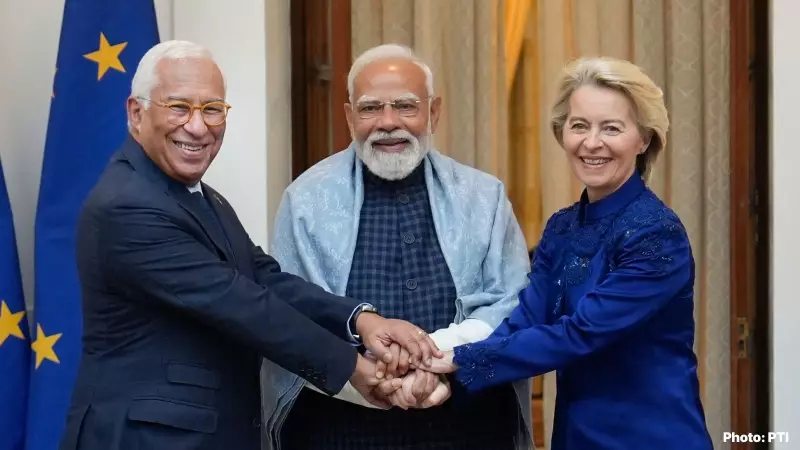
India and European Union Seal Transformative Free Trade Agreement
In a landmark development that is poised to reshape global trade dynamics, India and the European Union have formally inked a comprehensive free trade agreement. This monumental pact, often referred to as the "mother of all deals," signifies a new chapter in the economic partnership between the world's largest democracy and one of the most influential economic blocs.
Strategic Implications and Economic Benefits
The agreement is designed to eliminate or significantly reduce tariffs on a wide range of goods and services, fostering enhanced market access for businesses on both sides. By dismantling trade barriers, it aims to stimulate economic growth, create employment opportunities, and boost investment flows between India and the EU member states. This strategic alignment is expected to bolster India's position in the global supply chain while providing European companies with greater access to the vast and rapidly expanding Indian market.
Key Sectors and Collaborative Opportunities
Several critical sectors stand to benefit immensely from this pact. Information technology, pharmaceuticals, automotive, textiles, and agriculture are among the industries that will experience a substantial uplift in trade volumes. The agreement also encompasses provisions for intellectual property rights, sustainable development, and digital trade, reflecting a forward-looking approach to contemporary economic challenges. Furthermore, it paves the way for increased collaboration in research and innovation, particularly in areas such as renewable energy and advanced manufacturing.

Geopolitical and Global Trade Context
This free trade agreement arrives at a pivotal moment in the international trade landscape, characterized by shifting alliances and evolving economic policies. By strengthening ties with the European Union, India not only enhances its economic resilience but also reinforces its strategic autonomy in a multipolar world. The pact is anticipated to serve as a counterbalance to other regional trade agreements and contribute to a more diversified and stable global trade ecosystem.
Implementation and Future Prospects
The successful implementation of this agreement will require robust regulatory frameworks and continuous dialogue between Indian and EU authorities. As both parties embark on this journey, the focus will be on ensuring that the benefits permeate all levels of society, from large corporations to small and medium enterprises. Looking ahead, this free trade agreement is likely to catalyze further economic integration and set a precedent for future trade negotiations with other key partners.